This is the third post in a series on migrating away from my comfort zone – shooting in Aperture Mode – to exploring the wonders of shooting in Shutter Mode. In Part 1 I talked about the trade offs of Shutter vs Aperture Modes and the search for the structure of a hummingbird’s wings. In Part 2 I discussed some simple setting changes that let me get more shots off and have more keepers in a series on a visit from a bluejay. Today I want to discuss an unexpected byproduct of shooting in Shutter Mode – Happy Accidents.
In my typical Aperture mode I might have gotten an inflight shot by accident once a month that was useable. Now sometimes I got lucky when there was so much action that all I had to do was keep snapping and hope for focus like this. Apart from this flurry of activity those times when a bird launches into the air were mostly just unreadable blurs.
Now most of these shots are not really useable, but they are readable and I think I am learning more about the way a bird flies. That information will help me take better shots of birds as they launch themselves into the air – knowing the process helps me to make better guesses of where the action will be in a split second.
I have always imagined that birds launch themselves into the air by flapping their wings and lifting off – but no – they take a leap of faith, hopping or stepping off to catch the air before they even spread their wings…

Alley oop! f6.7 1/1000 second ISO 1600

Geronimo! f6.7 1/800 second ISO 3200

Cowabunga dude! f6.7 1/800 second ISO 3200

To infinity and beyond! f8 1/800 second ISO 2500
Like I said – not great photos, but they do give me a better feel for where to look for the action on take offs, but what about landings? I am learning that wings are much more open when a bird is landing – they flutter to catch their balance. Sometimes they even overshoot their target – it all happens in a split second and I always missed it in Aperture Mode…

Incoming! f6.7 1/800 second ISO 3200

A real nail-biter! f6.7 1/800 second ISO 1600
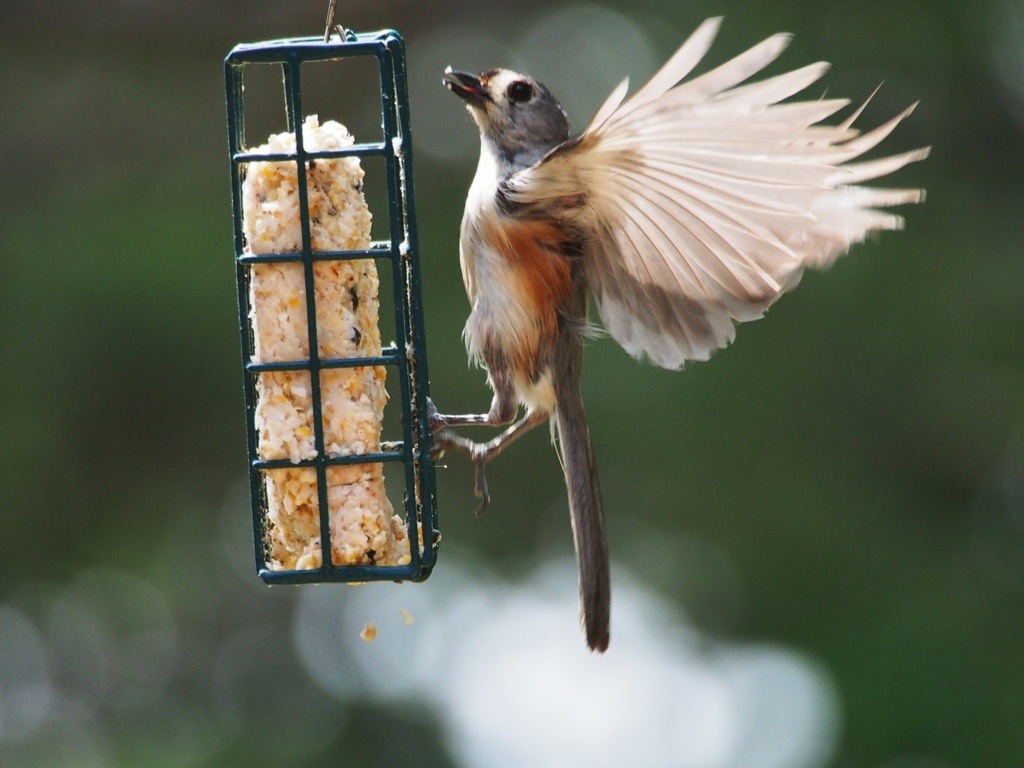
All a flutter! f6.7 1/1000 second ISO 1600
Knowing that the landing is the prime time to catch wing action was a huge advantage to shooting. I also noticed that certain feeders with narrower foot holds tended to require more wing flaps to land on, so this weekend I set out to try to make one good capture. I knew what was needed – bright light, fairly high ISO, fast shutter speed, a bird landing on a tricky perch – not much to ask for – right?
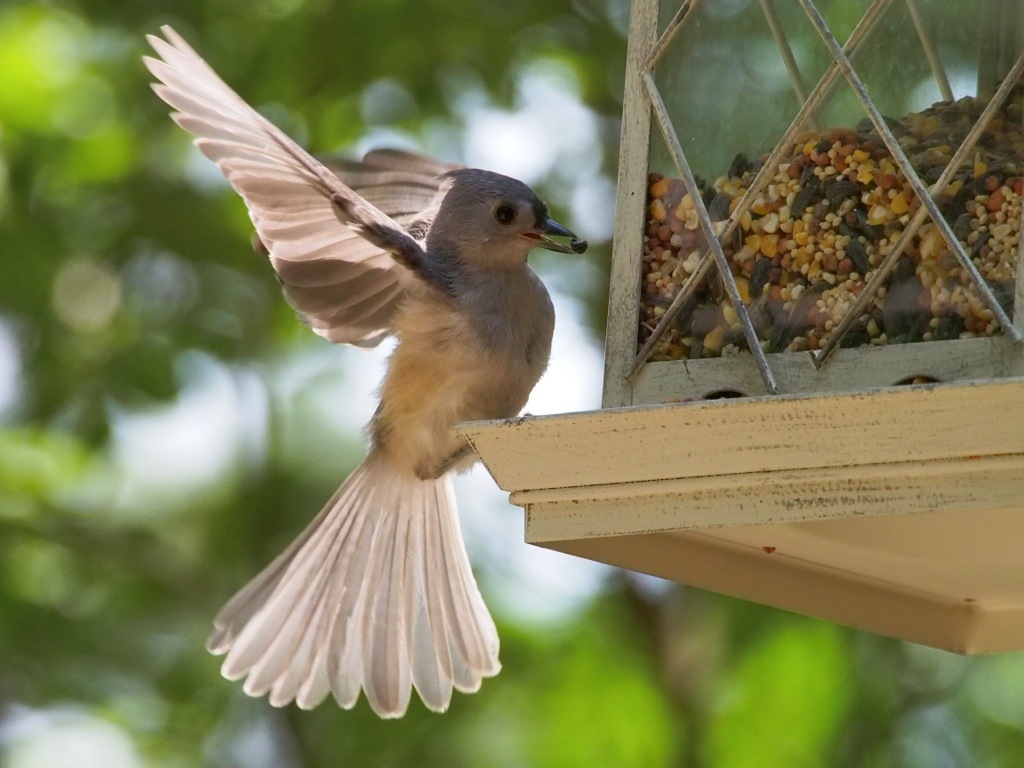
A focused landing! f9 1/1000 second ISO 3200
I found this feeder a couple of weeks ago at Lowes and wondered if the birds would use it because of the narrow edge. It turns out that they do use it and if you can get into place before noon on a sunny day with the right camera settings you just might capture some wing action.


 the eff stop