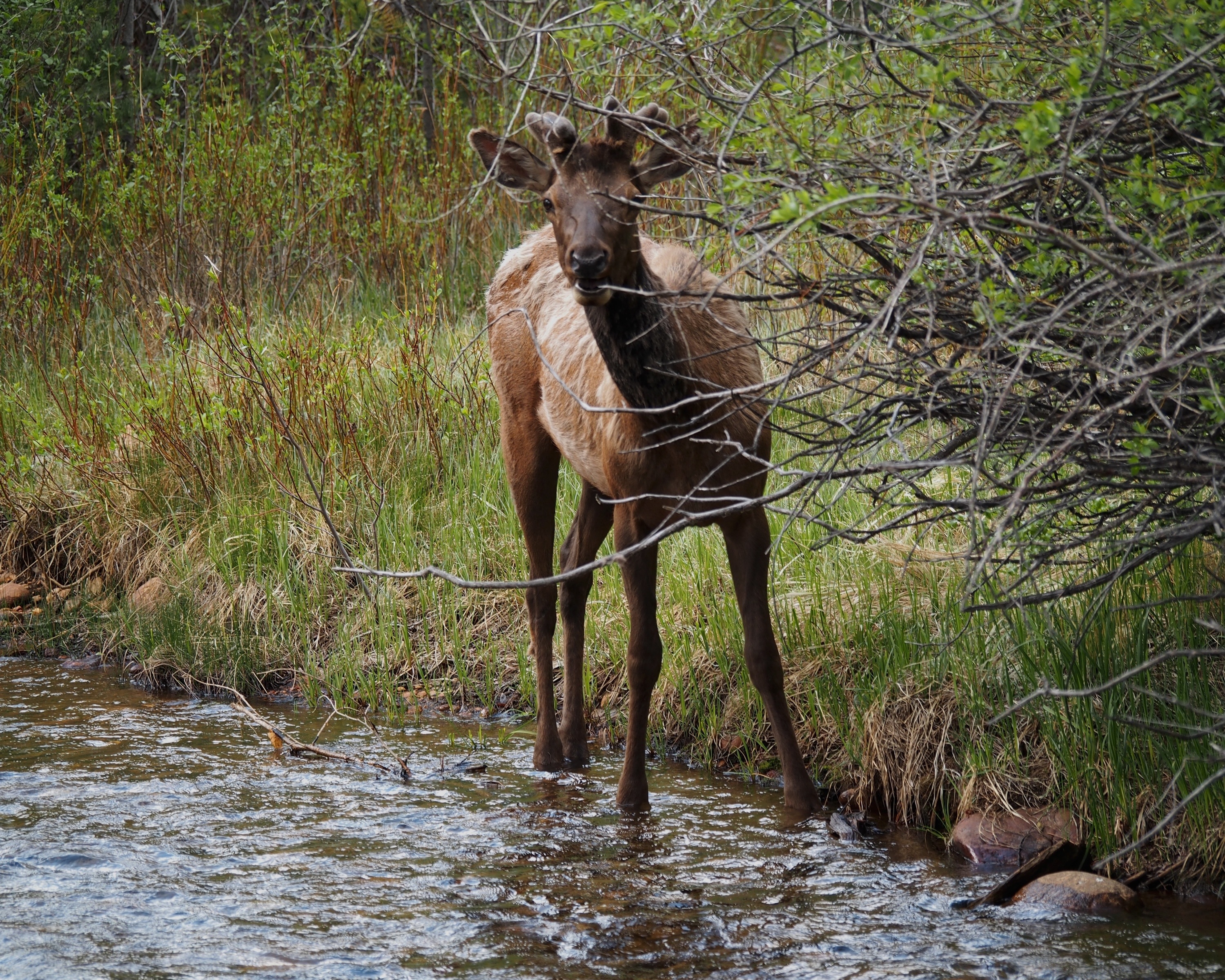
Chomp, chomp, enjoying brunch at my favorite eatery…

Can’t I eat my meal in peace?

What are you looking at?

Do I need to call security?
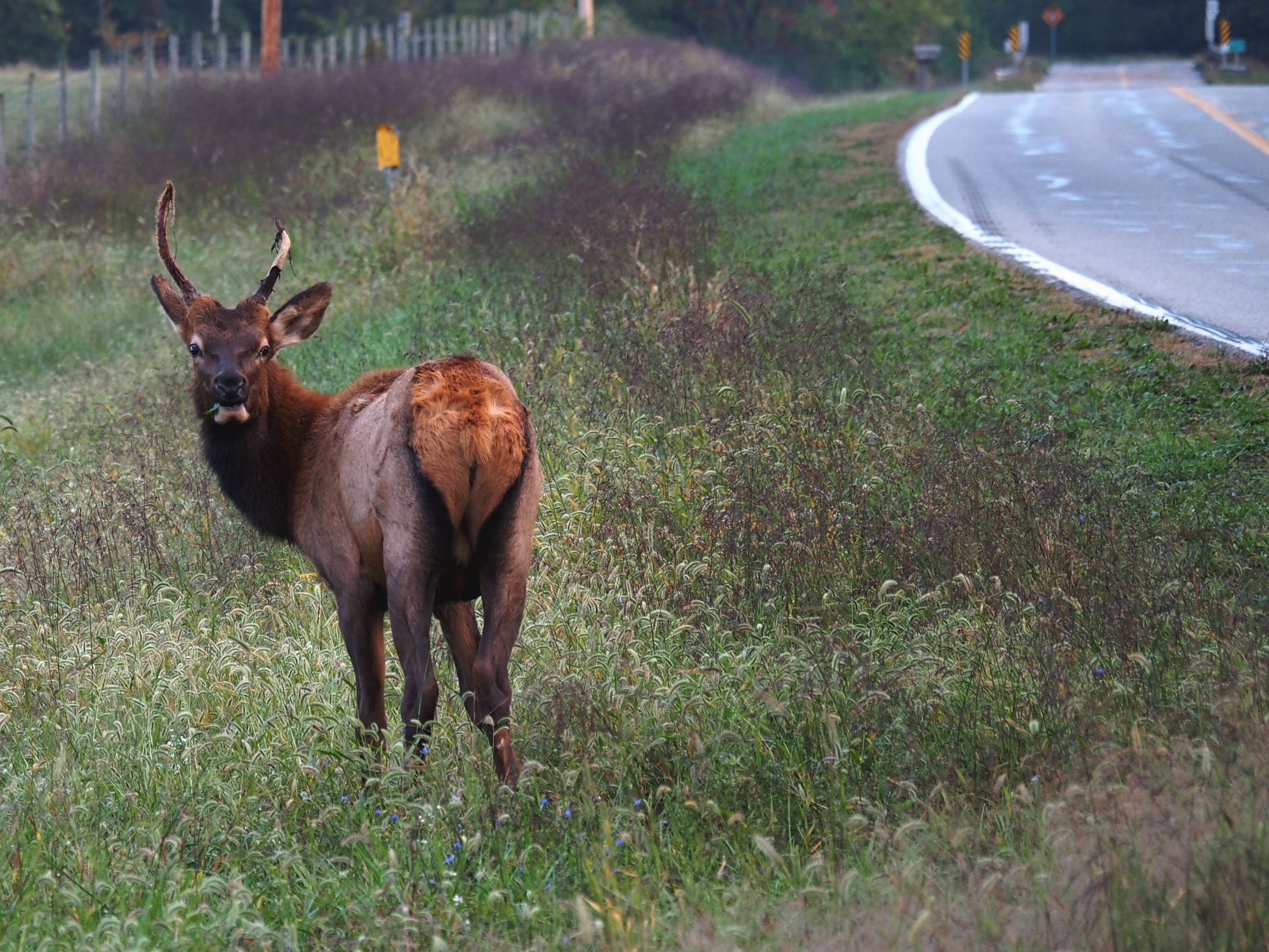
I’m outta here!

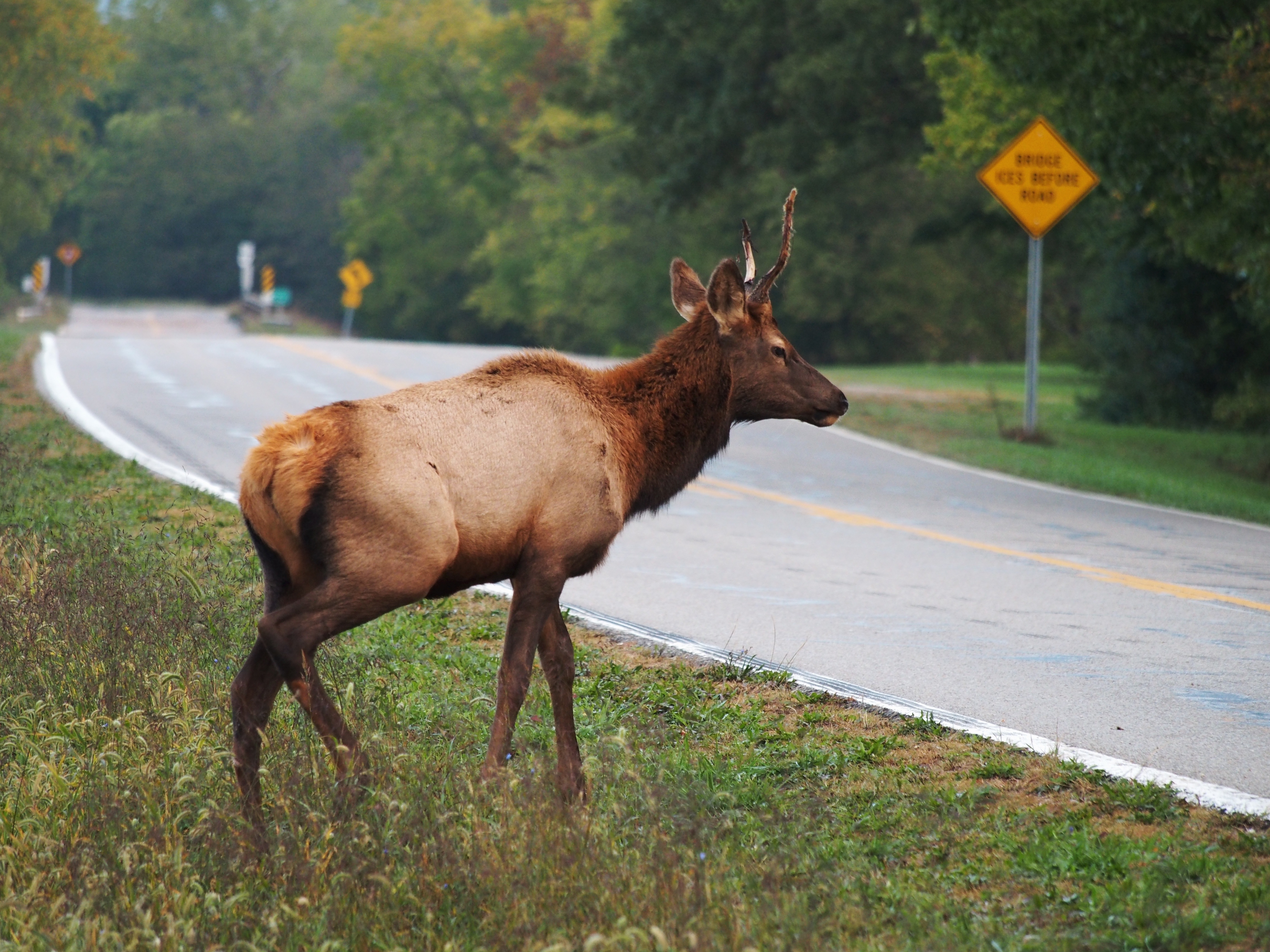

Why did the elk cross the road? To escape the paparazzi.
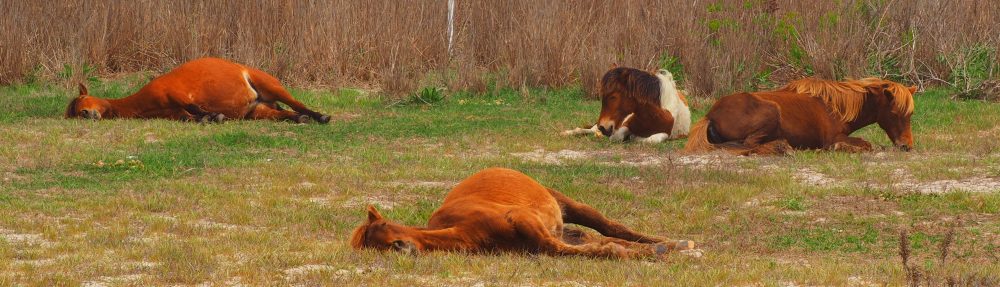
Chomp, chomp, enjoying brunch at my favorite eatery…
Can’t I eat my meal in peace?
What are you looking at?
Do I need to call security?
I’m outta here!
Why did the elk cross the road? To escape the paparazzi.
I had an artist reception a couple of months ago and someone asked me what inspires me.
I know what I like to shoot, what draws my eye – but the things that inspire me are connections. It doesn’t matter if I’m shooting my Grandpa’s car keys, an antique car, a famous place, or an ostrich – I’m looking to make it personal. I’m looking for the shot that connects the viewer with the subject. Sometimes I succeed – sometimes, not so much. Connection is always the goal for me.
Here are some shots I’ve taken this year where the subject has chosen to make a connection with me. It always amazes me when this happens. If you’ve ever tried to get a decent shot of your dog, you know how hard it can be. It’s nothing you can plan for, but when it happens…


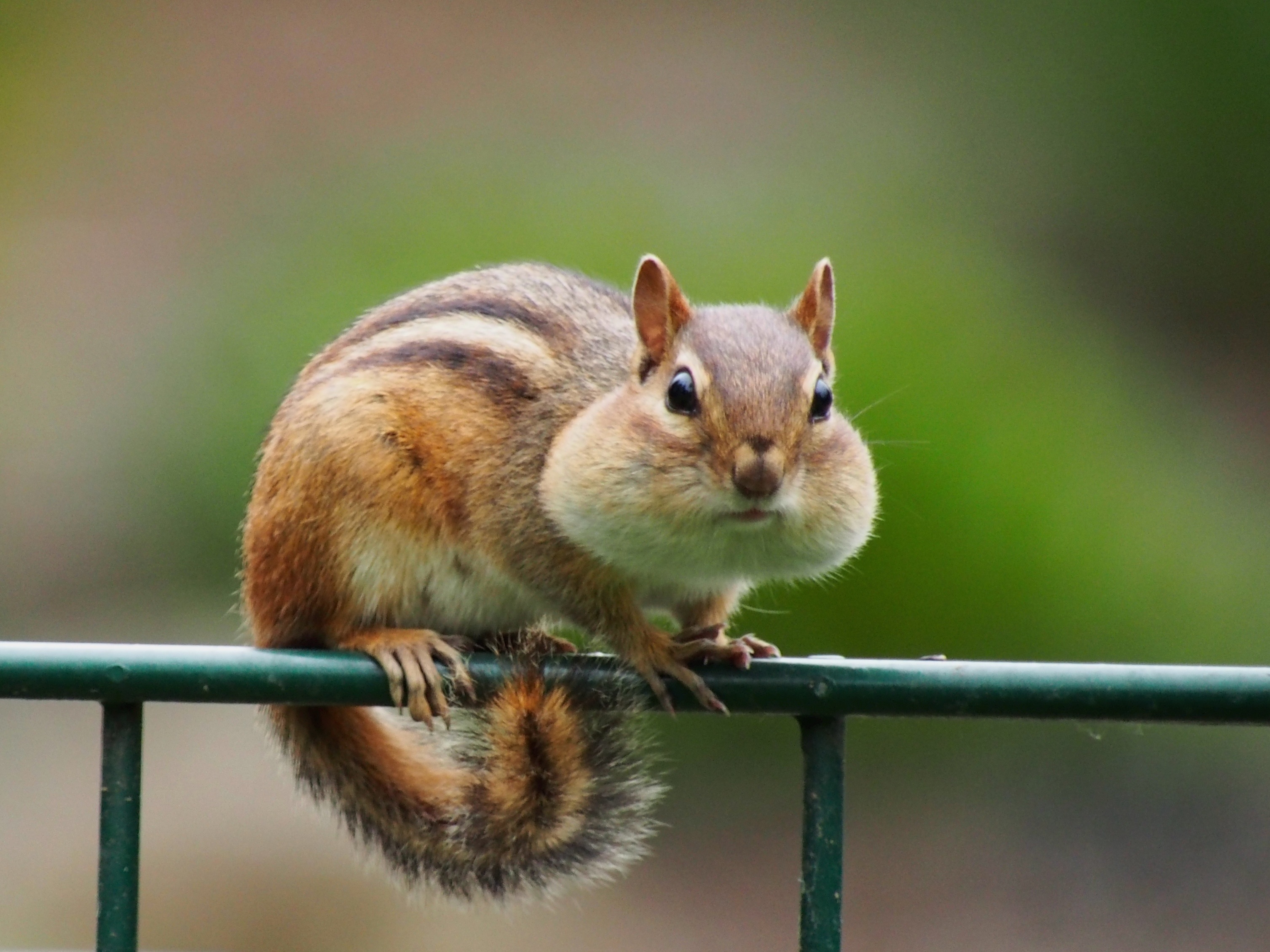
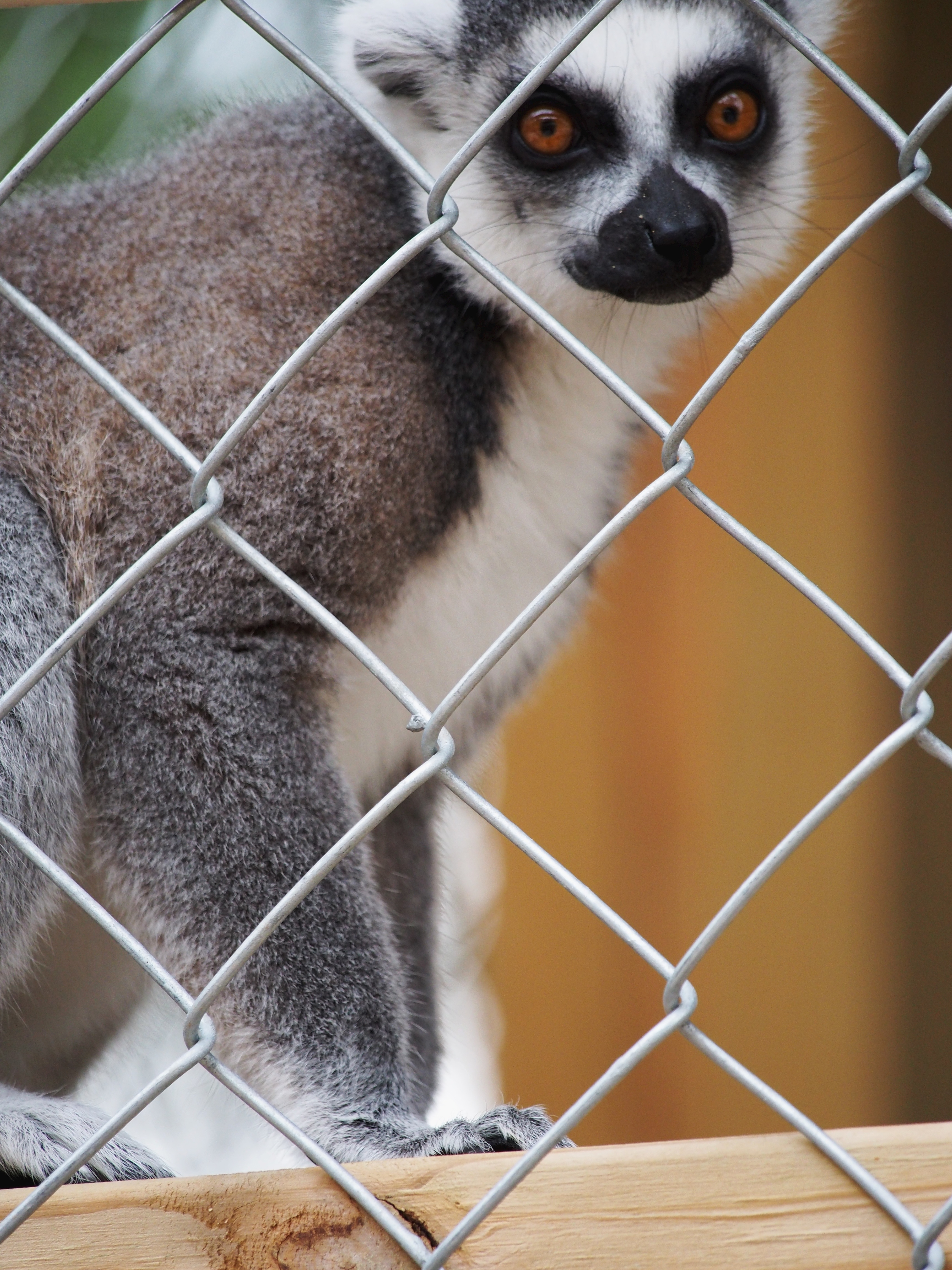
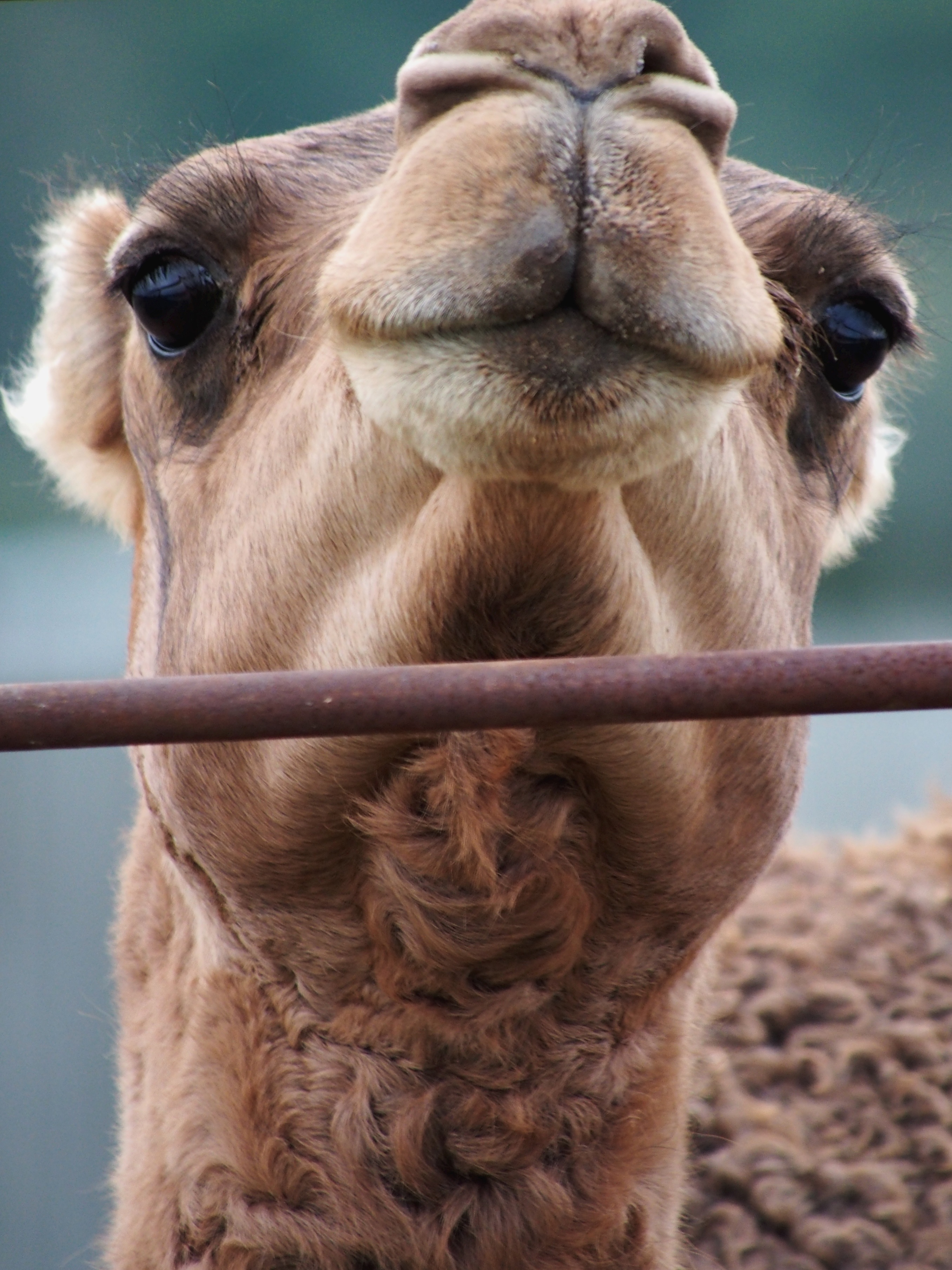


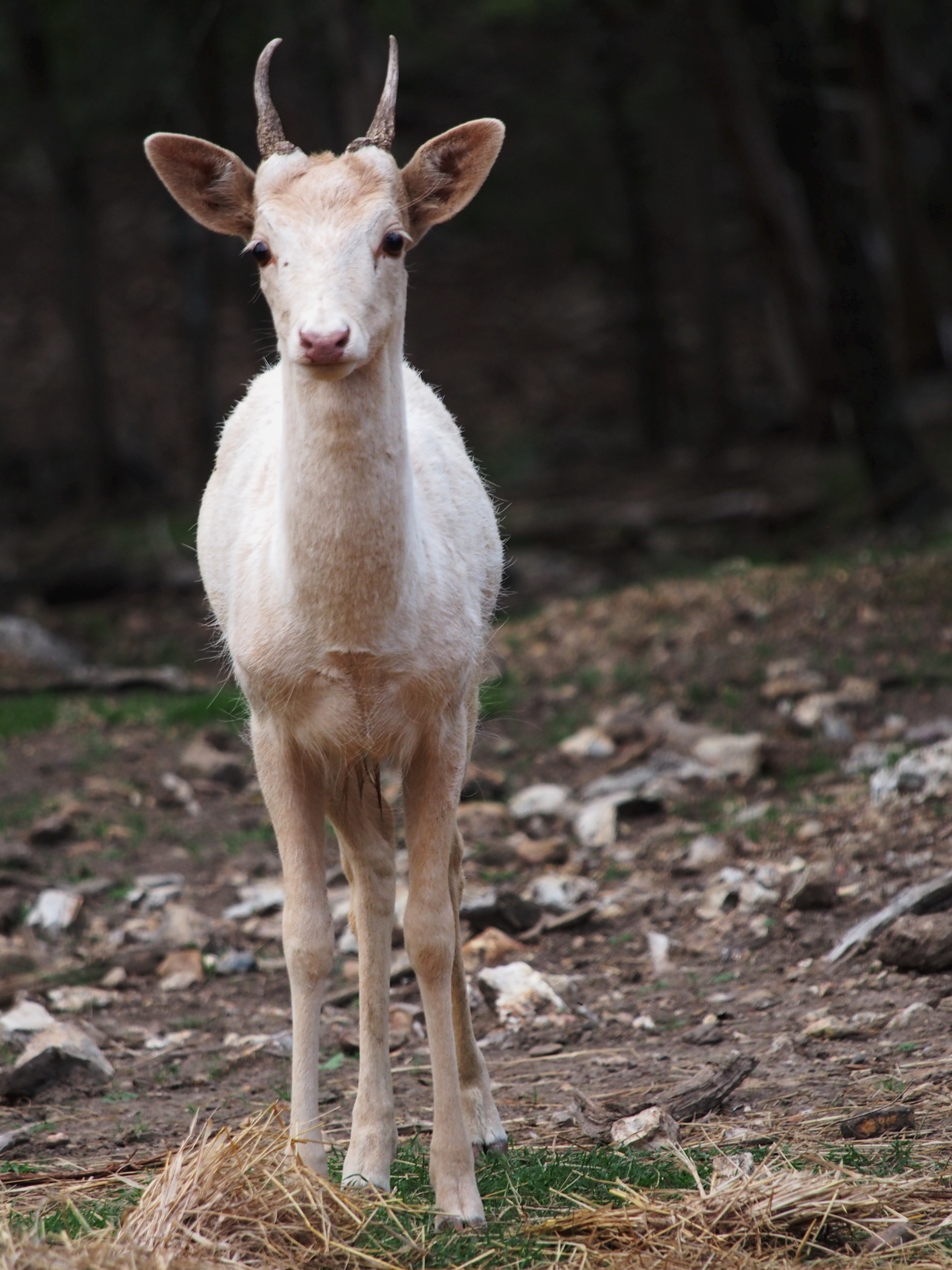

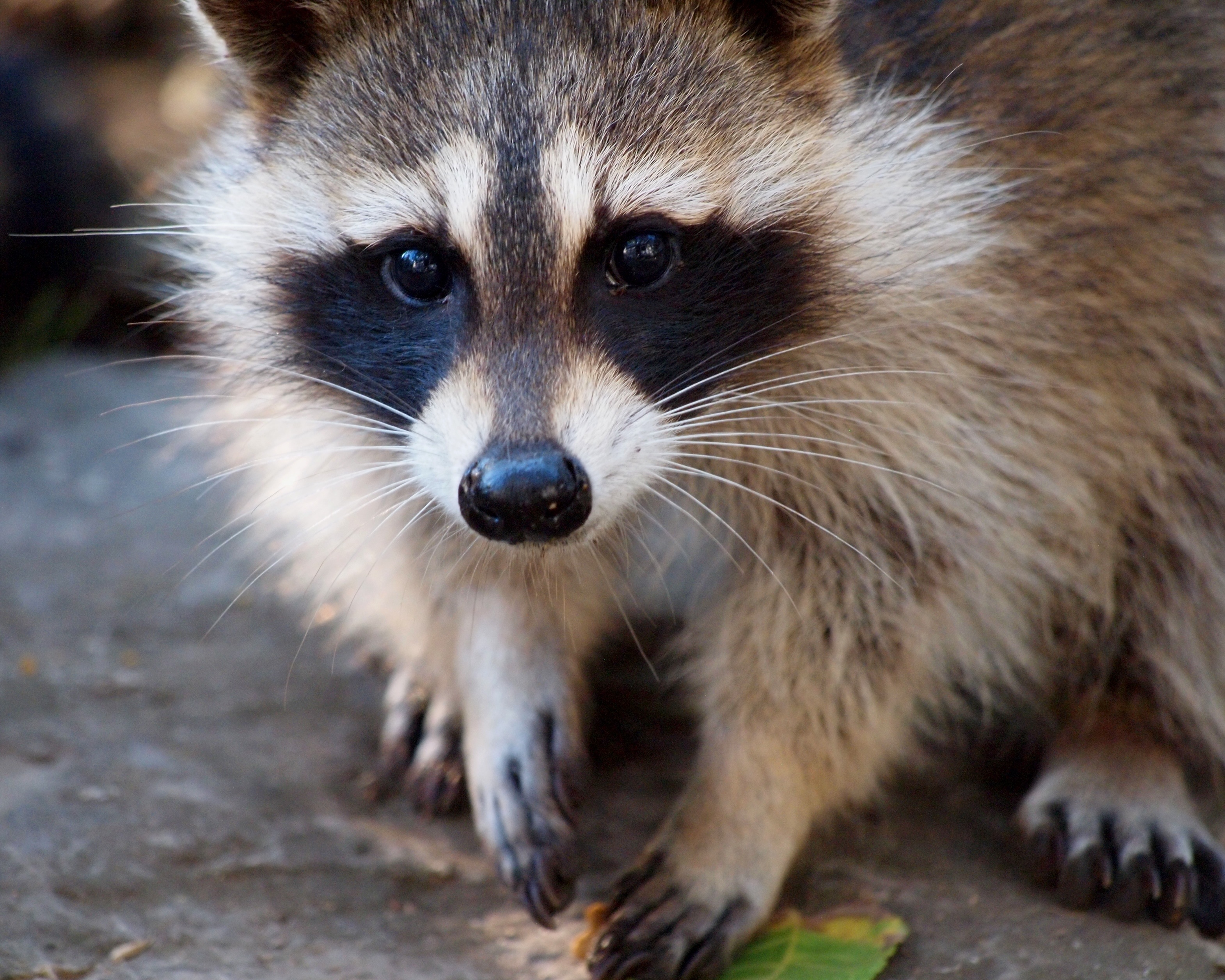
These may not be my best shots, but they are my some of best experiences shooting. Having a wild animal pause and look you in the eye is pretty amazing even if you don’t have a camera with you. I’ve noticed that so many animals are curious, maybe as curious as I am about them.
I’ve always seen the zebra as the epitome of graphic design – it has all the elements – line value, diagonals, white space…

I was a Fine Art major in college. My emphasis was on life drawing. We would spend hours doing “contour drawings” where we would draw to actual contours of a model, never lifting the pencil from the paper. The idea was that when completed the dimensional shape would be evident in your drawing. Sometimes it was successful, sometimes not so much.

I experimented with sumi brushes making the lines thick and thin in order to show depth along with contour and I was a bit more successful with that method in creating something that was closer to being art and not just an exercise.
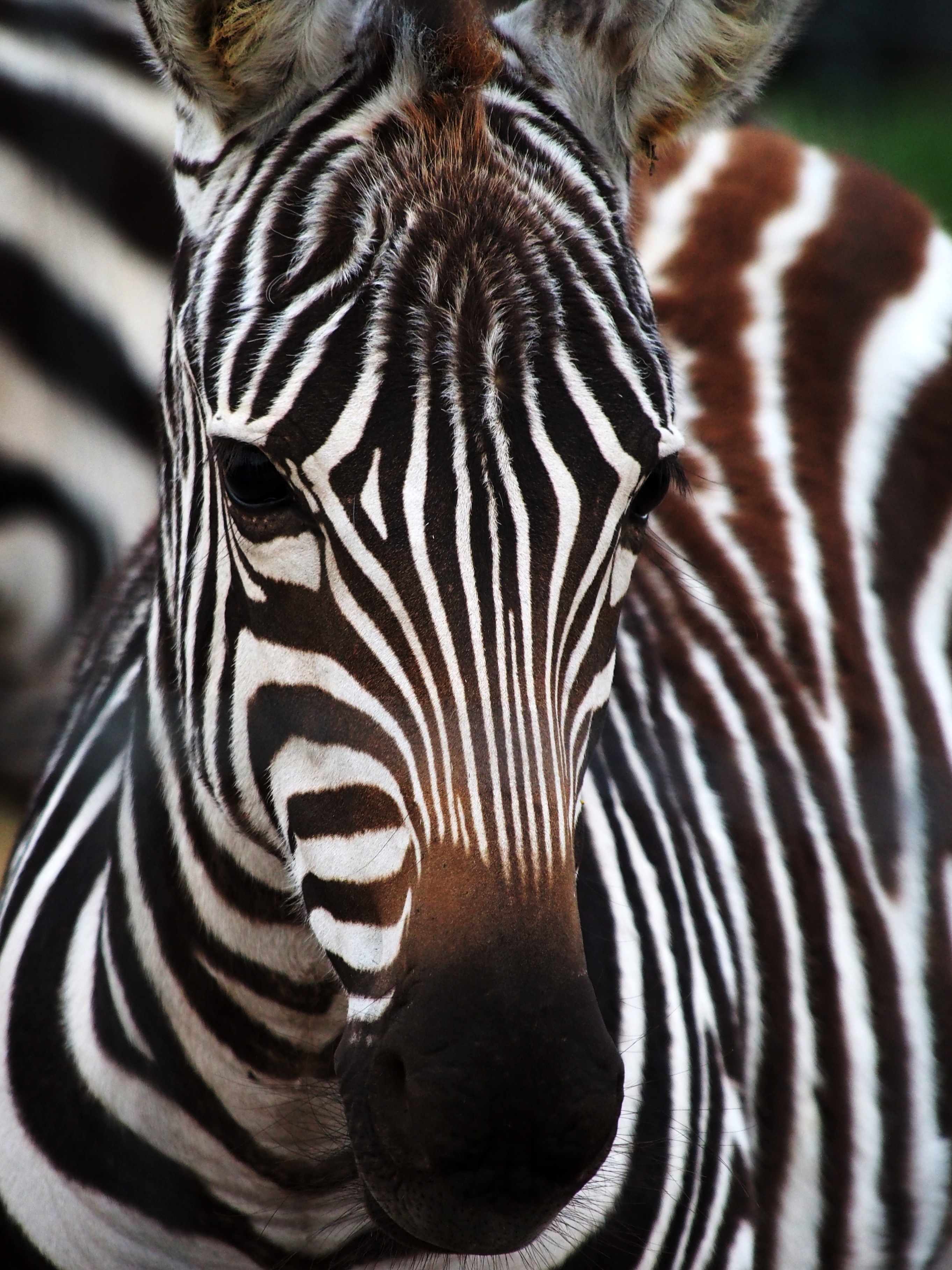
None of my experiments even approached the success of the lines of the Zebra – curving over the curved parts, widening over the wider parts – unfurling like the waves of a striped flag in the breeze.

It’s the ultimate use of negative space – show just the white on black and it’s all there, show the reverse and its design is just as successful.

How amazing is it that these stripes serve as camouflage in an environment made up of golds and browns. A brown and gold striped horse on the African plains would have been just as successful, yet this bold design works just fine in the presence of color blind predators.
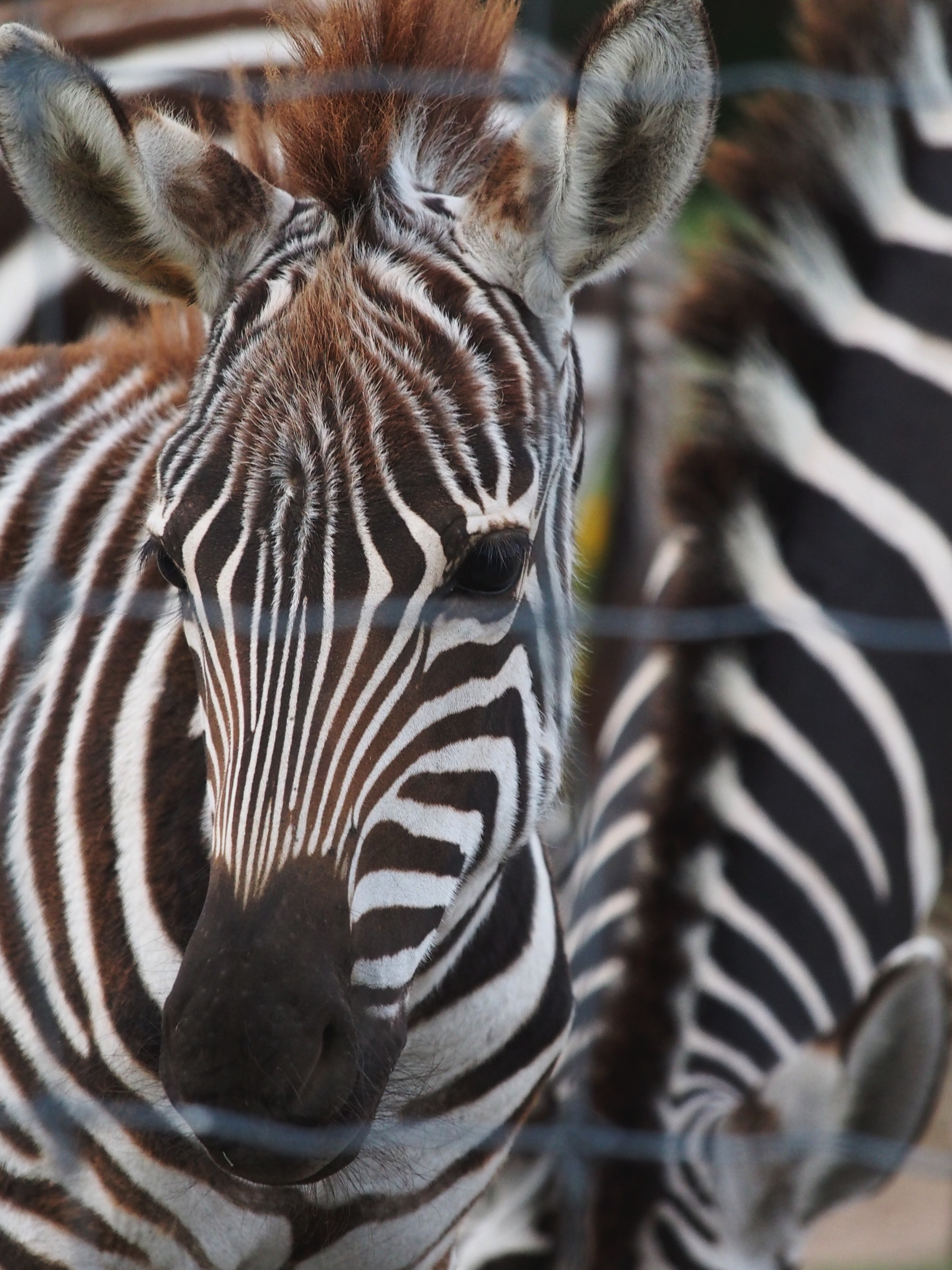
Super-clean lines, completely functional design, bold styling – just perfect.
These Grant’s Zebras are a part of the herd living at the Promised Land Zoo just north of Eureka Springs, Arkansas.
Yesterday on a lark I decided to visit a local attraction called the Promised Land Zoo. I live near a tourist destination and its surrounded by attractions. Having grown up in the ultimate tourist destination, Las Vegas, I’m typically skeptical of attractions – but this one did not disappoint. It had a sweet petting zoo at the entrance followed by a driving tour that covered over 100 acres. Hundreds of animals graze in the open fields of the meadows below the highway entrance. I was especially taken with the fallow deer.
Fallow deer are native to Eurasia and have been exported to every continent with the exception of Antarctica. They are relatively small – except for the older bucks they are about the size of a large goat.
There are 4 varieties of fallow deer. This guy is one of the common variety. He approached the driver’s side of my jeep, looked me in the eye…
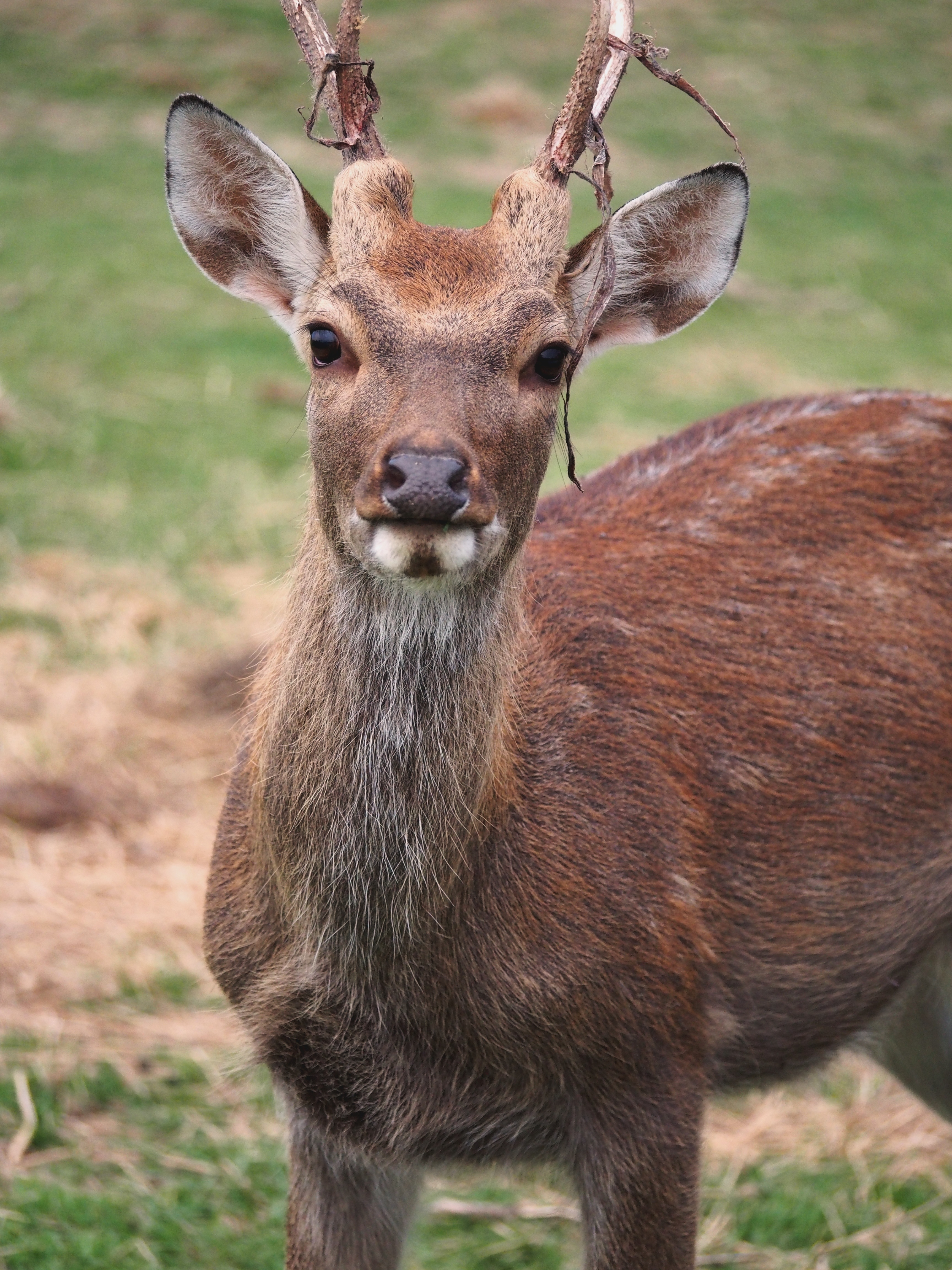
Then bowed and raised his head up high.

He bowed and raised his head over and over until we moved on.
It is said that the Romans imported fallow deer to Europe and the Normans brought them to Britain.
These are the menil variety, they have spots like the fawns of the American whitetail all summer long no matter their age. The white spots mimic the play of light through the trees in the woods. These make up the largest portion of the herd at the zoo.
These young fawns seemed to have a natural curiosity about the jeep. They did not rush over towards the jeep, but they did start wandering my way each time I stopped the vehicle.


The young bucks have simple spikes for the first couple of years.


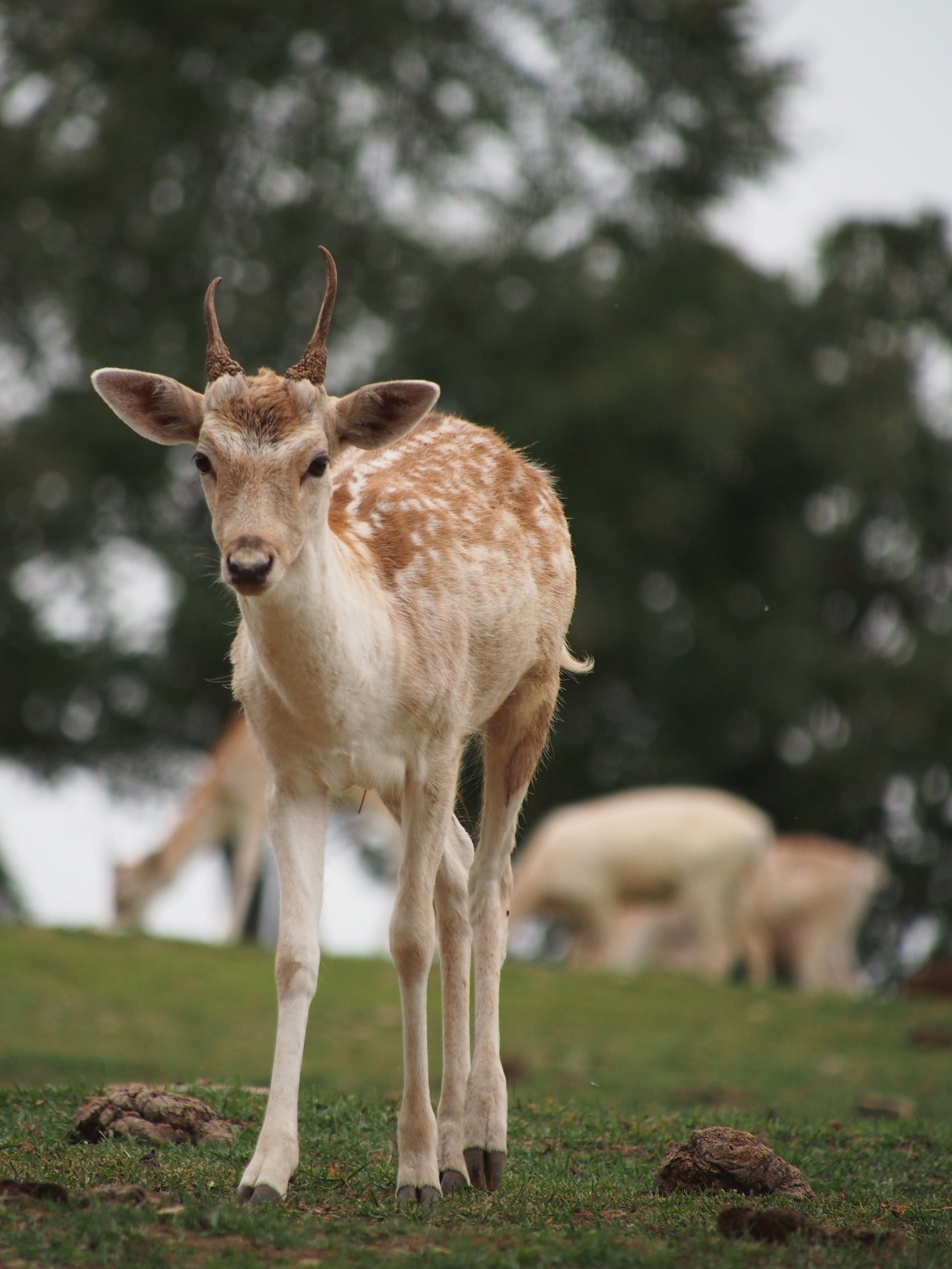
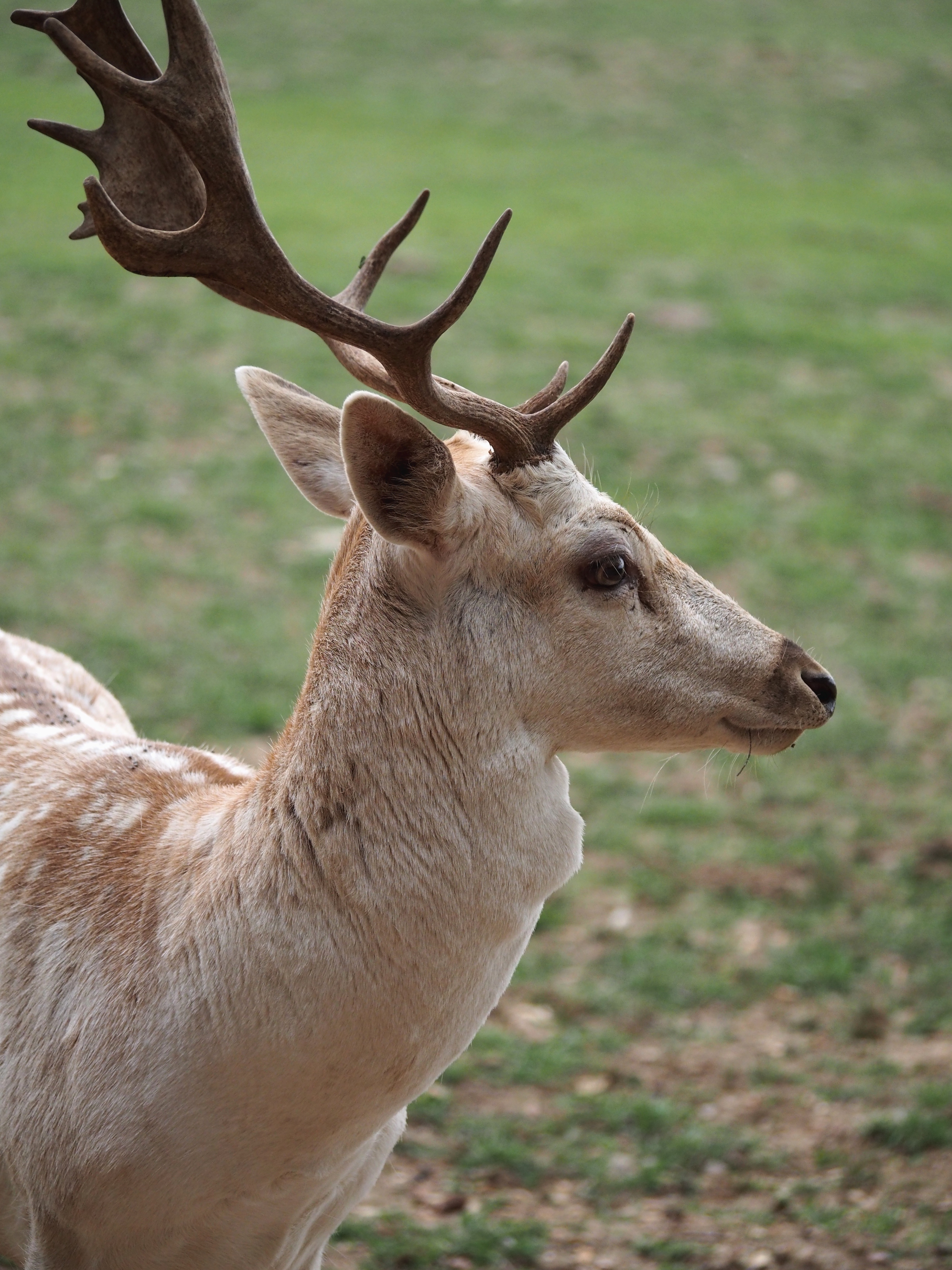
After their third year they develop palmate antlers similar to those on caribou.


All of the adult males seem to have this same curved neck that resembles an Adam’s apple.
There are historic herds of fallow deer in Sweden that date back to the 1600’s.
This buck is of the menalistic variety. He approached the passenger side eagerly. He stopped short about 6 feet from the jeep and started to throw poses my way.

The approach…

The stare down…

The profile…

Turning on the charm.
The fourth variety is leucistic – a white variety that is not albino.
Seeing this buck lying on the grass it occurred to me that these deer look like something out of a renaissance etching or coat of arms. They are small and approachable, but they are almost regal. Large piercing eyes, huge antlers, and a dramatic and curvy shape. To my American eye they seem just a bit exotic.

I read last night that they are easily tamed…

Driving through this herd I would not call them tame, but they are quite curious…
I was in their territory, so they walked over to check me out…

And calmly looked me over.
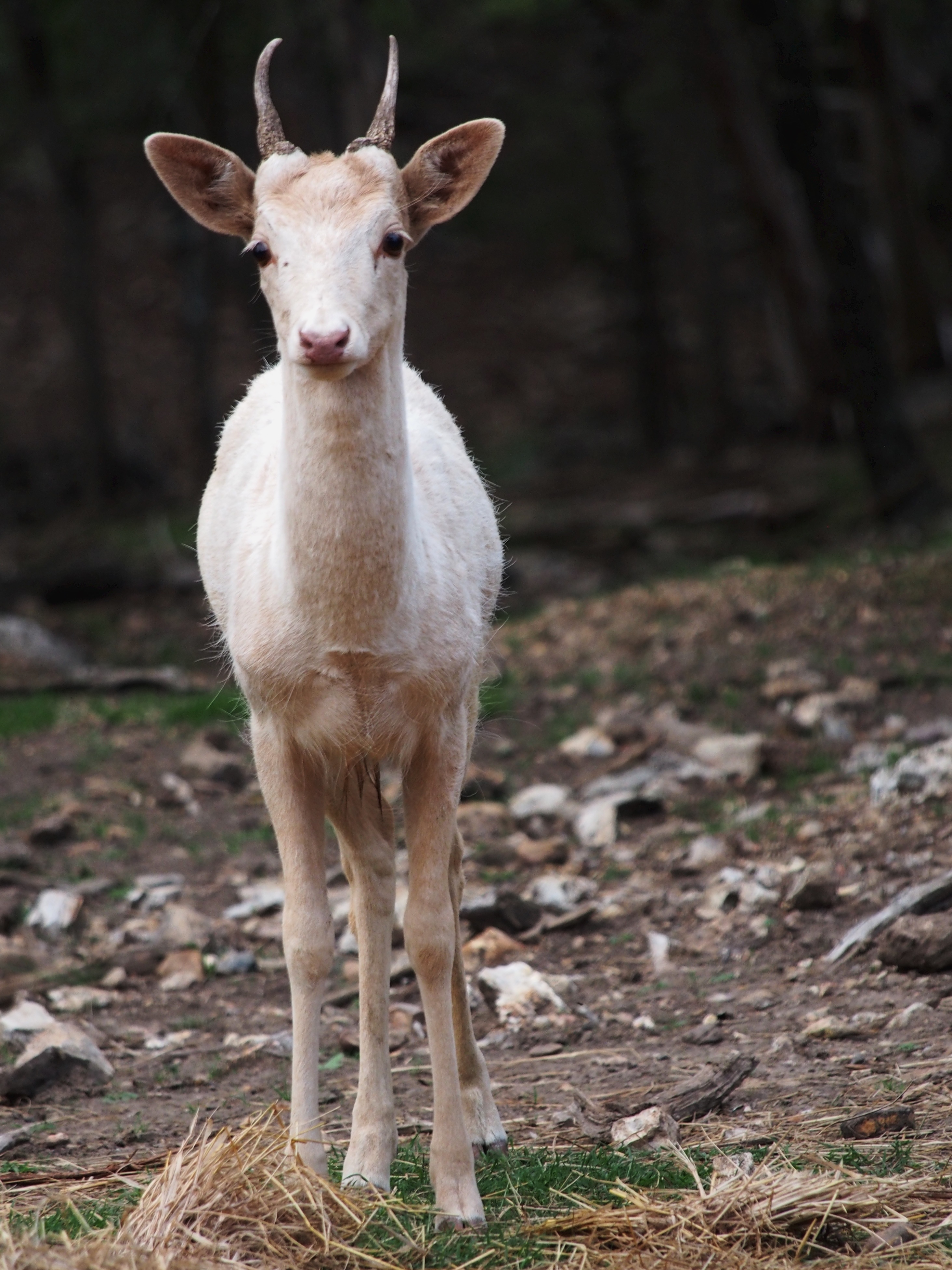
There is something sweet about their nature. They don’t seem to be on alert like the local white tails.

This is a nursing fawn in the petting area. She is bottle fed and is incredibly tame….

When she grows up she will rejoin the herd in the Promised Land.
I’m on a plane flying home from a business trip to Michigan. The signs of the fall are already apparent there and the colors are in the early stages of changing. Before I left I saw a couple of trees just starting the transition. After the warmest summer that the Ozarks has ever experienced there were concerns that there would be no color at all, but the gentle rains after Isaac may have saved the season.
Although Isaac brought less rain and wind than anticipate, he also brought my very first macro photo ops after a long, brown summer,

I have no idea what this is – it was on the ground and it wasn’t brown.
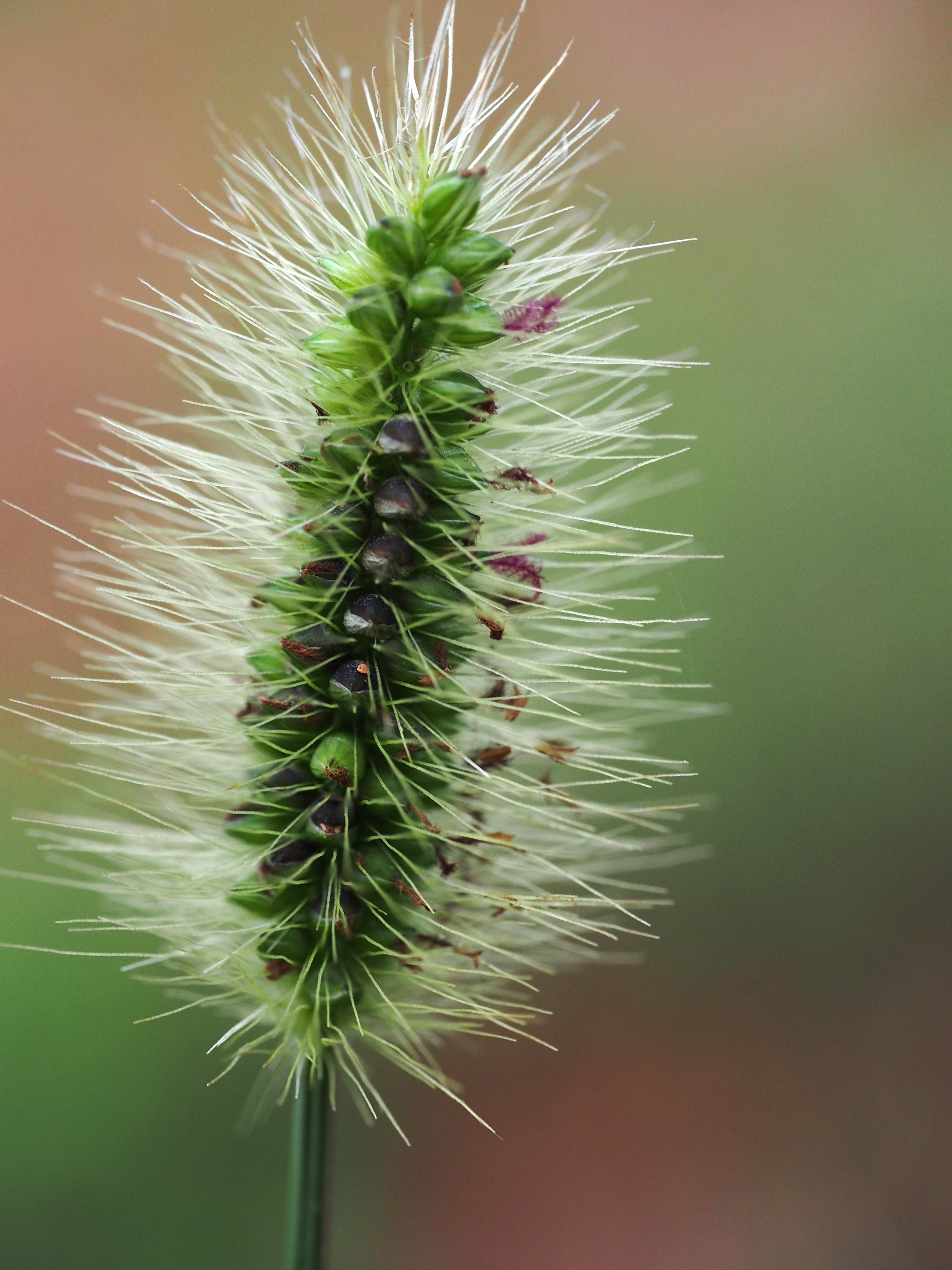
In a pinch, even a greened up weed will suffice as inspiration.
In between showers I would pop outside and look to see what had changed. I love rain or dewdrops on leaves.
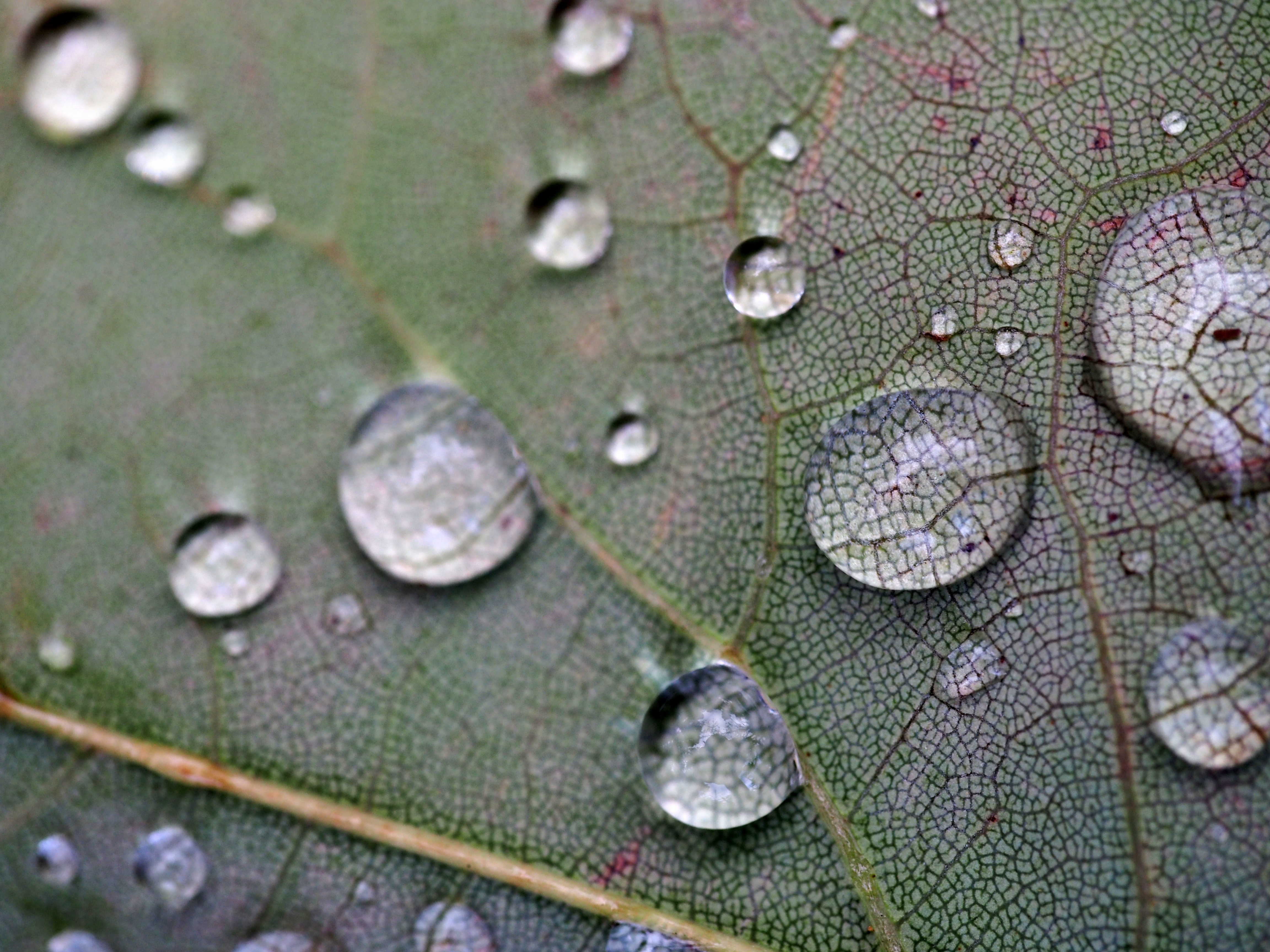
If you look very closely and let your imagination fill in the details, I am visible reflected in the bottom center water drop. I’m gonna have to try to do that for real soon 🙂
On July 4th I posted a lament to cancelled fireworks and focused on some lilies that seemed to thrive in a hidden garden at my neighbor’s place. As promised the lilies have gone to seed and the seeds look just like blackberries.
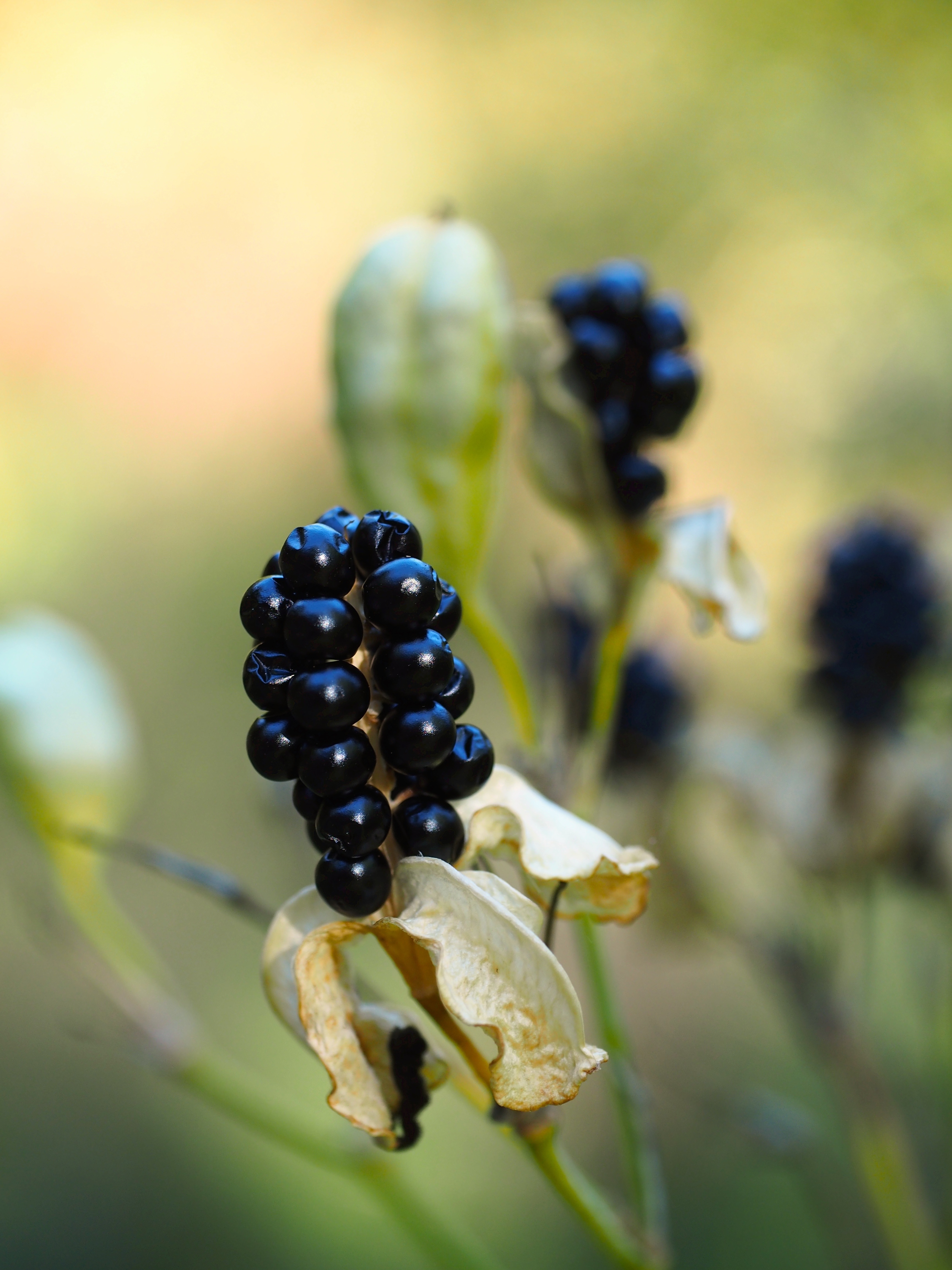
This subterfuge confuses birds to pick them and drop them elsewhere once they discover that they are not tasty berries. I need them to carry some my way.
Another lily that peaked after Isaac was the local favorite, the Naked Lady – not sure why they call it that, but I got a chance to shoot some macro between showers.

Before the leaves change colors, a lot of the local wildlife gets a makeover for fall. This young fawn has lost her spots and is starting to go from a rusty brown to a more grey brown that matches the color of the barren winter trees. The tourists are also changing from motorcycles to minivans.

Even the cardinals are starting to spruce things up – This is one of the birds I posted images of a few weeks ago when he was impersonating a scraggly parrot. His transformation for fall is almost complete and he’s looking pretty dapper.

I don’t know what these are but they are gorgeous, I shot them at the Ponca Elk Education Center last weekend.


The Hummers at my place are fattening up and getting a bit cocky with me. This guy is roosting in my crepe myrtle, totally unconcerned with my proximity to him

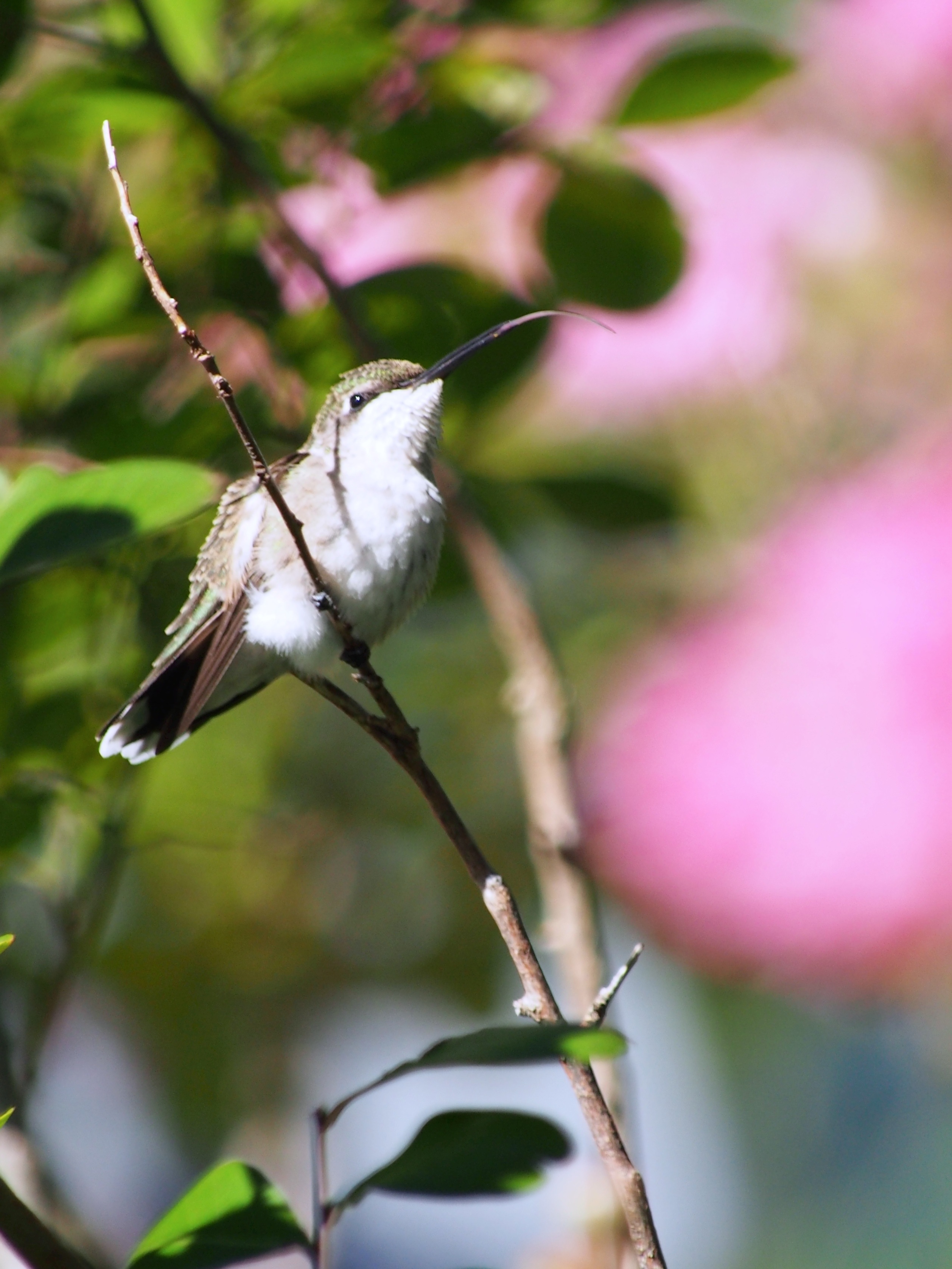
In fact – I get a raspberry from him – he’s taunting me, I just know it.
Even the rain doesn’t dissuade this guy from watching over what has become his own personal feeder.

Lest I live under the illusion that I am a hummingbird whisperer and that my birds have accepted me into the flock – here are a couple that I shot at the Ponca Elk Education Center.

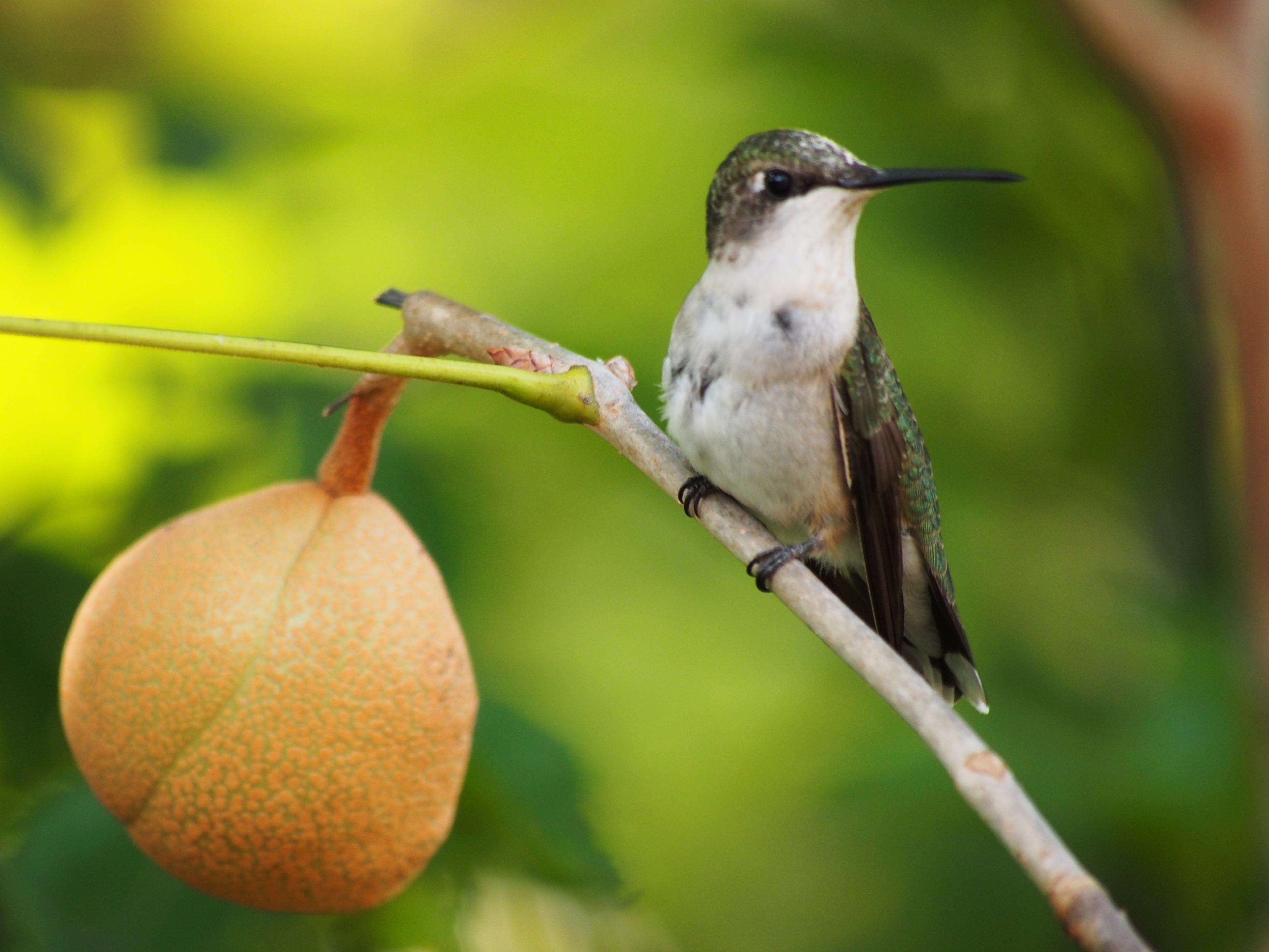
Apparently they are more concerned with stocking up on calories for the long journey south than they are with stalkers like me going in for the shot.
The color’s out there, and its about to explode – now is the time to take that camera absolutely everywhere! What’s the color like in your neck of the woods?
At the dawn of the 19th century, settlers in Arkansas found themselves in a land of amazing biodiversity. Vast herds of elk roamed the hills and hollows of the Ozarks. Those settlers saw the ancient forests as expendable resources. They harvested the timber and exported it to their neighbors to the north and they hunted the great eastern elk into extinction. By 1840 there were no elk left in the Ozarks.
For almost a century the sound of the bugle was gone from the meadows along the Buffalo River. In 1933 11 Rocky Mountain Elk were transplanted to Arkansas. They thrived in the same meadows where they had lived since before the coming of the white man. The Wapiti were once again roaming in those ancient meadows. Those 11 transplanted elk grew into a sustainable herd of over 200 animals.
By 1955 the elk had completely disappeared once again. The destruction of their habitat and poaching lead to the complete devastation of the restored herd.
In 1981 the Arkansas Game and Fish Commission attempted a second restoration. Over the next 4 years 112 elk were gradually transplanted into Newton County along the banks of the Buffalo.
Today a healthy and monitored herd of over 500 populate 5 counties. Almost a hundred live in the Boxley Valley alone.
Here are some shots I took this weekend of bulls in Boxley Valley, near the Buffalo River.
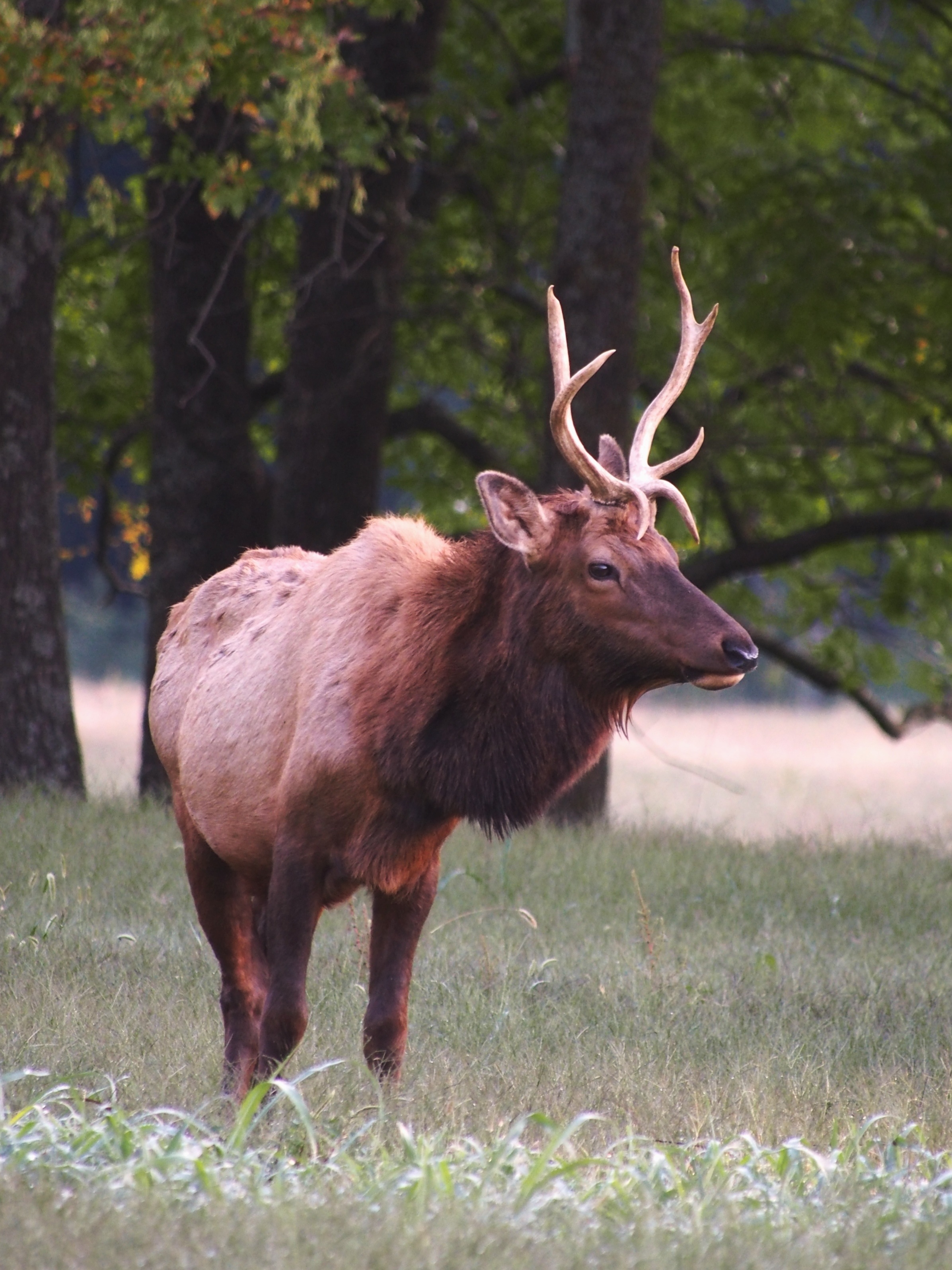
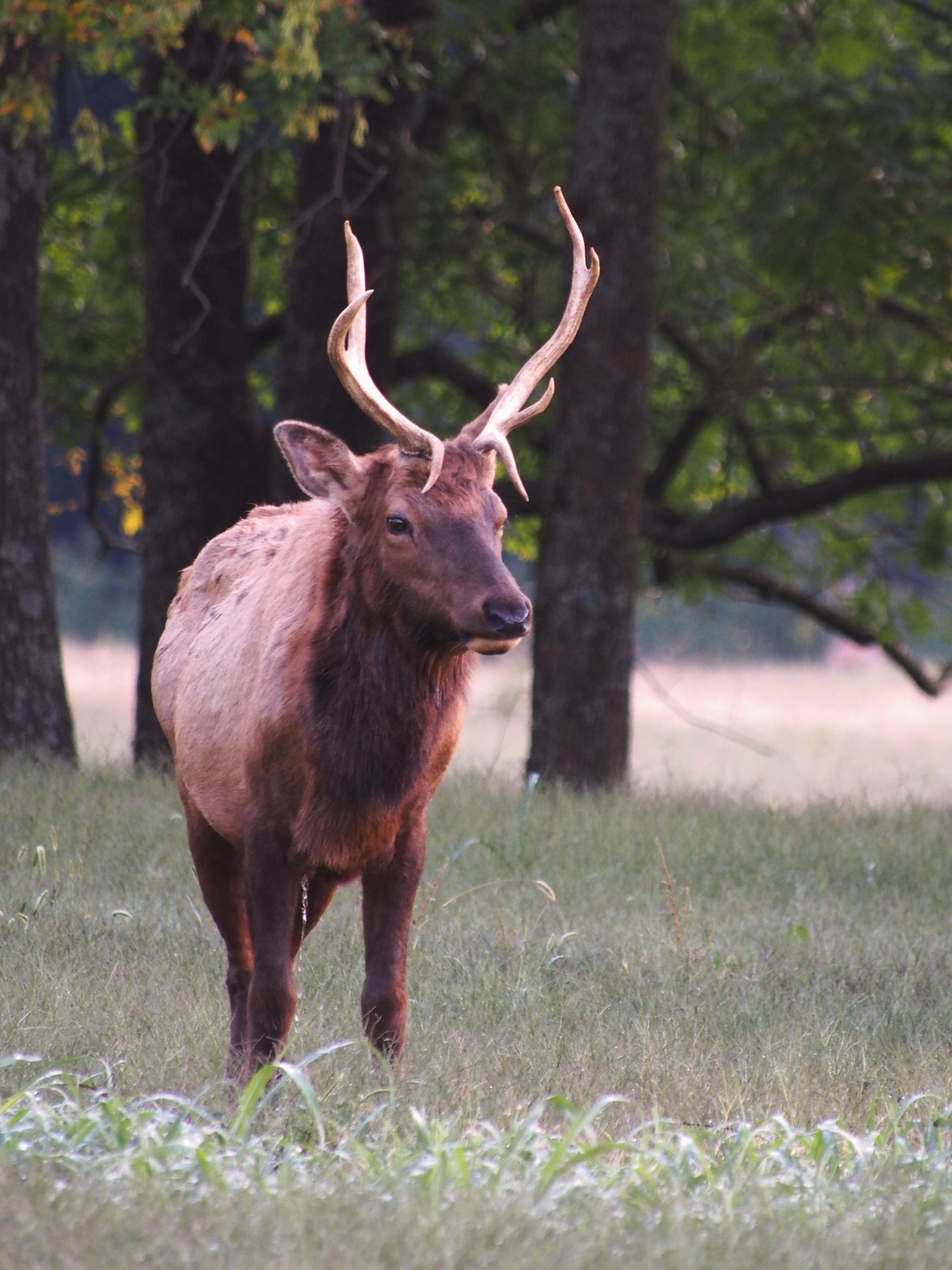
This is George – at least that’s what I call him. I have seen him in this same spot before. His antlers are a bit crooked, but they look better than they did last year. Bulls shed their antlers every winter so this years growth looks a bit more symmetrical that they were when I saw him last. He also is a bit knock kneed on his rear legs. He seems to like it here in front of the creek. He grazes and poses for the early morning photogs and spotters who fill the valley. From the look of his antlers I would guess that he is 3-4 years old.
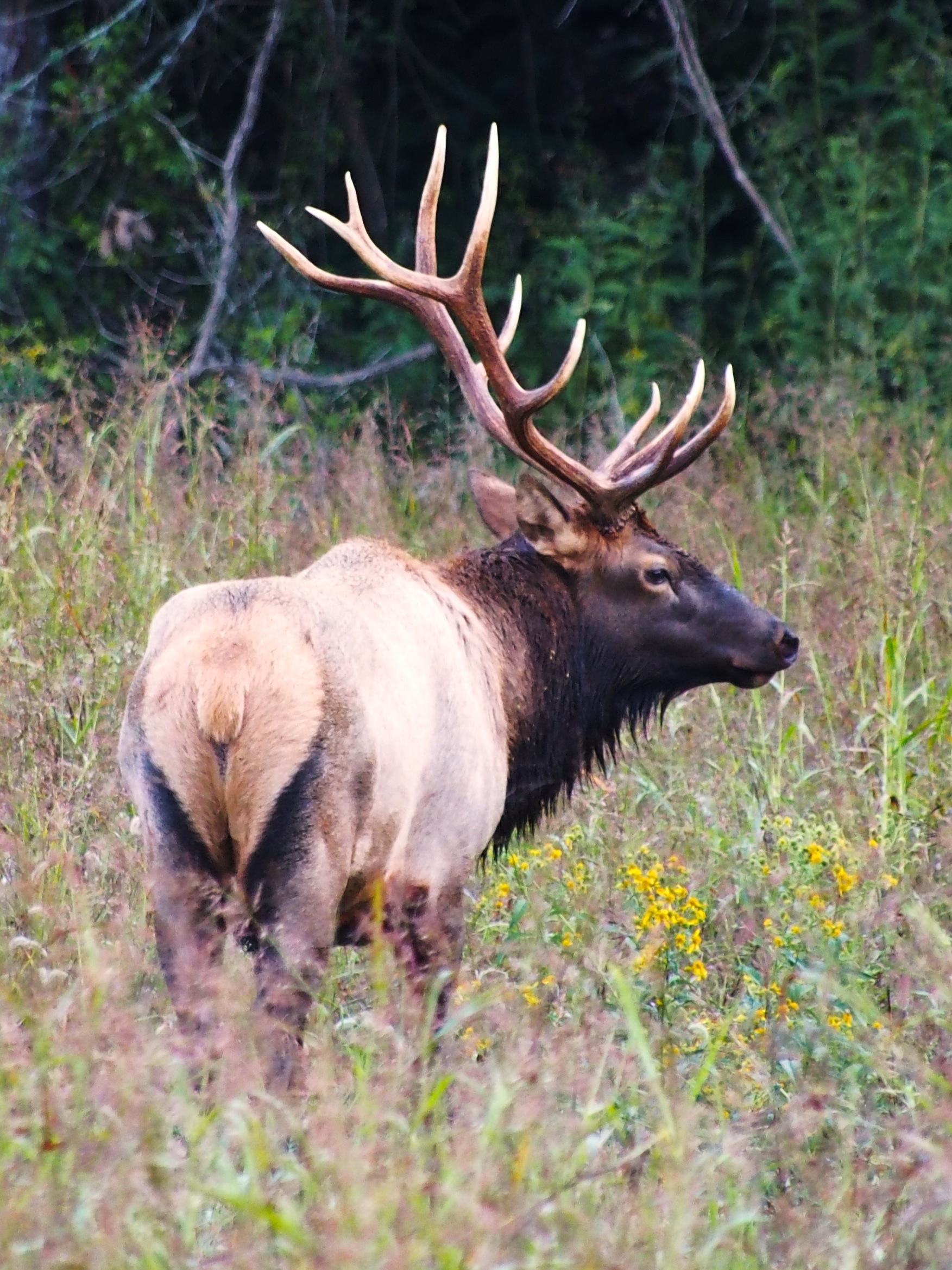
This is a great old fellow. He is simply enormous, but he seems to lack the bulk of a younger bull. Most bulls live about 6 years, the oldest known bull in Arkansas was 15. Their antlers start to decline in size around 10 or 12 years of age, so I’m guessing he’s somewhere north of 10.
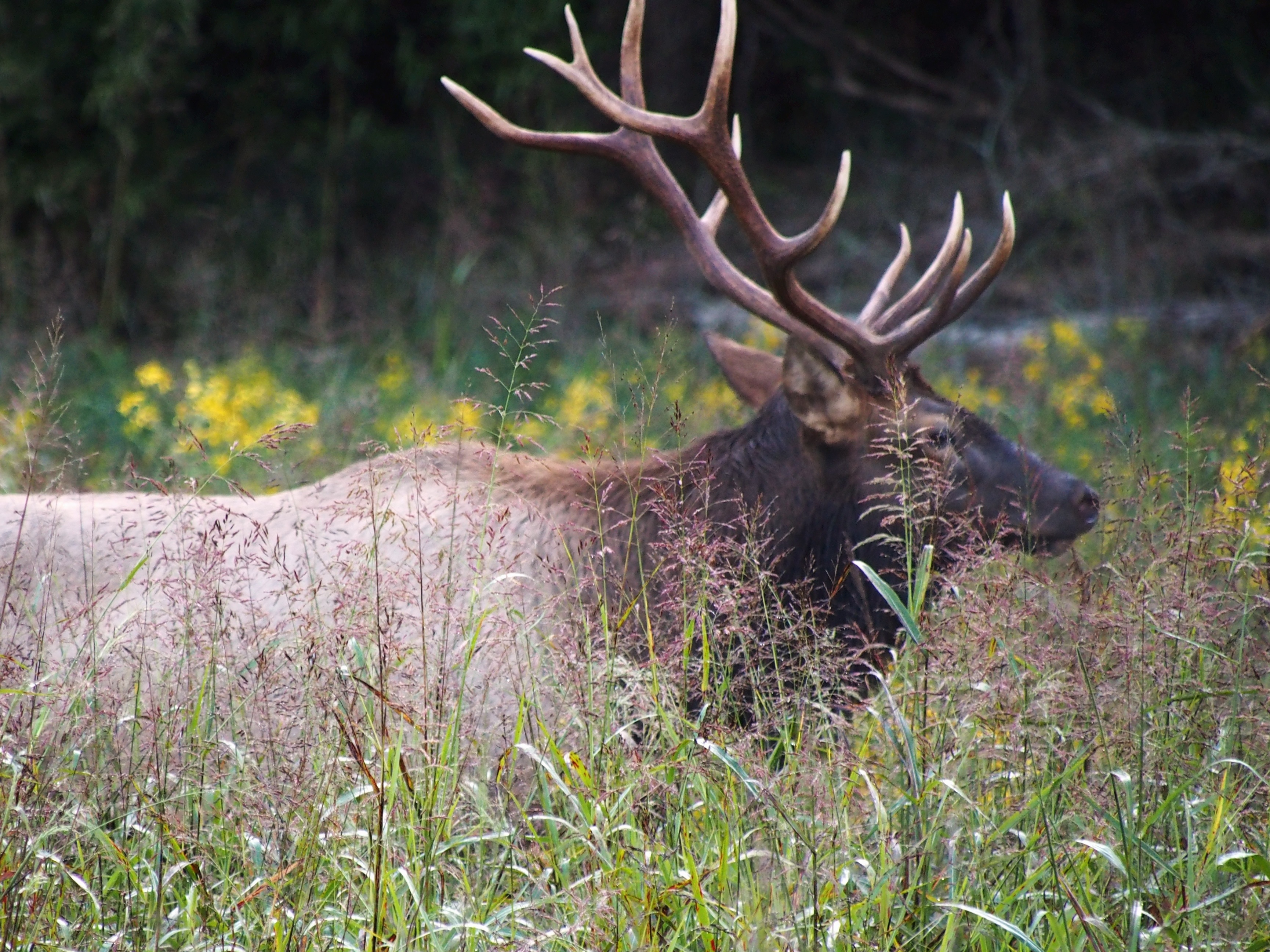
He’s over 5 feet tall at the shoulders so the depth of the grass in this meadow is pretty amazing, almost like it was designed to feed animals of this size.
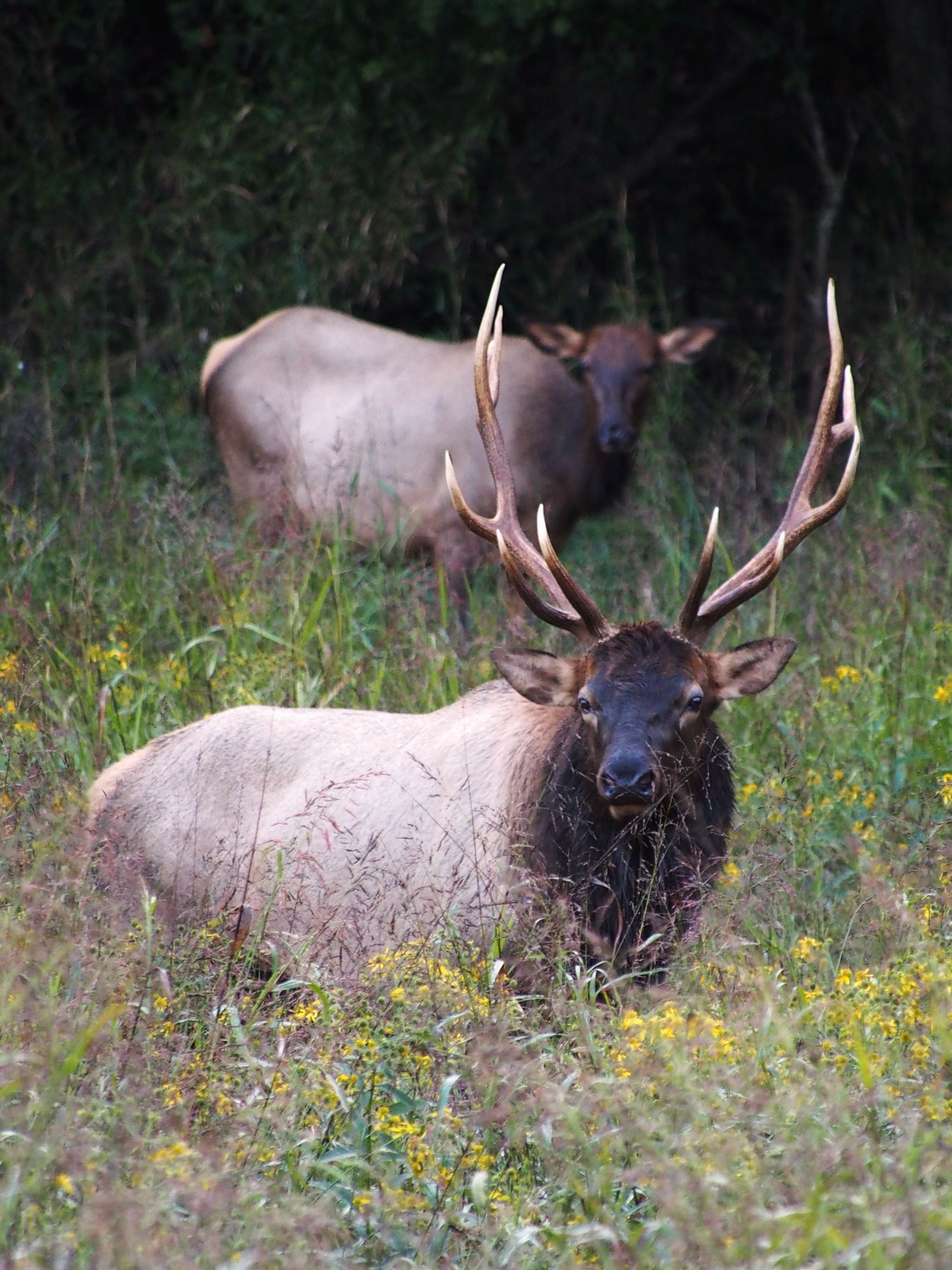
He had three females in his harem. The cow behind him had wandered off so he circled around her and guided her back to a safe spot near the treeline.
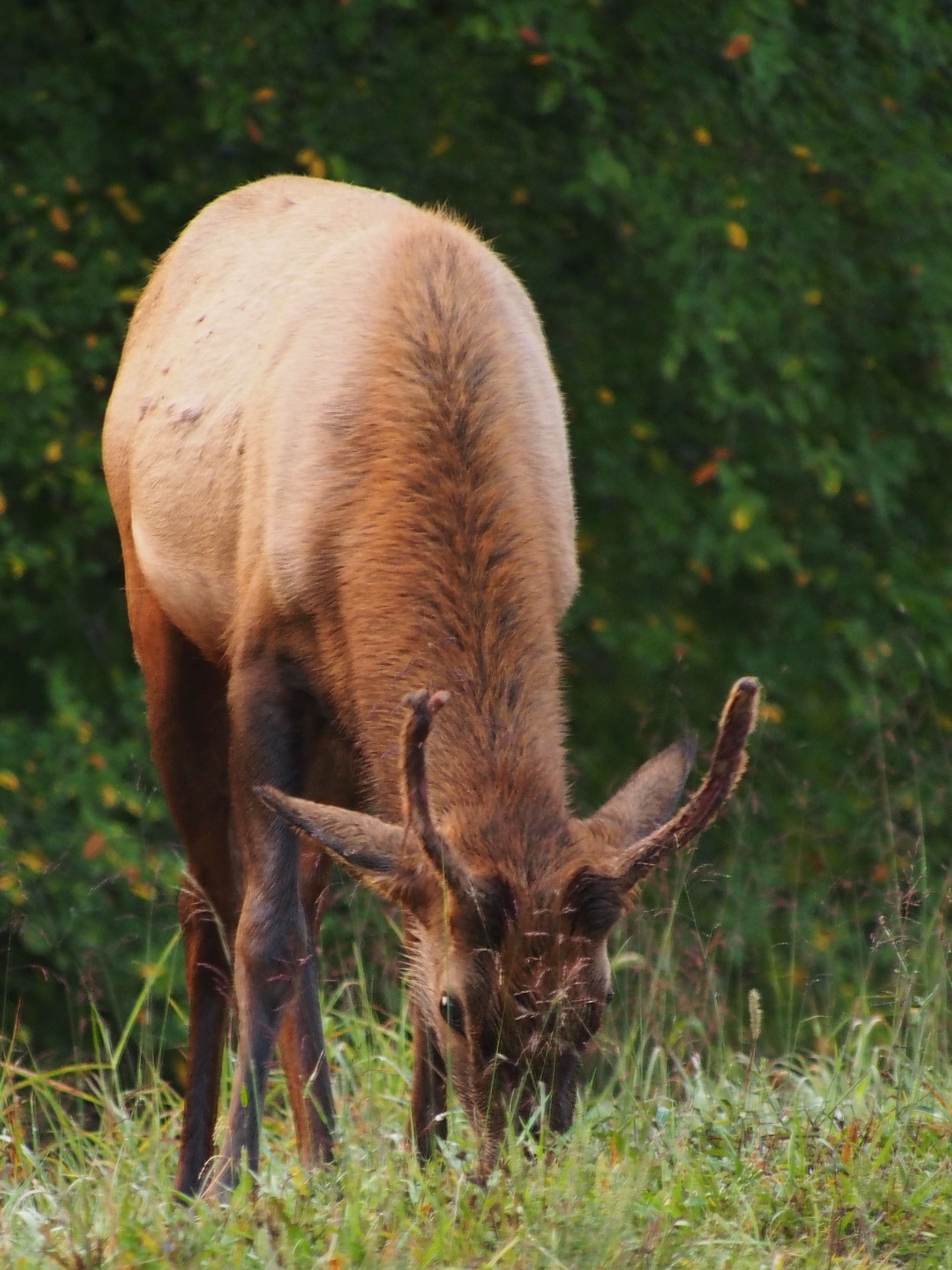
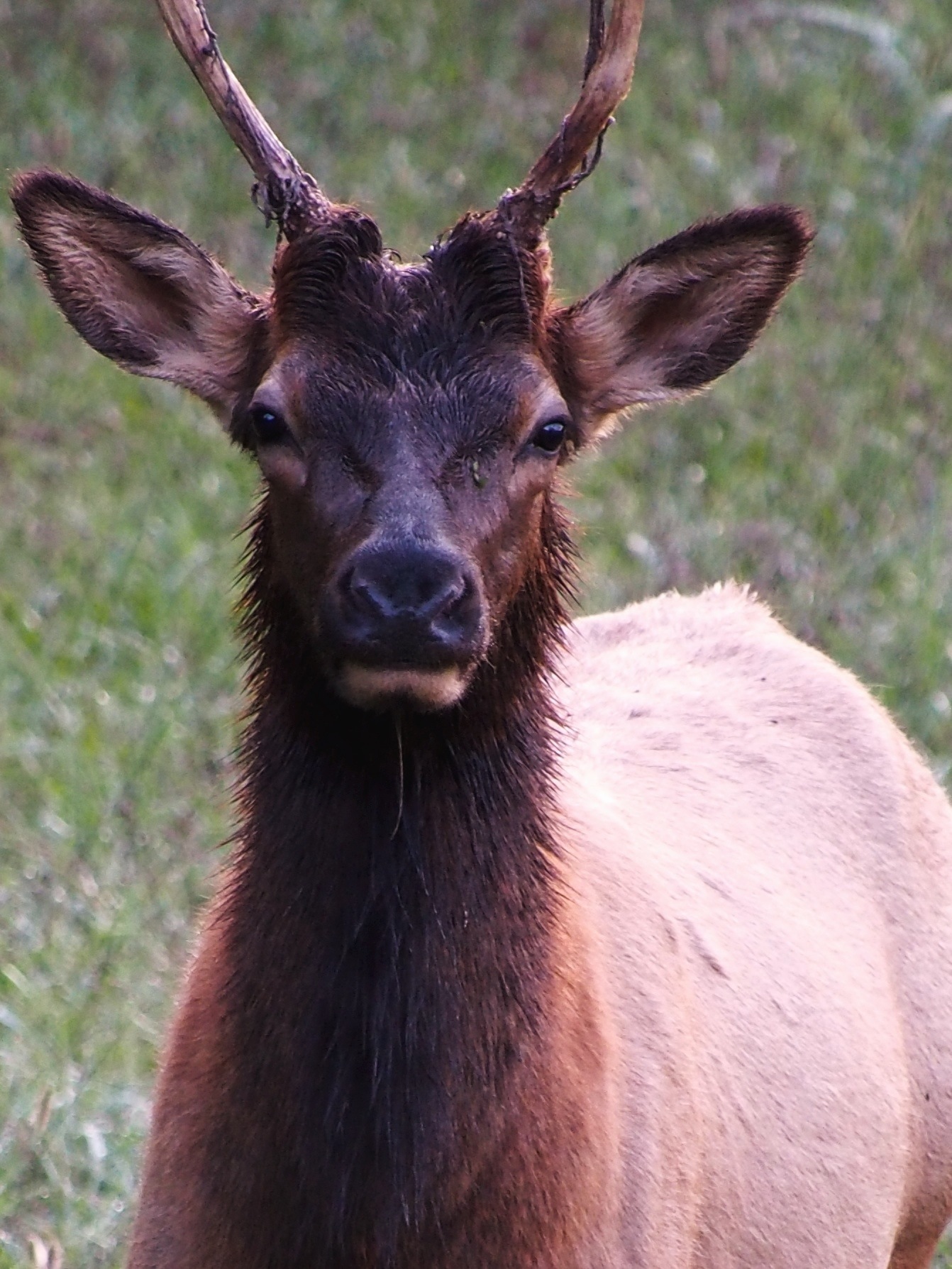
This is a pair of youngsters I spotted alongside the road. They have the antlers of a 2-year-old. Spindly without definite points. They were off alone away from the females – bachelors. Elk are very social and males like this tend to live in small groups away from the cows and calves.
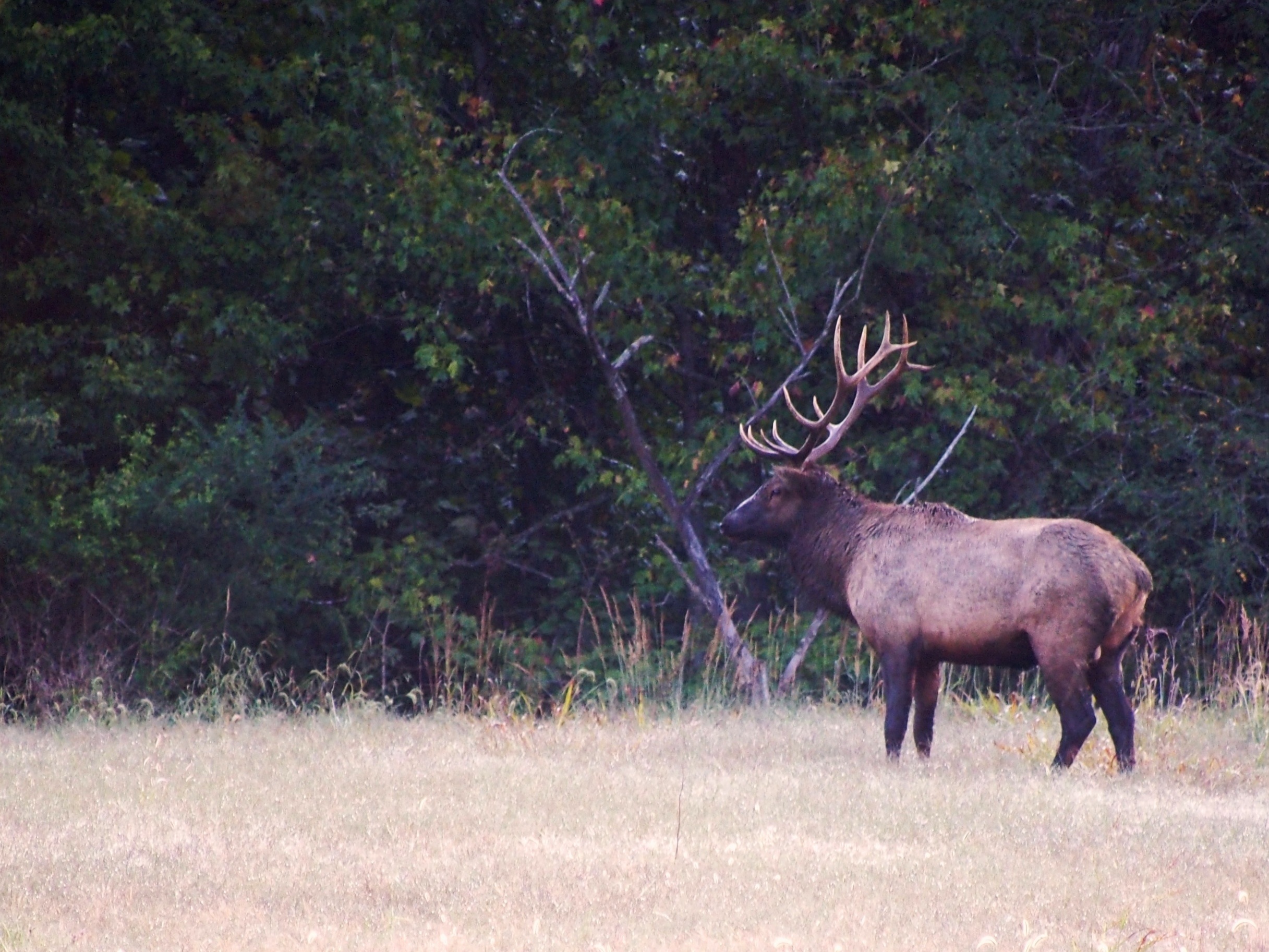
This isn’t a great shot – it was into the sun and a pretty far distance off, but I include it to show the size of a bull towards the end of his prime. I got the chance to hear him bugle for the ladies in the meadow about a quarter-mile away.
It’s good to see bulls of all ages in the herd. Some of the cows have tracking collars and great care is taken to prevent poaching. The herds placement was established with the assistance of the locals, so they are not seen as pests, but rather as a part of the environment.
It looks like the Natural State got it right this time, third time’s a charm.

This morning I got up bright and early – 4:30am – to head over to the Boxley Valley near the Buffalo River. A friend and I decided to make a run over to see if we could get a look at some elk. We arrived at the valley right before sunrise and began to scout out locations. We saw a pair grazing in a roadside ditch. It was still just a bit to dark to get any good photos so I parked my jeep about a 100 feet away and hiked towards the pair of young bulls. As cars passed by, I just hoped they would stay close until the sun came up. One at a time they wandered across the road, over a fence, and down into a meadow. I thought for sure that we had missed out, but hiked over towards the spot where I had seen them leap over. From the roadbed I was actually above the meadow and got a chance to see them both clearly visible above the wall of foliage along the fence.
The most amazing thing happened next. They carefully, even gently, began to spar with each other. There was no crash of antlers or huffed snorts, it was more of a quiet ballet.


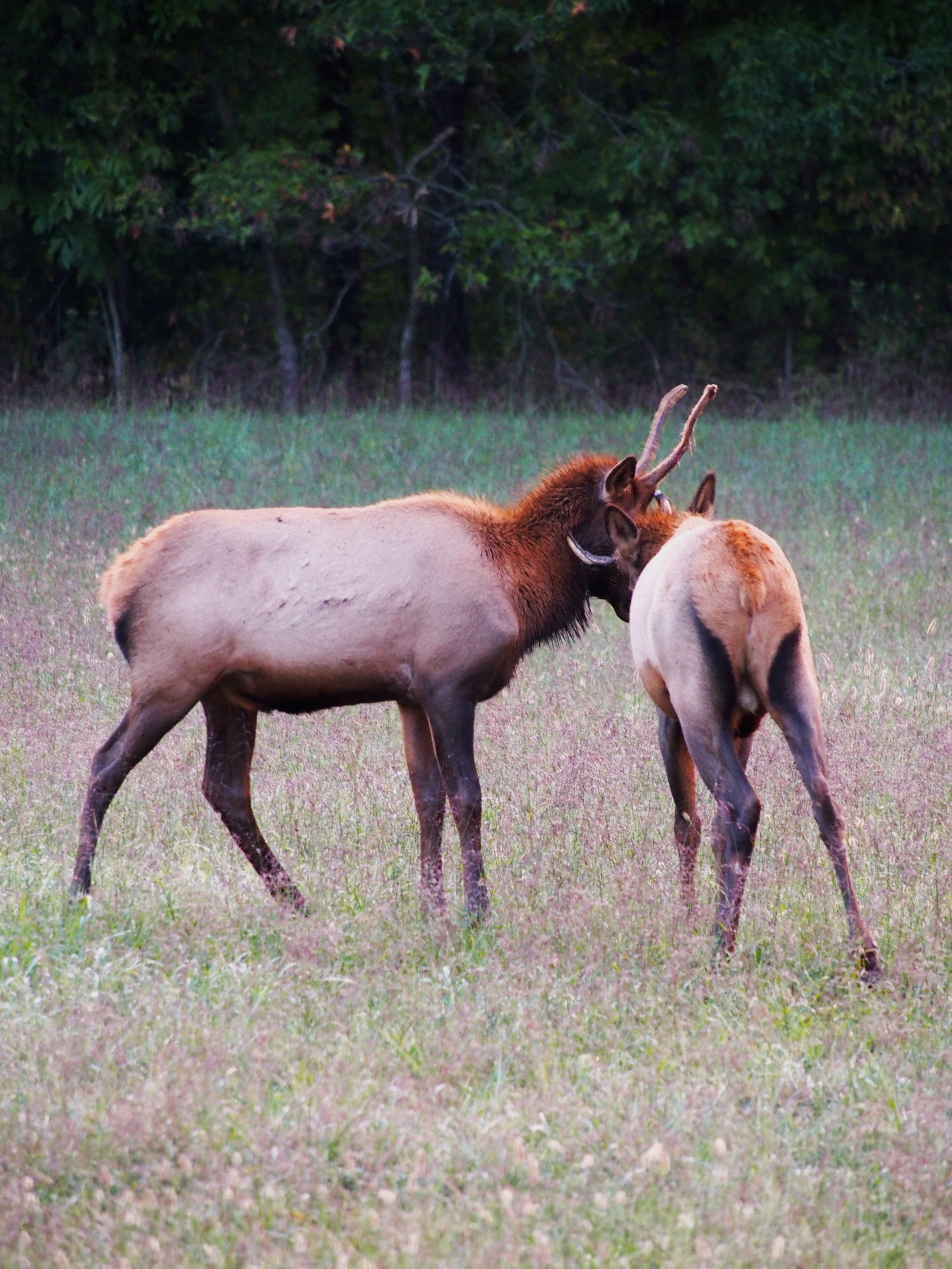


Occasionally the pair would stop, and look our way. Then they would look back at each other and continue the dance.

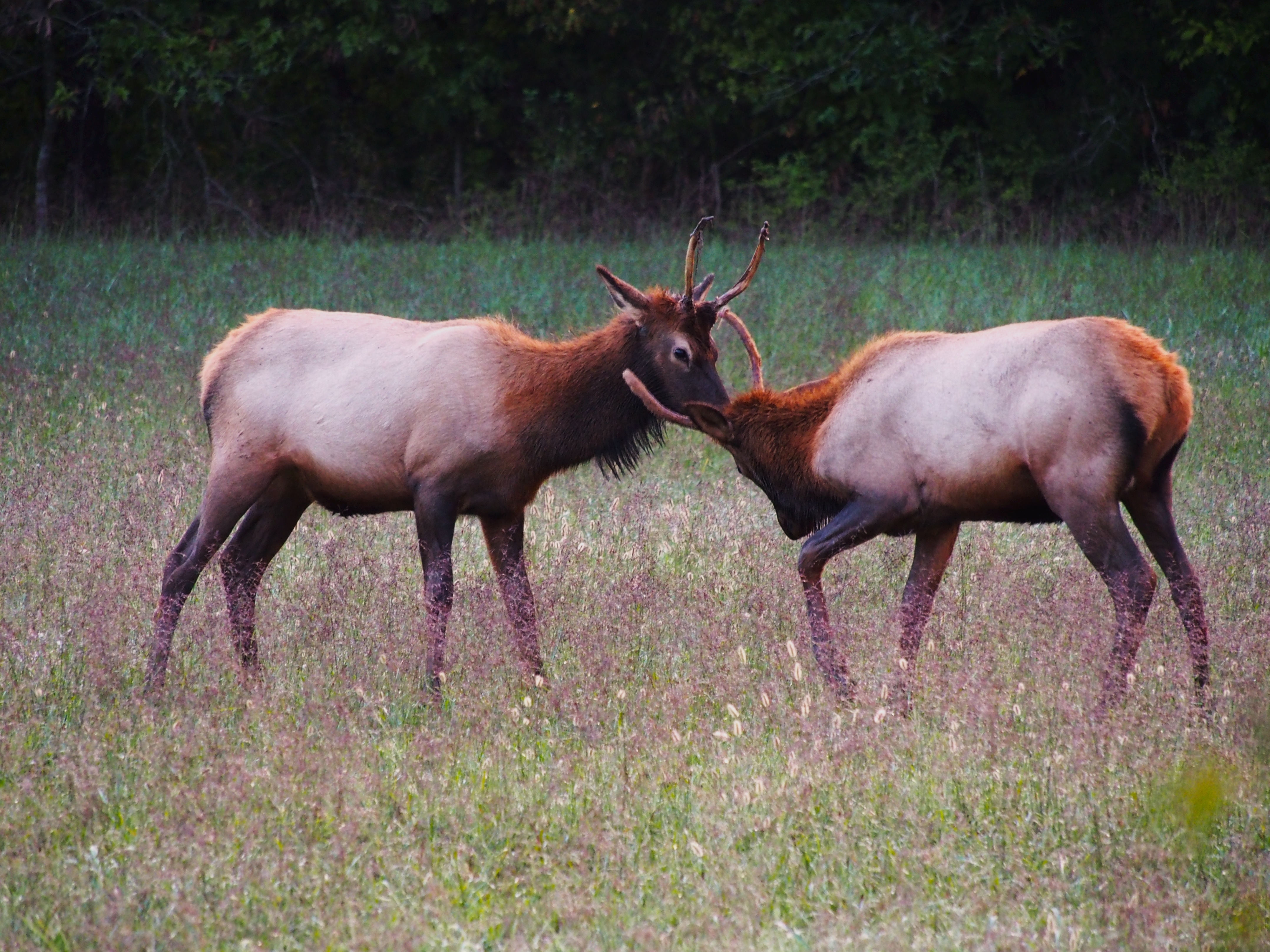


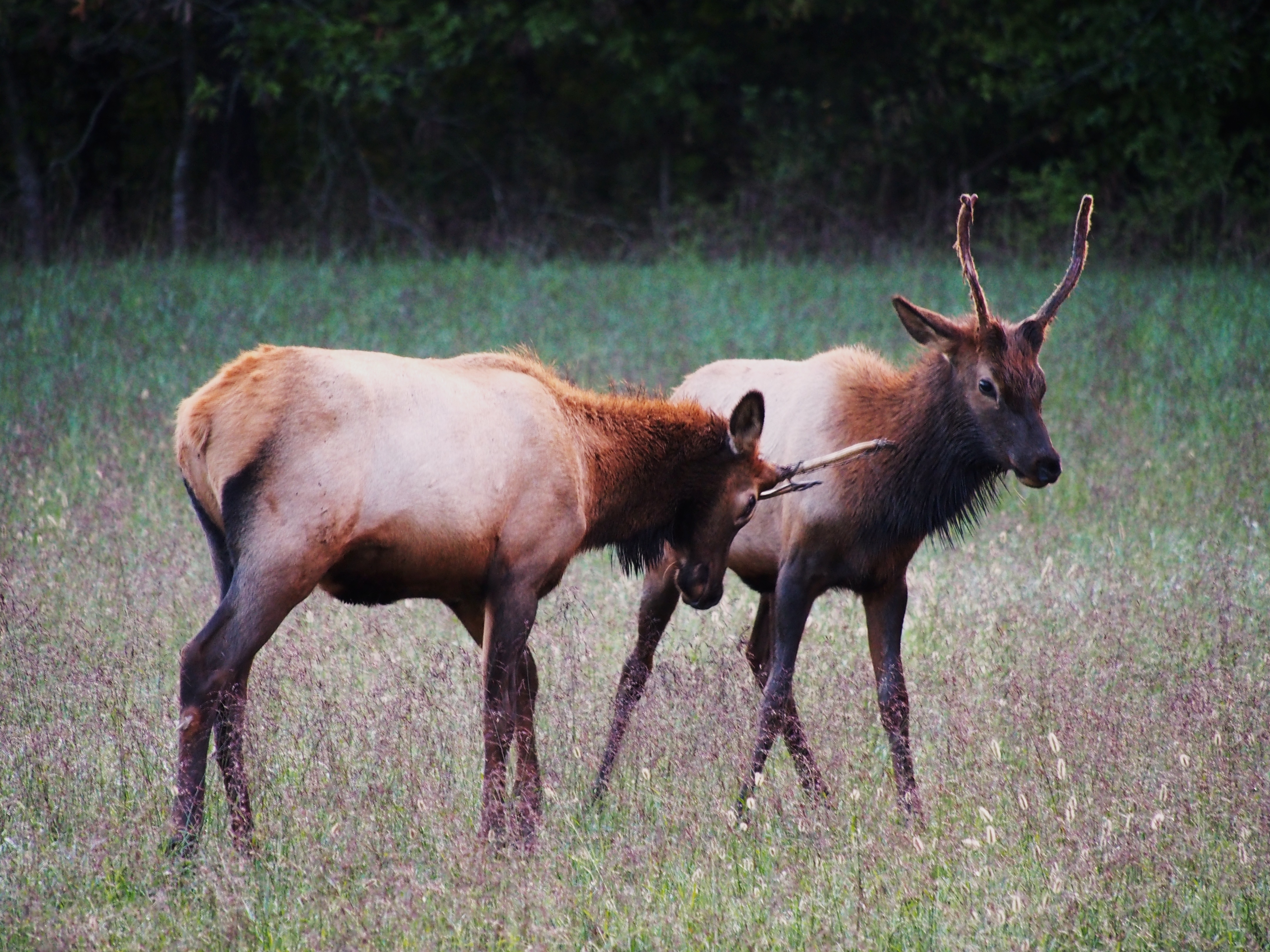
Dodge, thrust, parry, block – and then another glance, perhaps to see if we were still watching.
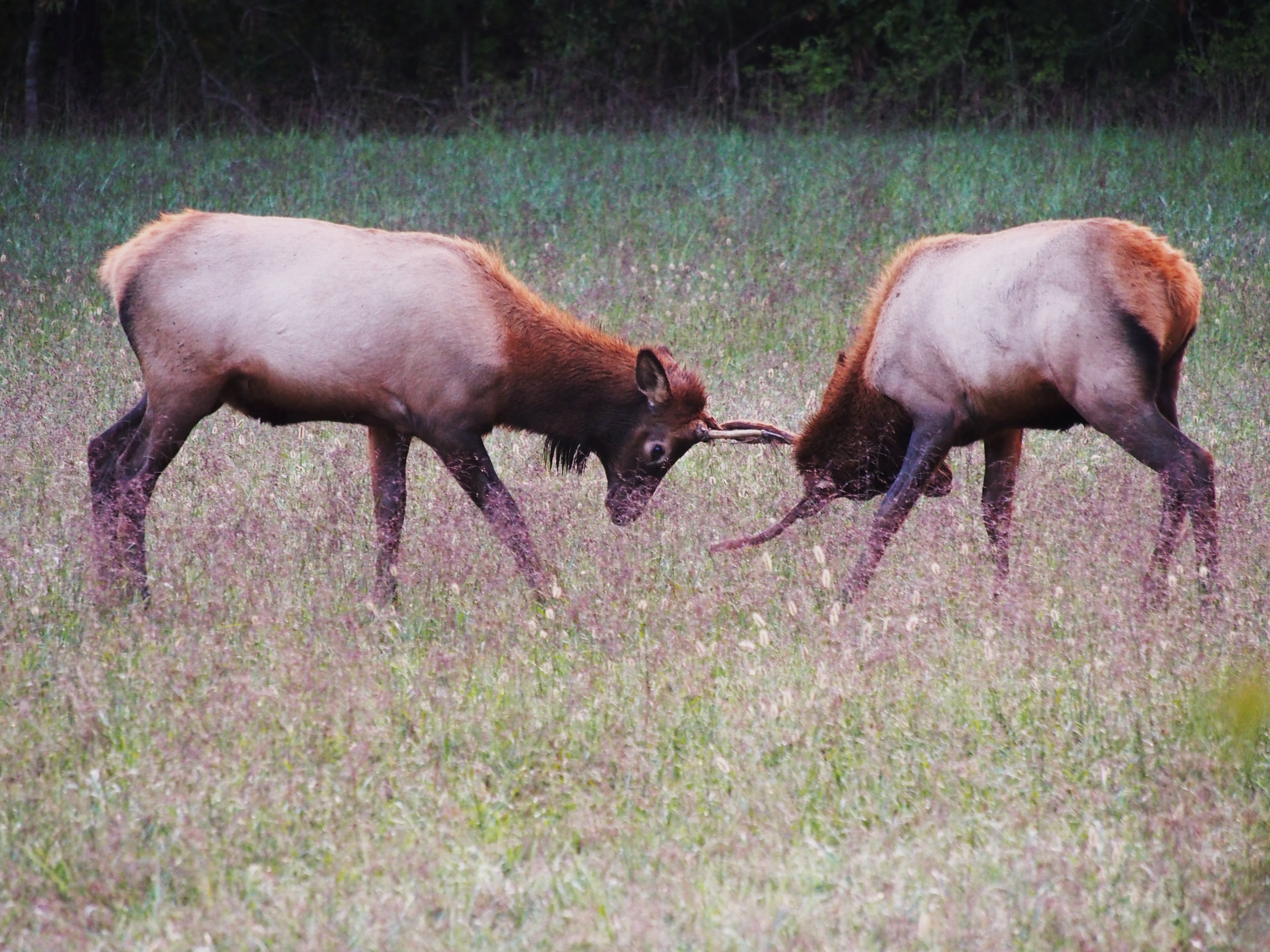
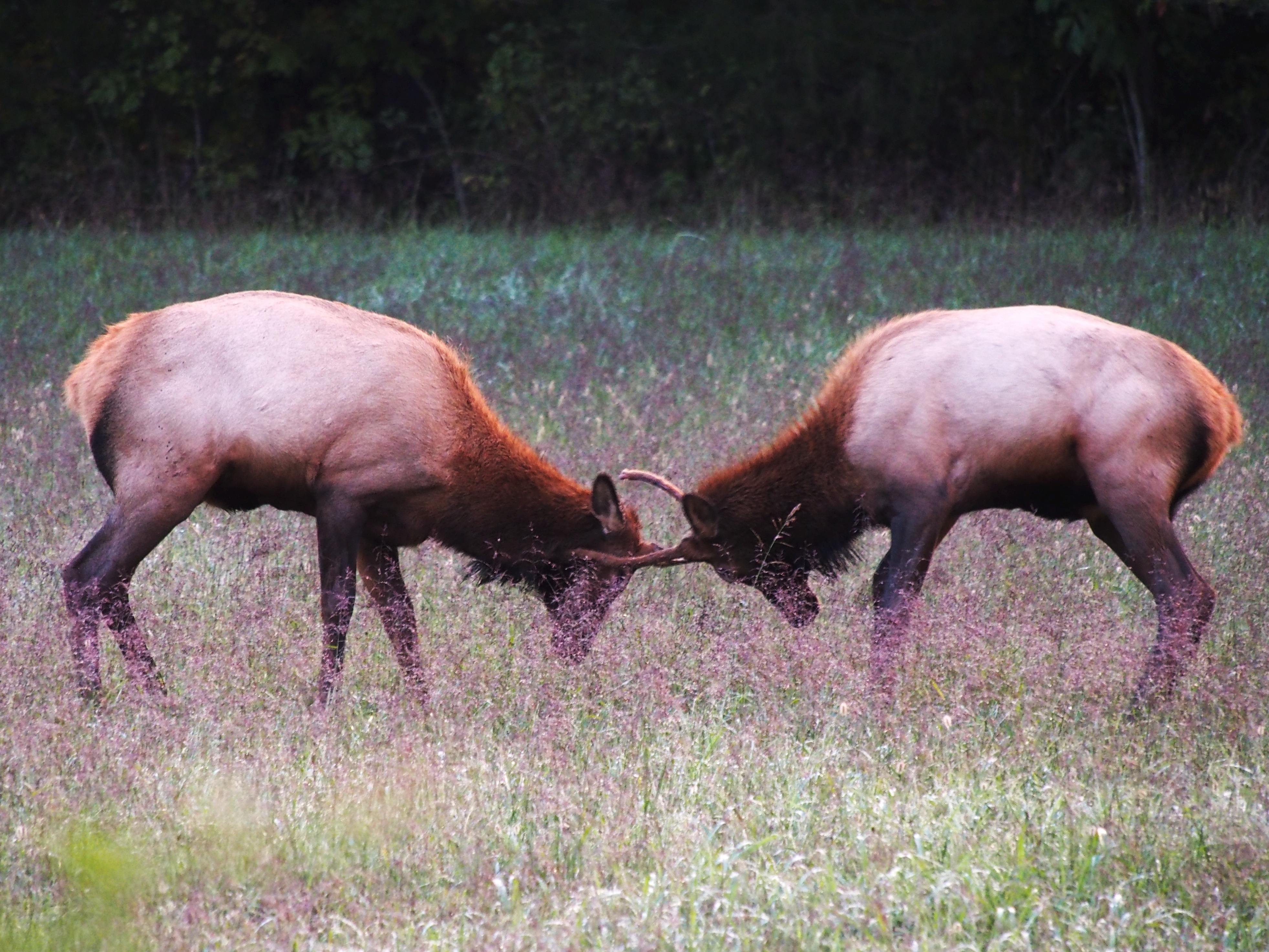


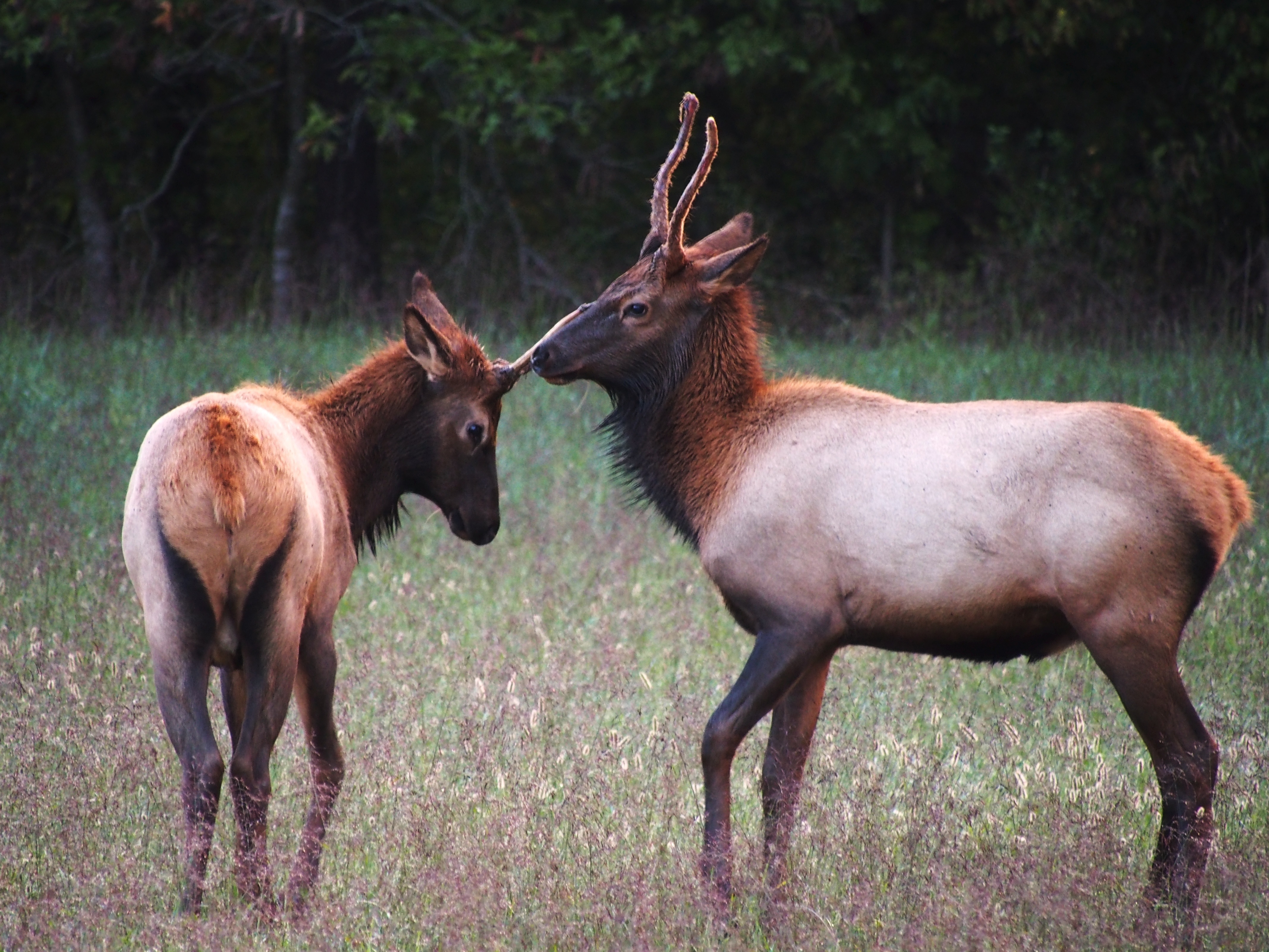
Back and forth, round and round, stop and glance – this went on for about 20 minutes.

Then they were finished, the show was over, time to take a bow.

They both headed off towards the cover of the woods.
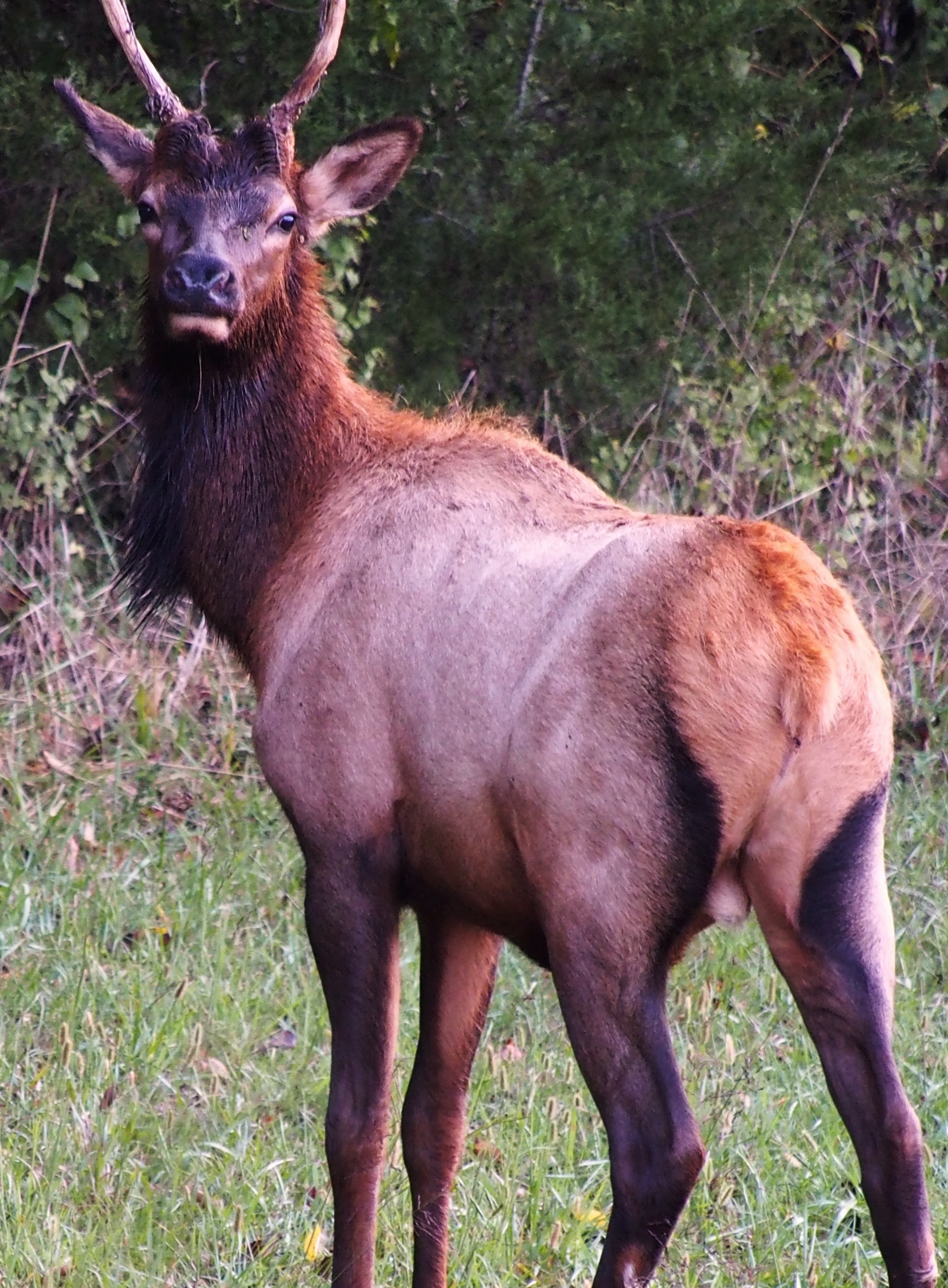
The first bull went on through, the second lingered, almost like taking a curtain call.
I photographed lots of elk today, but I was most enchanted by the young bulls I spotted before sunrise. I’m not sure what they were doing, were they practicing for a future rut? Were they raised together in a nursery group? Did they see my camera and decide to put on a show? Either way it was worth it, now I think I’ll go take a nap.
I have done a lot of posts about birds lately so I thought I would change things up. These are a series of shots from last winter taken with what was then a brand new lens – it’s now one of my favorites.
I live in a small village in the Ozarks called Eureka Springs and we love parades! Christmas, St Patty’s, Art’s Festival, VWs, Corvettes, Antique Cars, Diversity, Folk Music and more. Most of our parades are a part of the party we throw for our visitors. We host festivals on dozens of weekends throughout the year. Come see us during VW weekend and we’ll throw a party with a parade and you can be in it! But there’s one party we throw that is unabashedly about us.
In the dead of winter we crown royalty from among our own citizenry and host a week of parties culminated by the annual Eureka Gras Mardi Gras Parade. It’s one of my favorites. Instead of a visitor in a Model T, I get to see our own folk decked out in their best finery with beads-a-plenty. We’re not New Orleans – but that’s OK. Everyone’s welcome, even if you aren’t a Eurekan.
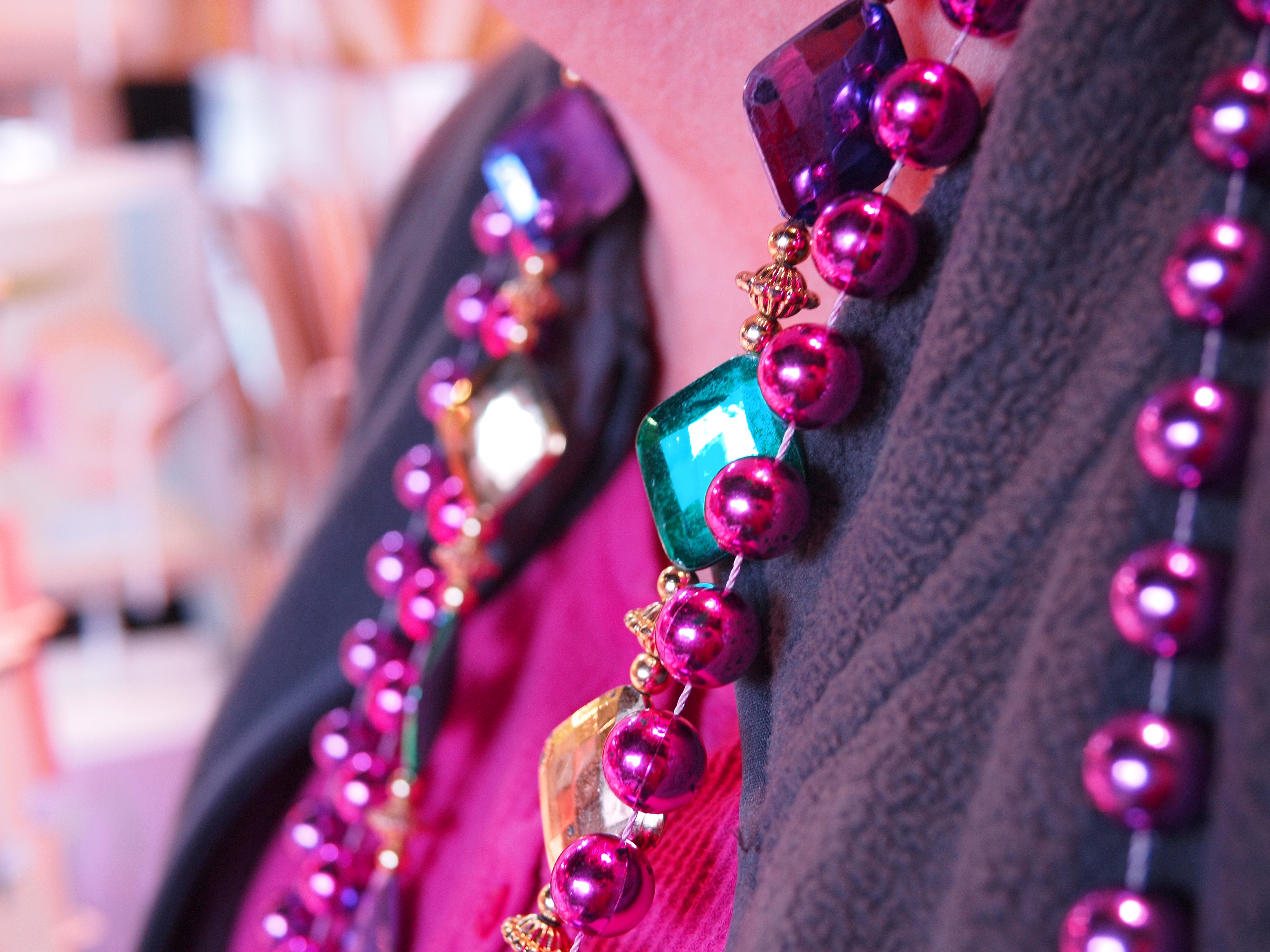
There’s something uber fancy about adding some beads to any ensemble
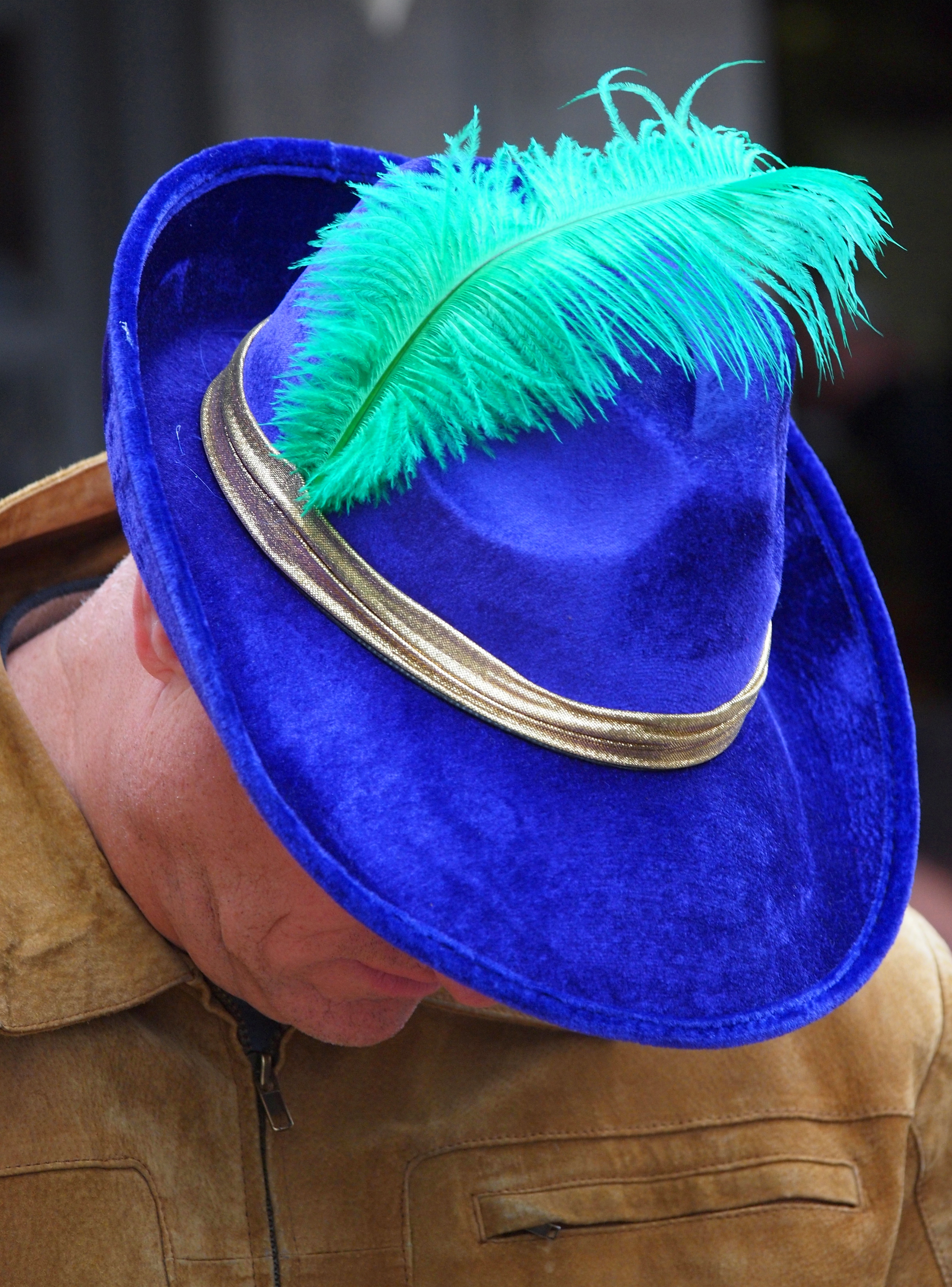
Adding an ostrich feather sets just the right mood.
This year I decided to make myself us only one lens. No bag, just my camera and a single lens and a strap. I had just gotten a Leica 25mm 1.4 portrait lens and decided it was the one to try out. I shoot a mirrorless M4/3 system so the focal length is equal to double the number so this lens is the equivalent of a “fast 50”.
I love this lens and I love the freedom to just shoot. It was so nice to dive in and out of the crowd and not worry about my equipment. With our parades no one cares if you just jump in so I did and got as close as I could to those in the middle of the action.
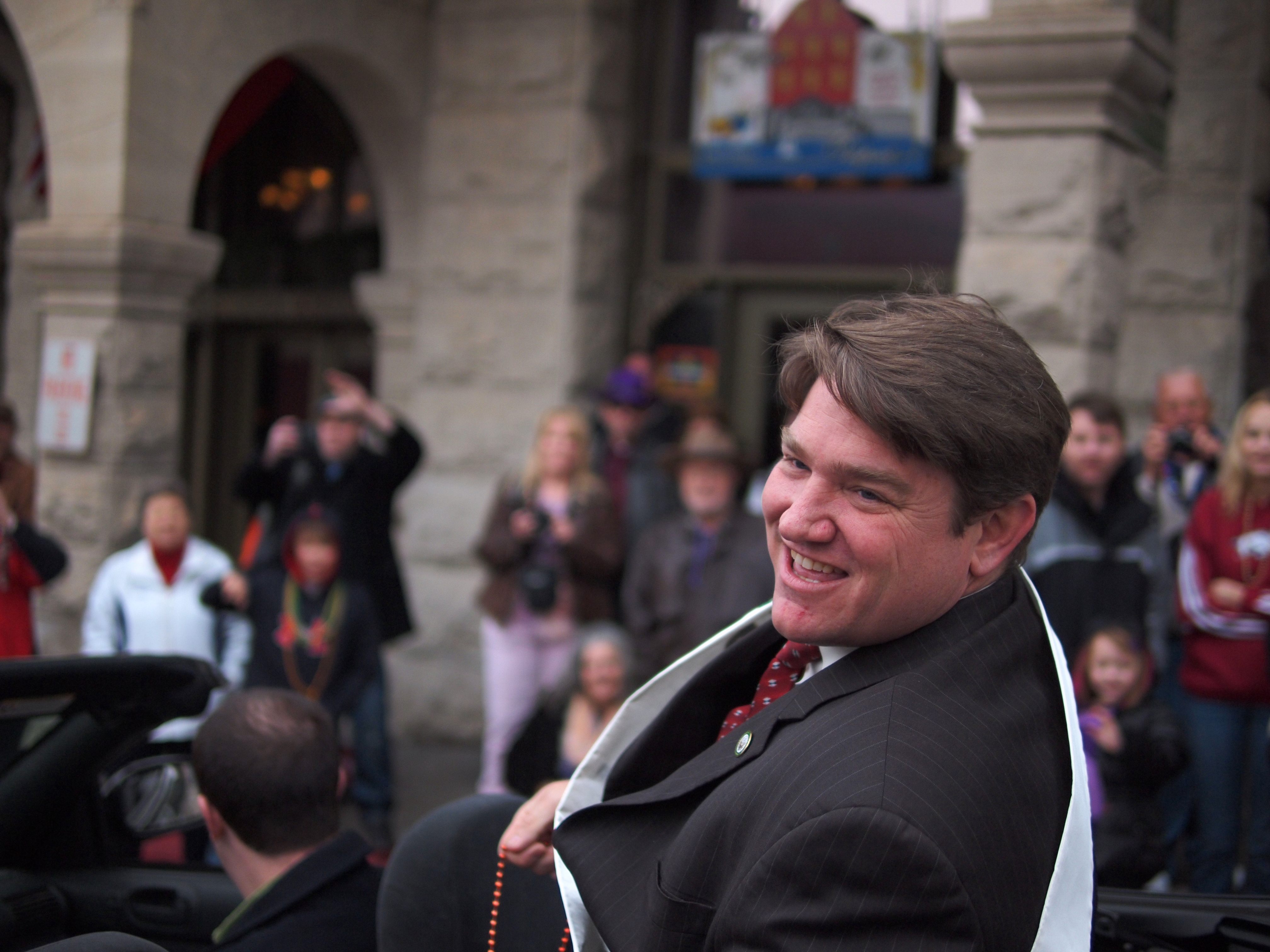
I think this guy might have been a Grand Marshall – I don’t think he got the memo about the dress code.
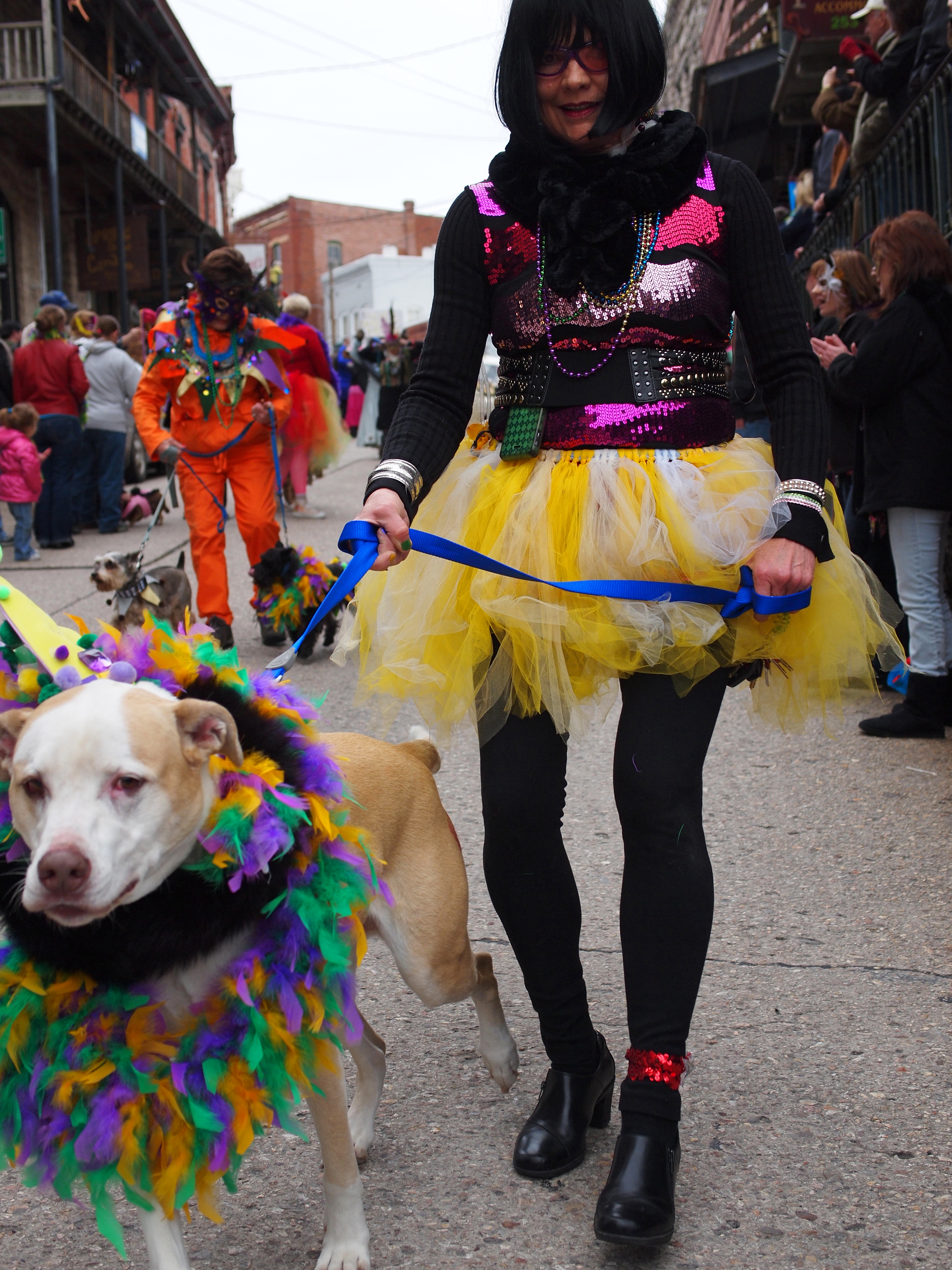
I did not realize that I knew this lady until I posted the image on Facebook.
Of course it’s fun to shoot the crowd in between floats. The noise and the crowds make this parade a joy to be a part of and the faces of those in the parade echo those of us who were just watching.

This is Judy – We both have birthdays near Mardi Gras so it’s just another party.
One of the things I love about this lens is the way it can isolate the subject. Casual portraits are pretty easy to pull off. I love the control I have over the DOF.

This is my neighbor Lynne – all beads and grins.
As the royal court approaches the beads really start to fly. I was actually hit in the face several times – too busy trying to get the shot to go for the beads.
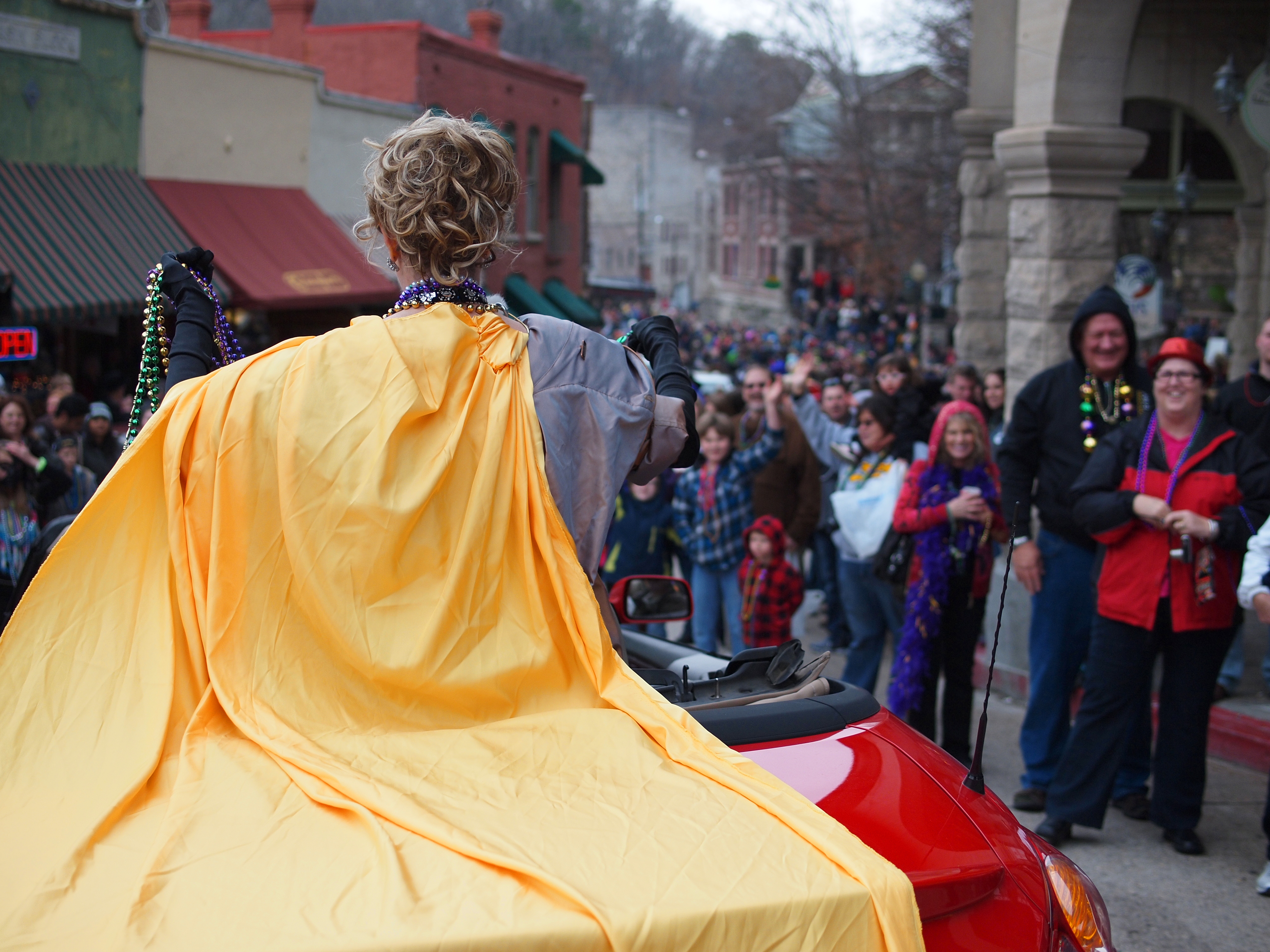
A member of the Court tosses beads into crowd.
The next three shots are from a series of a woman who was originally from New Orleans – the gusto she had for the enterprise of tossing beads into the crowd were amazing – these were my favorite shots of the day – Duchess Pamela.
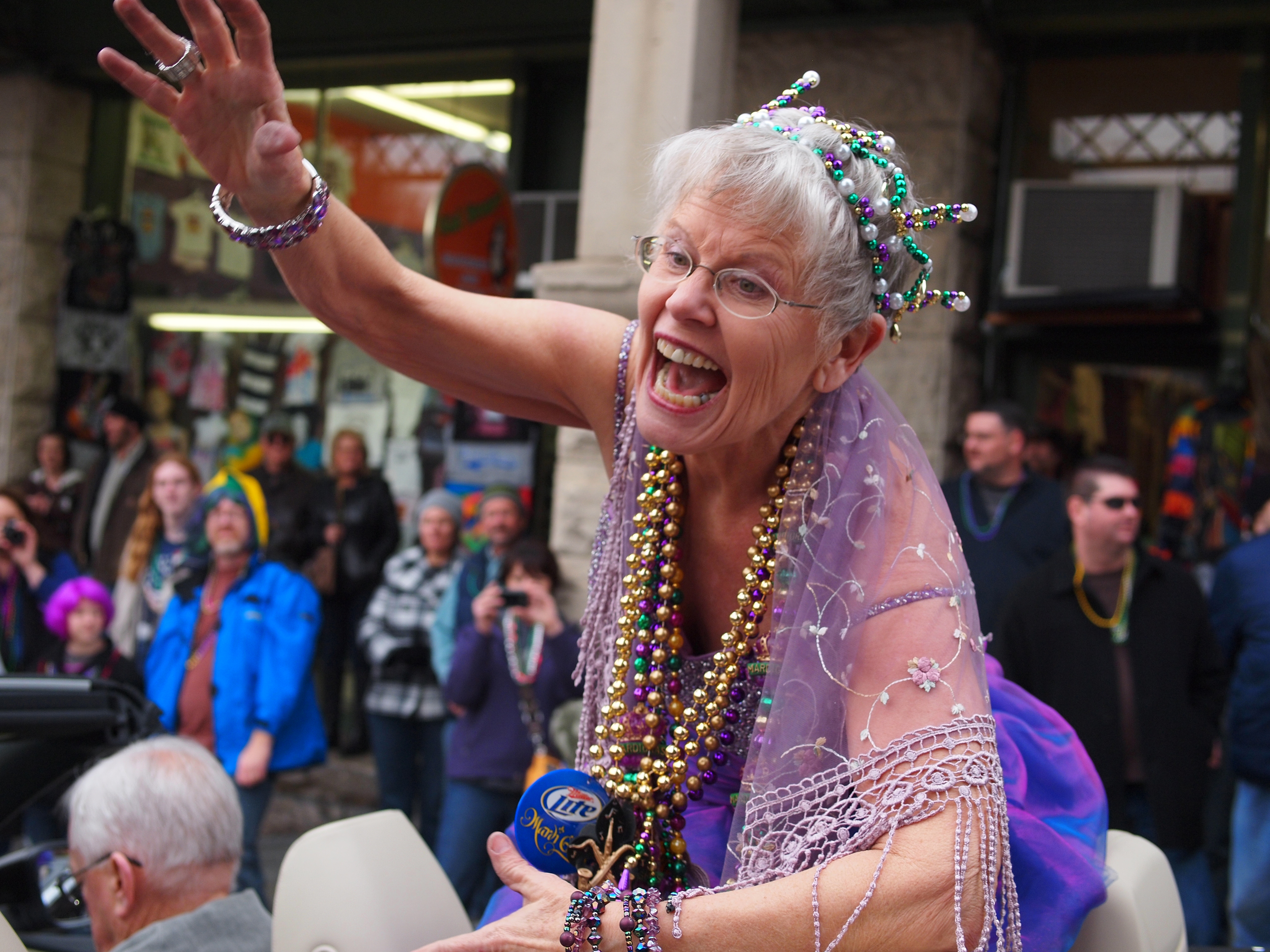
Wave

Wind-up

Follow-through
This Duke can’t quite get the beads free to toss.
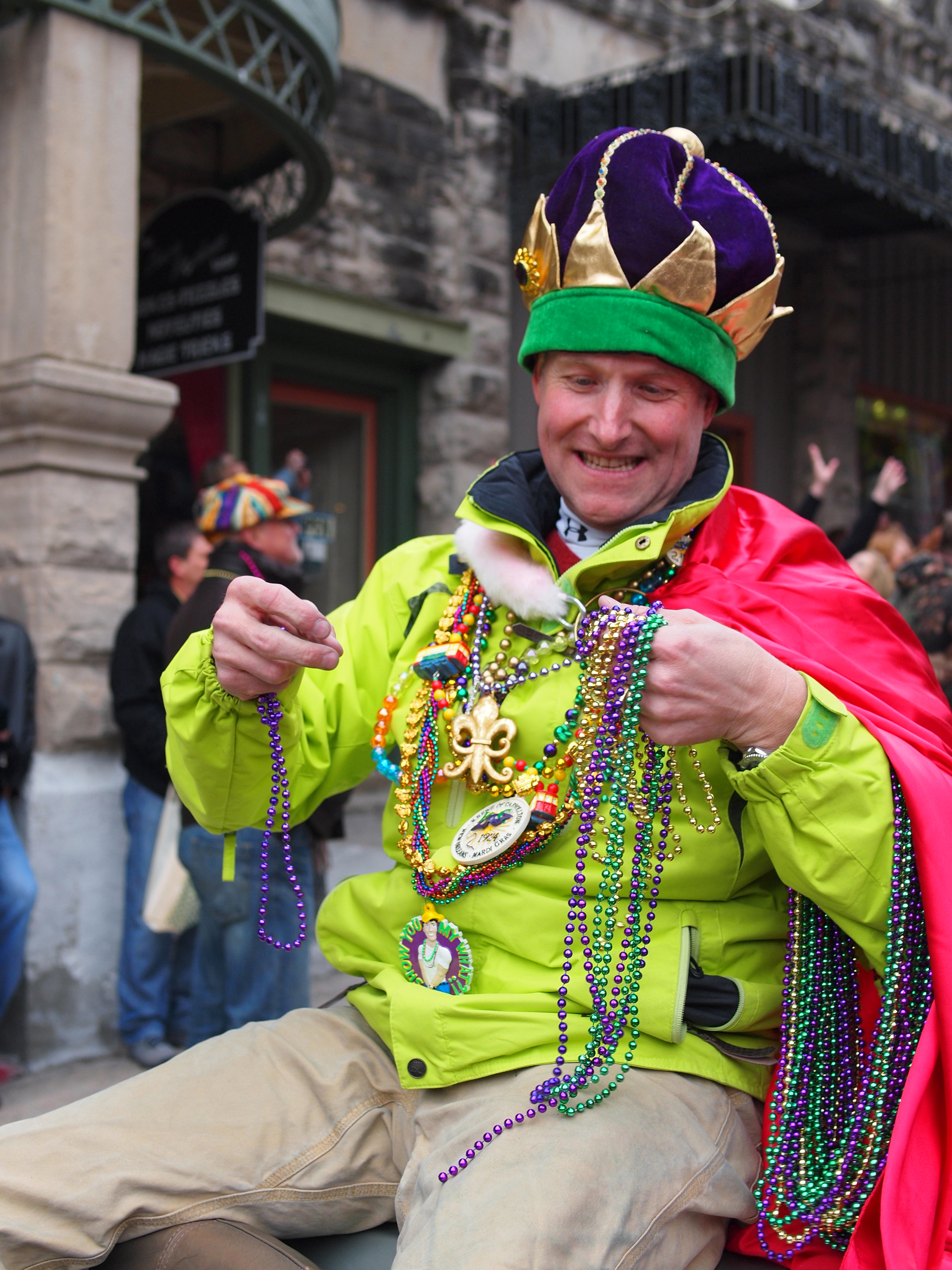
Tangled
This gentleman owns the local Indian restaurant. I love his smile.
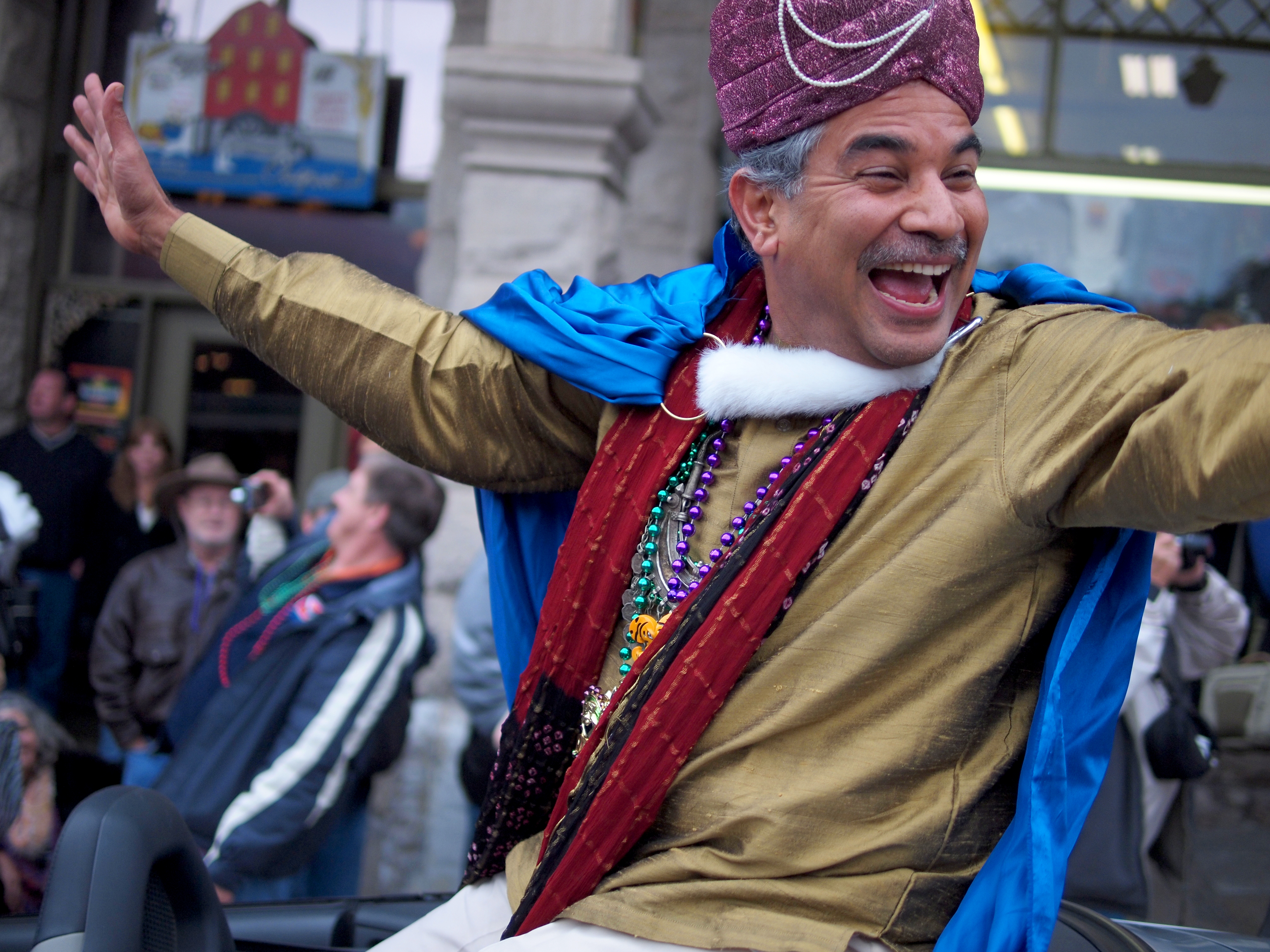
Turbaned Duke
This lens lets you pick a face out of the crowd. This is my friend and co-worker Sharon.

Beadmobile – the crowd’s looking up because beads are flying down.
This young man was all about the beads – he was focused on grabbing as many as possible.

This young man was in the crowd with us – his face painting is awesome.
Some of the floats were quite tall so you get a chance to play with the perspective – the King towers above the crowd.

Here comes the King!
In between the royal floats there were these fellows on bicycles. I love how this lens let me capture the streamers in motion.
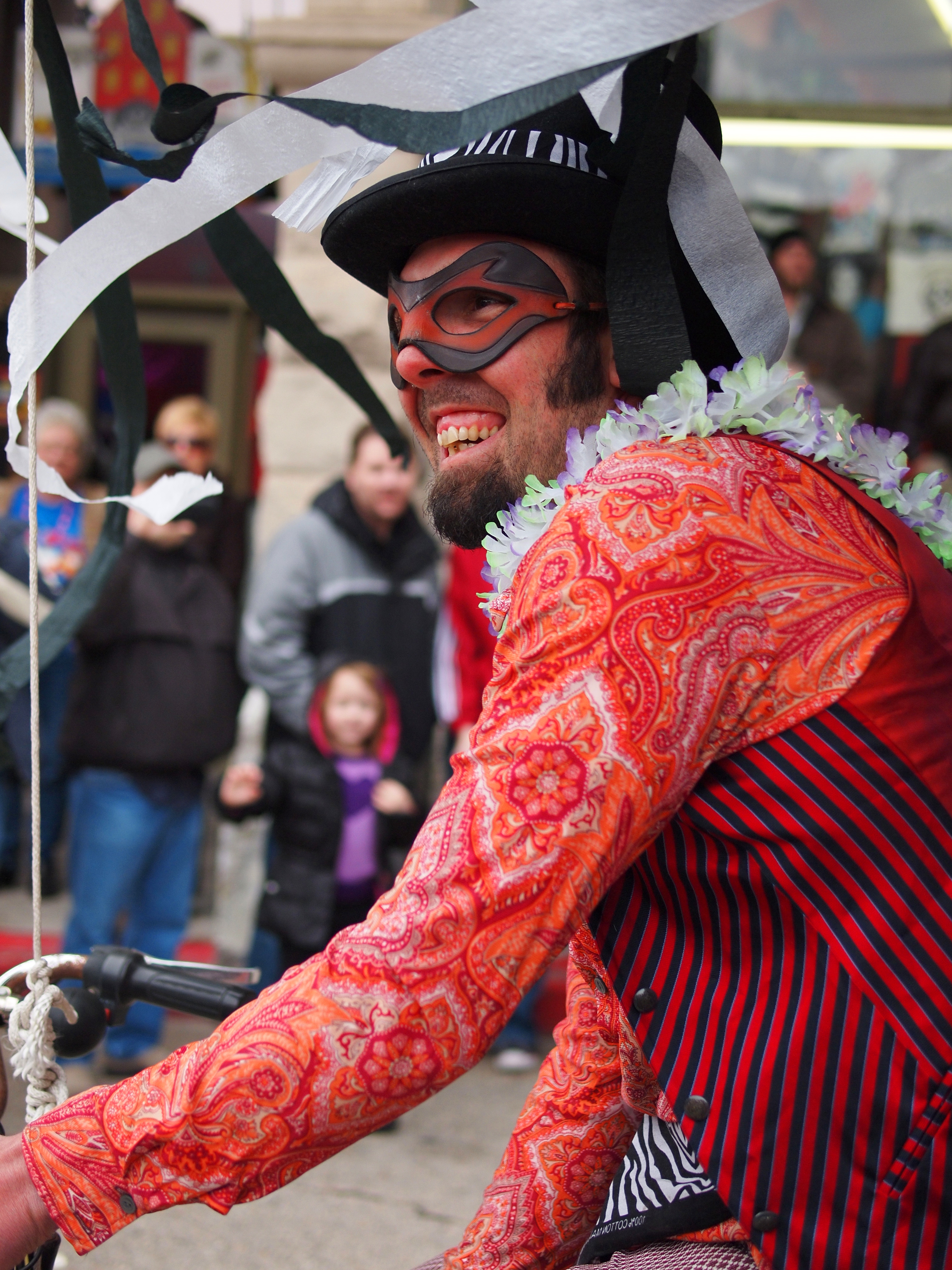
Steampunk Bicyclists follow the royal procession.

I’m thinking this is a great idea for those who just don’t want to commit to a full sleeve full time.
These kids we part of the Queen’s court – they did the bead tossing for her.

The Queen’s Helpers hoist beads into the air.
Of course we needed someone to control the crowds and keep the peace.
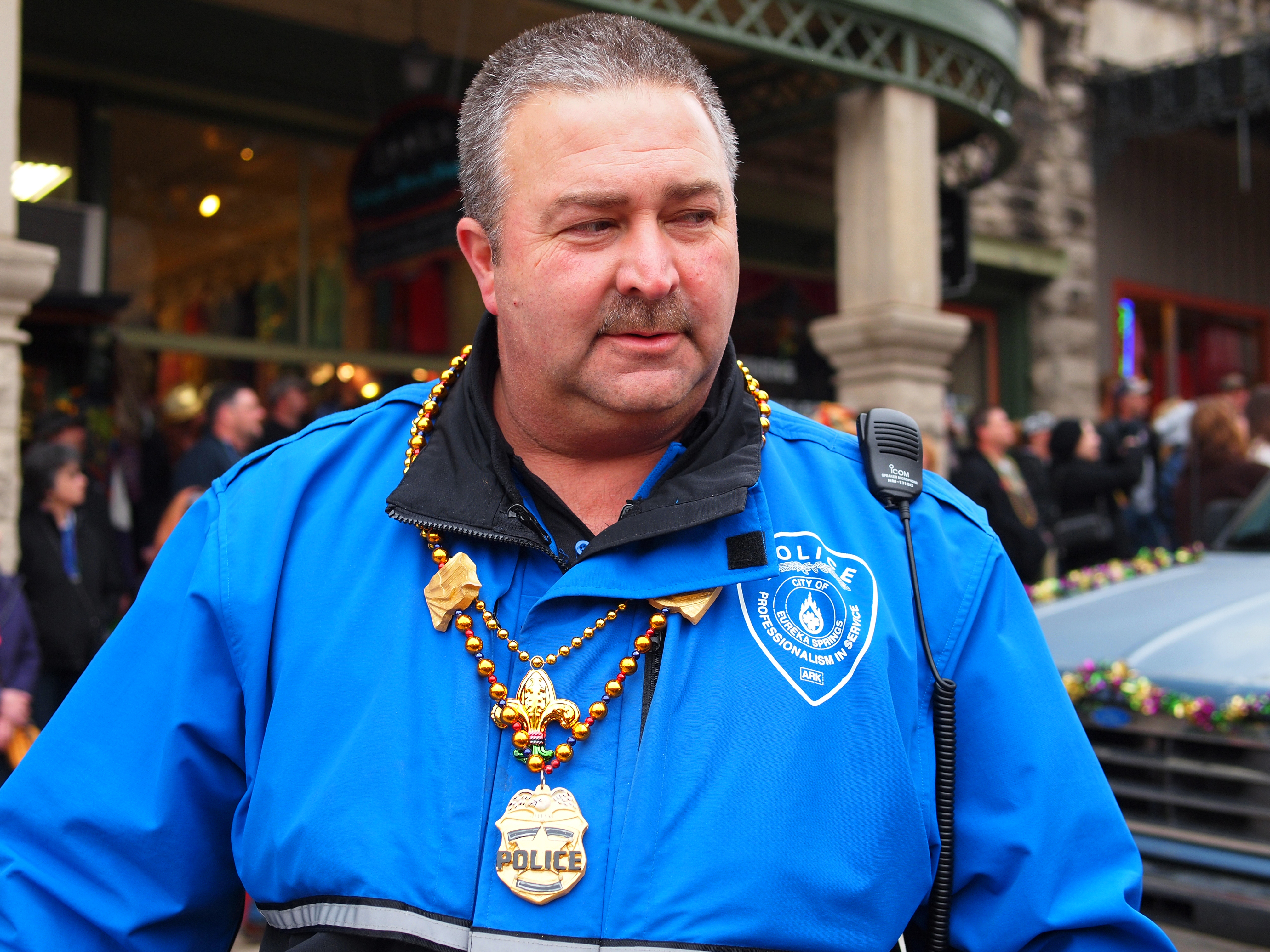
A bedazzled officer on crowd control
I typically try to avoid shooting into an overcast sky – but on this day the colors were so bright I shot up to get Alice letting loose.

Looks like Alice has gone down the rabbit hole and come back with lots of beads.
As the parade ended I got a chance to see some more locals adorned for the day’s events.
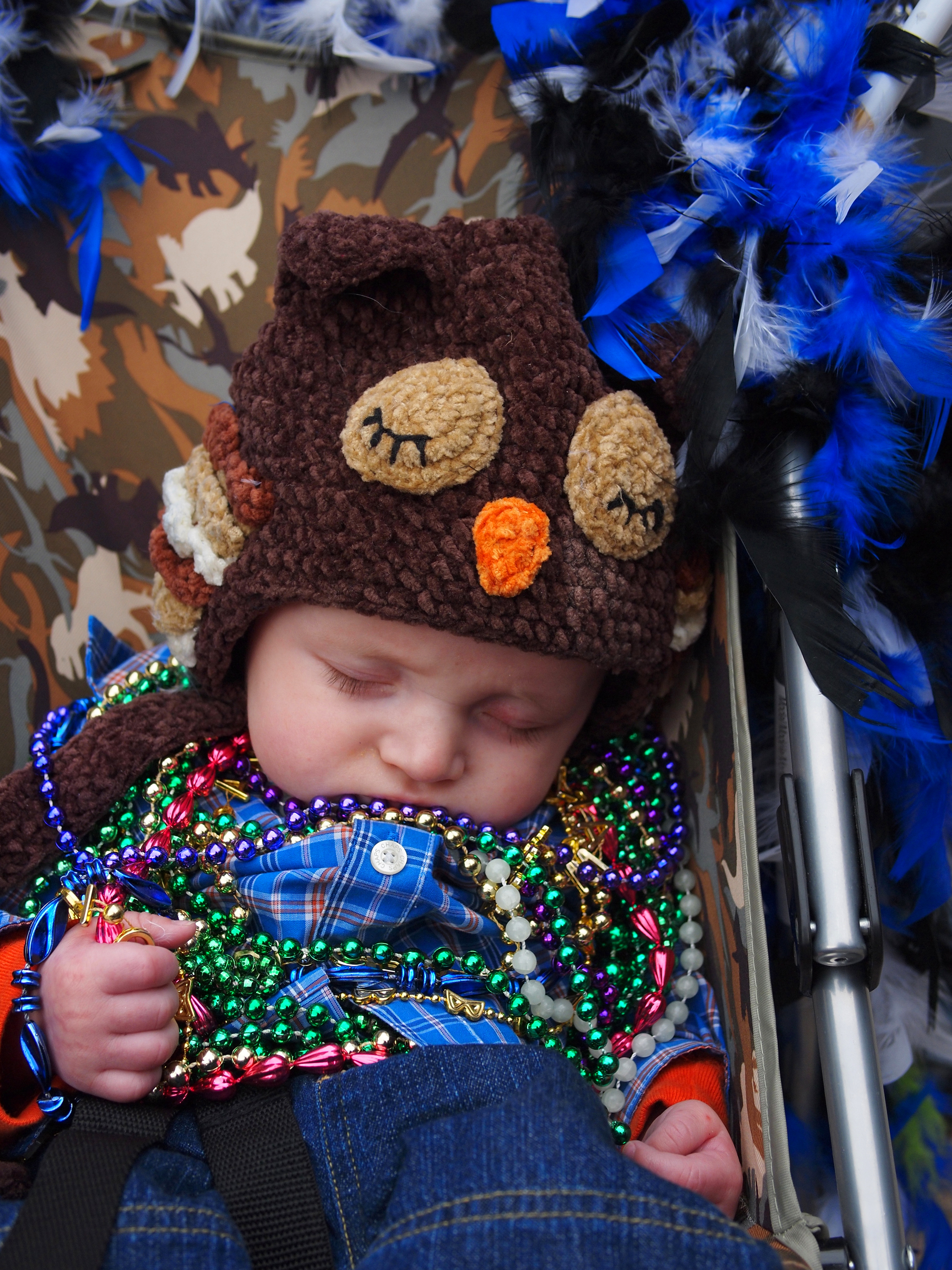
This little guy was worn out. Amazing he could sleep over the brass bands.

A beaded chapeau
I love the way this lens made me get close. There were moments when I wasn’t just watching the parade, I was in it. Now I don’t consider myself a street photographer – but I do love a parade.
In my post from yesterday I mentioned a woodpecker feeder. A friend told me about this feeder and it’s pretty simple and ingenious –
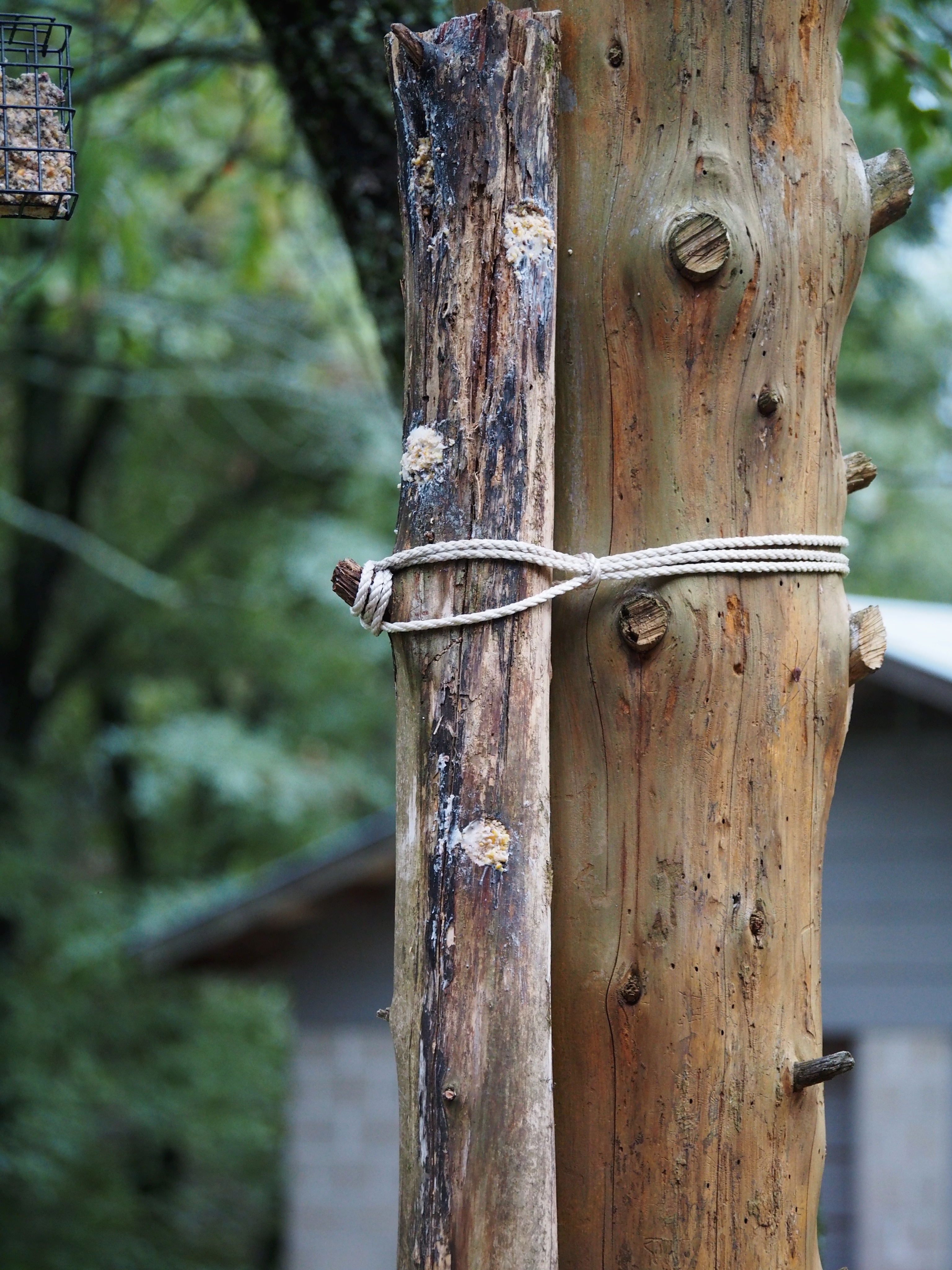
1. Take an old log, I used a downed cedar from my woods – drill 1 1/4″ holes about an inch deep around the surface. I specifically drilled the holes on a side that would face the spot where I shoot photos.
2. Attach it to something that will let it stand vertical like a tree – a fence post will do, I attached mine to the large cedar that holds up my pergola.
3. Fill the holes with suet. I also filled the cracks in the log.
My friend says it’s like a social program where you are giving a handout and making the little buggers work for it.
Here’s one of my feeders – nice and rustic…
Tonight Woody stopped by – first he landed on the top of the pergola .

He takes a look around to make sure the coast is clear – today he must have been really hungry because my Goldendoodle was sitting about 6 feet away from the feeder watching him.
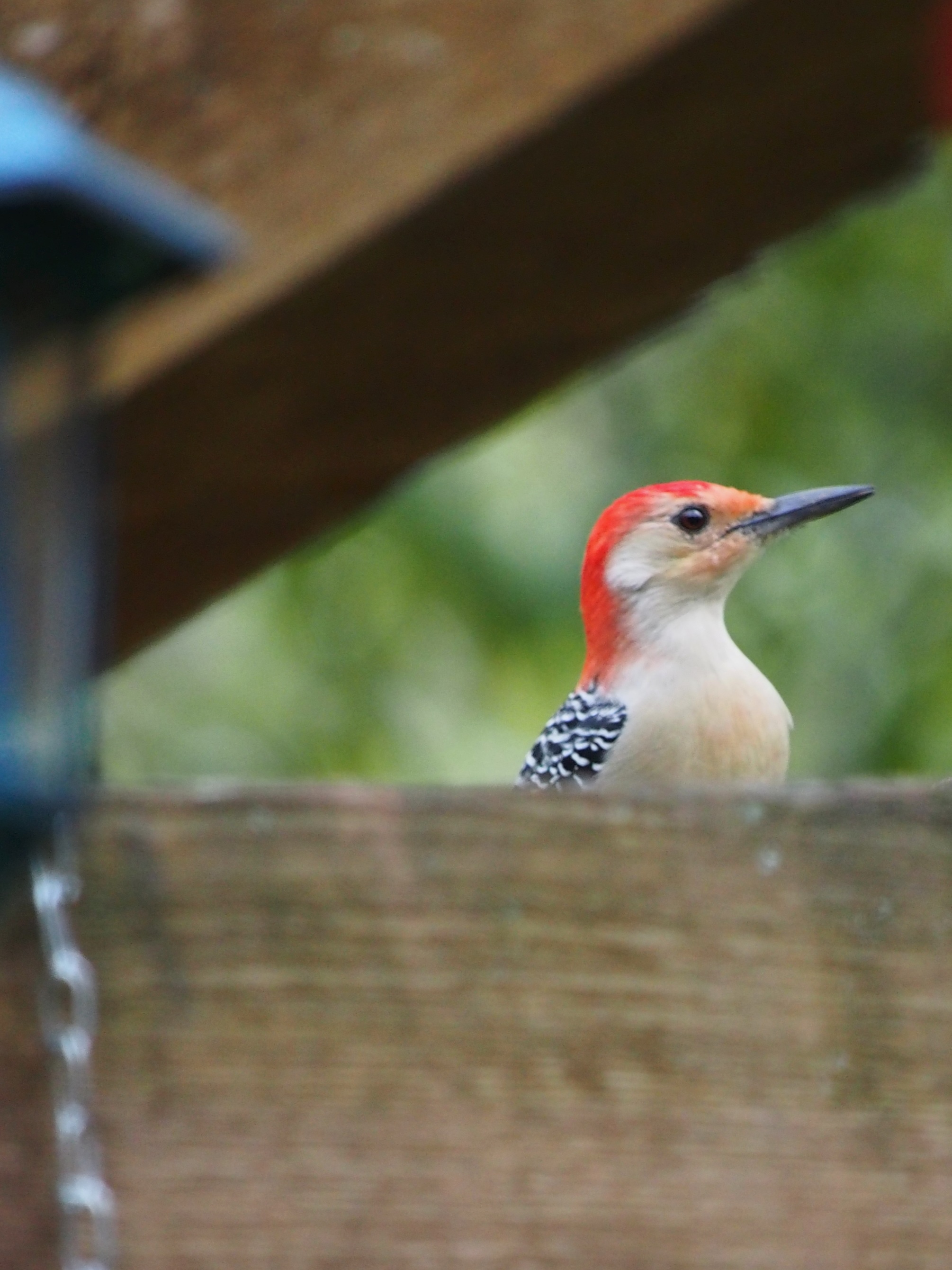
He lands and takes another look around…
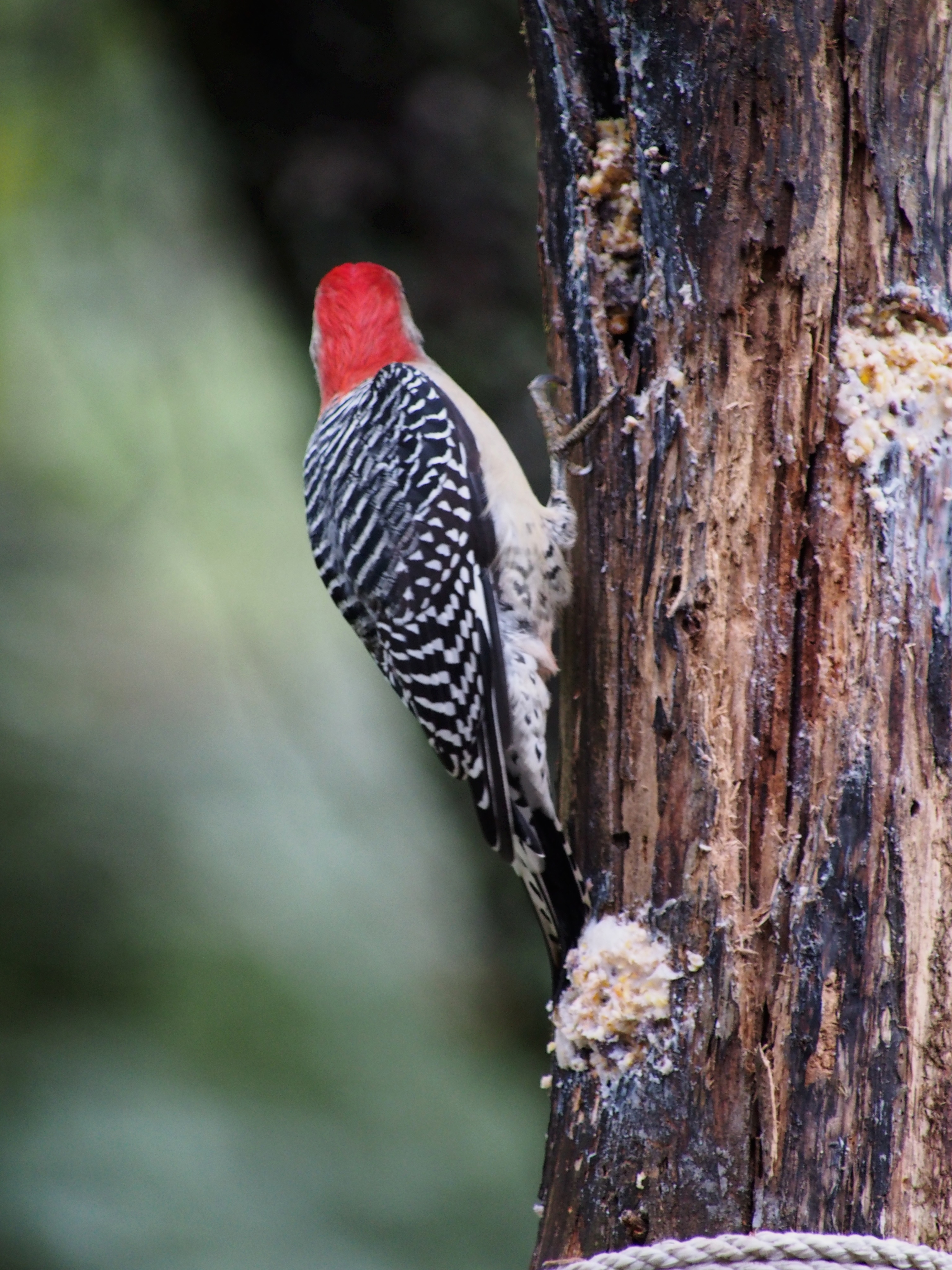
Scopes out the situation…

And digs into that suet.

He stays vigilant…

And digs into the suet again.

See the look of satisfaction on his face?

He looks like he could use a napkin.
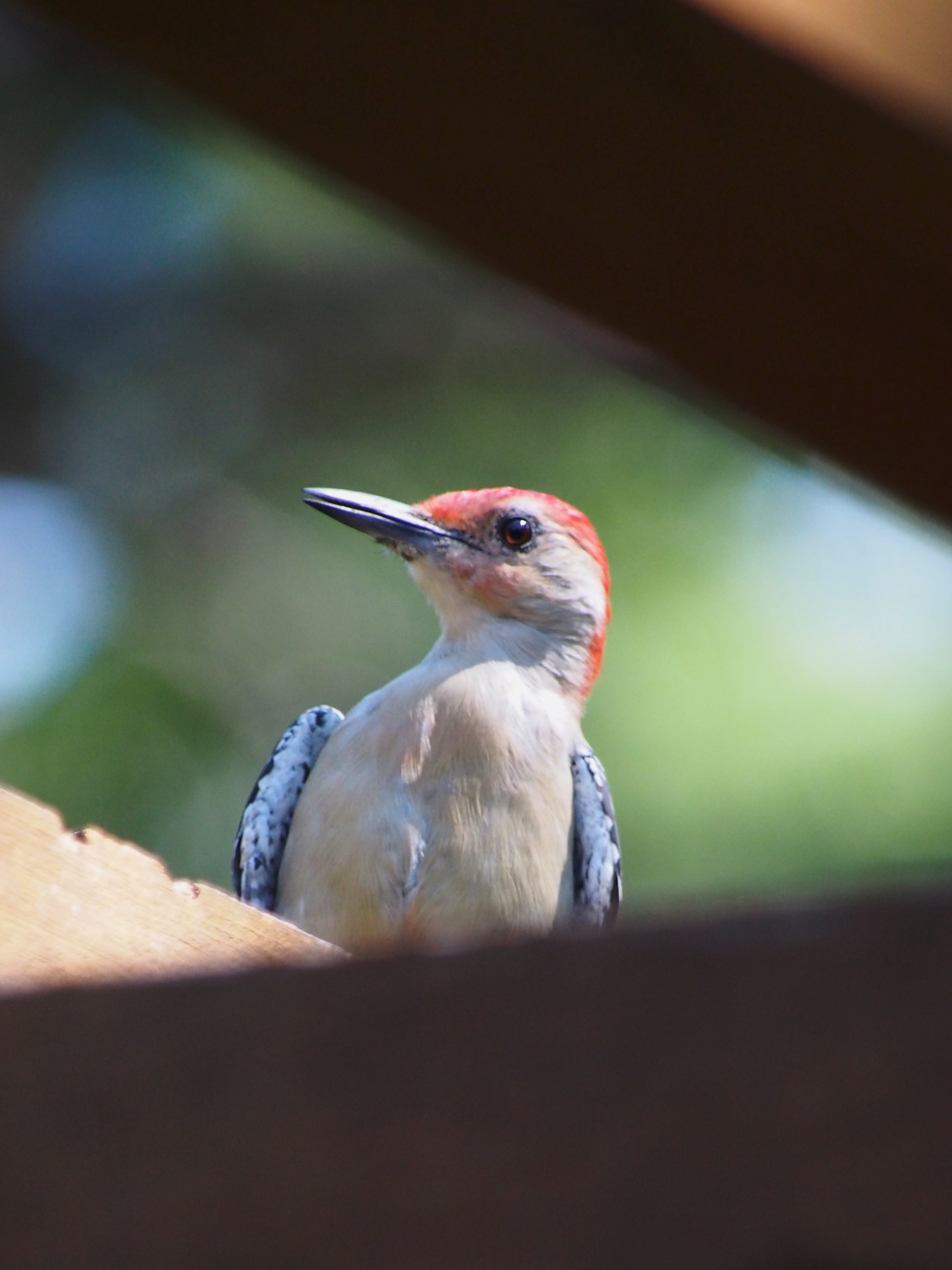
Woodpeckers are shy. This is a red-bellied woodpecker who hangs out in my yard. My suet feeders were up for over 3 months before he dared get close. Here he sits on top of my pergola, deciding whether or not to go for the feeder

He stayed up there for about 30 minutes checking to see if it was safe. He did this several times before he decided it was safe to try out the suet.

Eventually his appetite overcame his fear and he made the leap. It was clear right away that he was too much bird for a feeder like this.

I’ve built him a feeder out of an old dead cedar tree – I have seen him using it, but haven’t managed to catch him with my camera – yet. I drilled 1 1/4″ holes into the log and filled the holes with suet. The little guy loves it, its like his own personal suet tree.
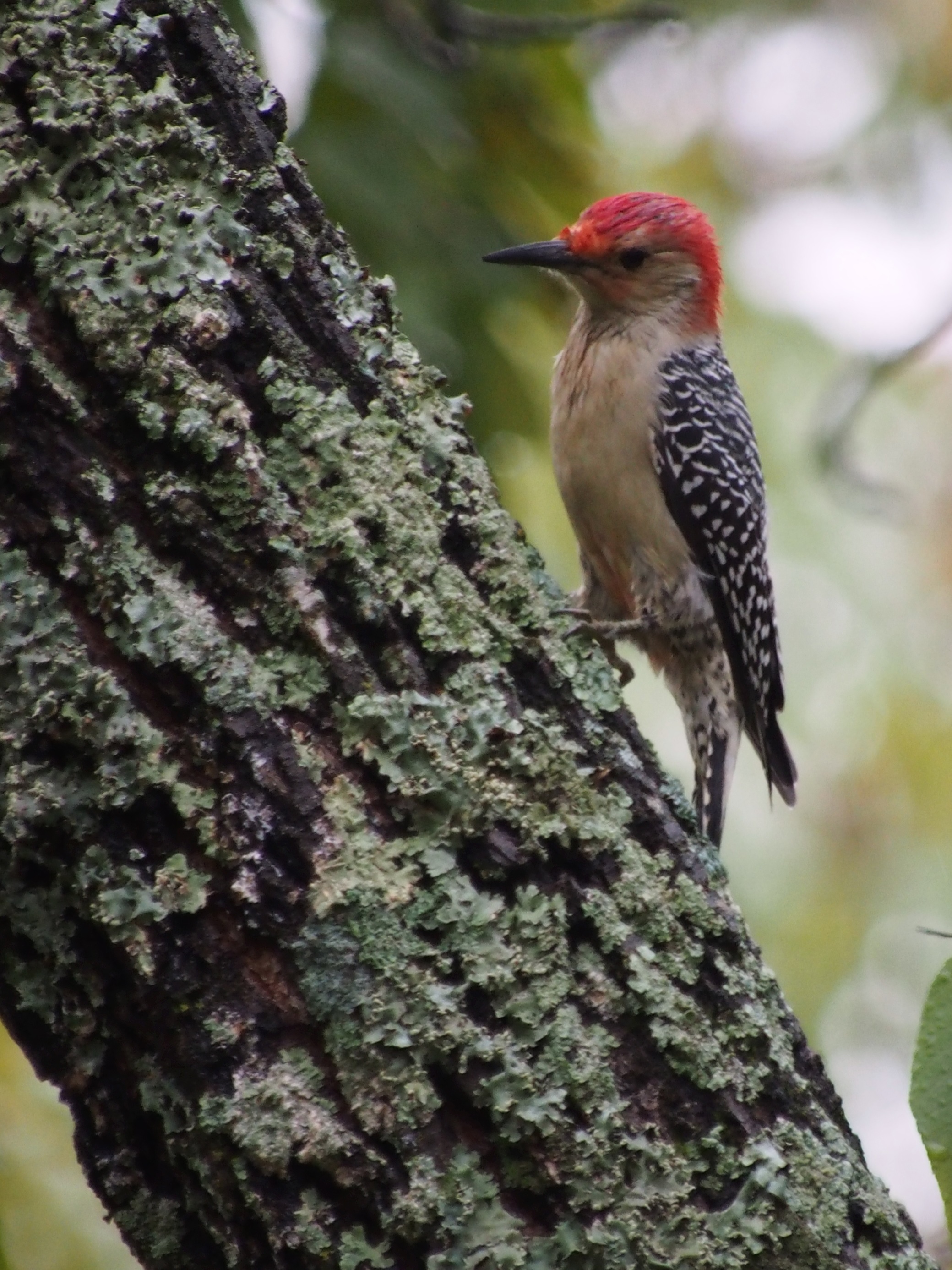
By far his favorite place is my black walnut tree just off my patio. He paces along the limbs, scouting the feeders and tapping on the old tree.
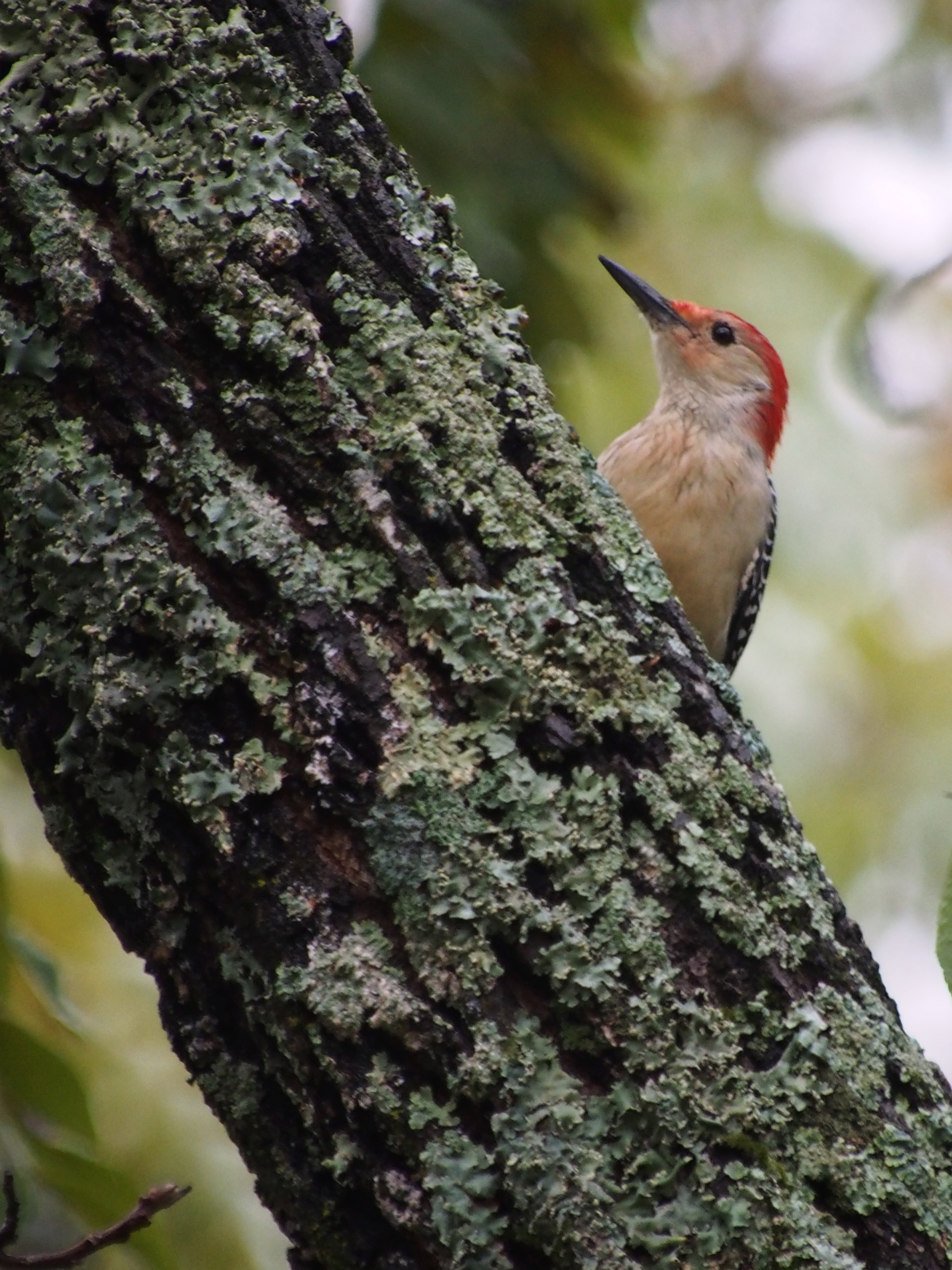
He has a distinctive call, it’s really more of a cry. It sounds mournful, sad – in contrast to his chipper face.
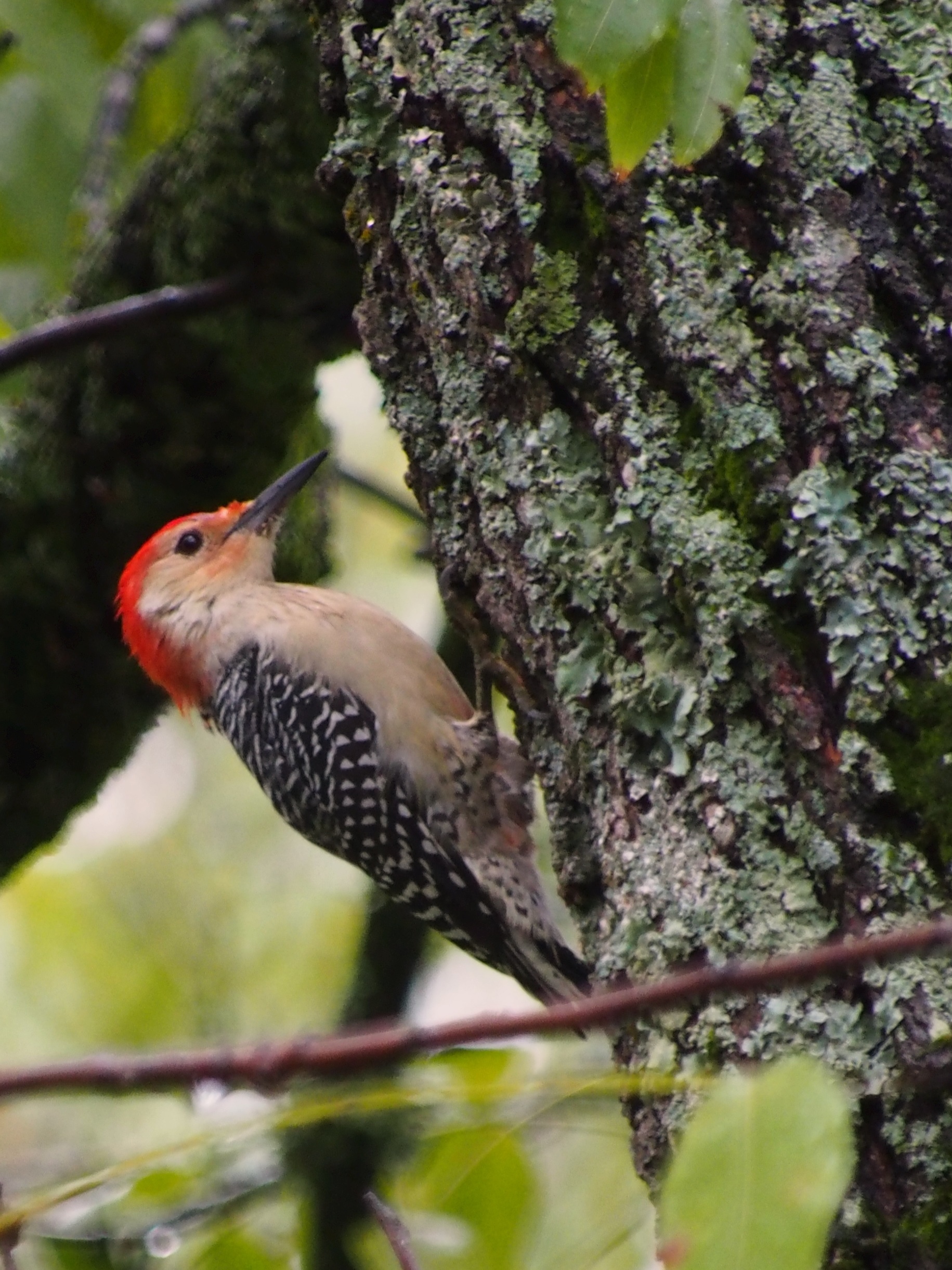
I can hear him in the woods near the house. He flies in long sweeping arcs from tree to tree.

I hear his tap and I know he’s back.
 the eff stop