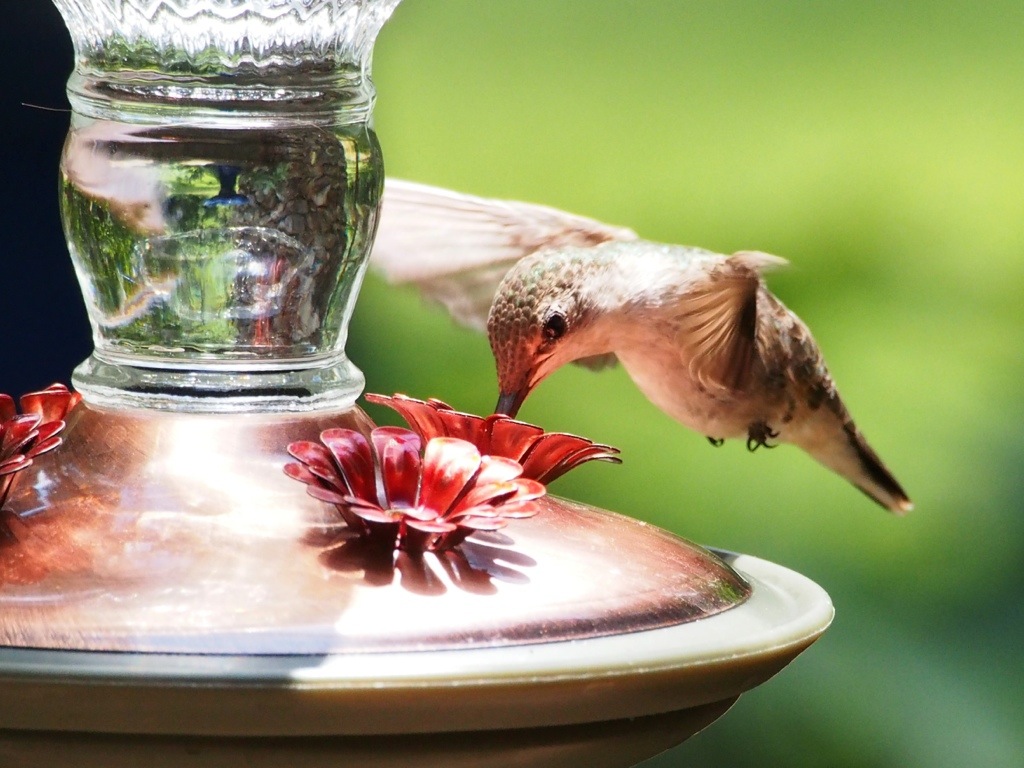
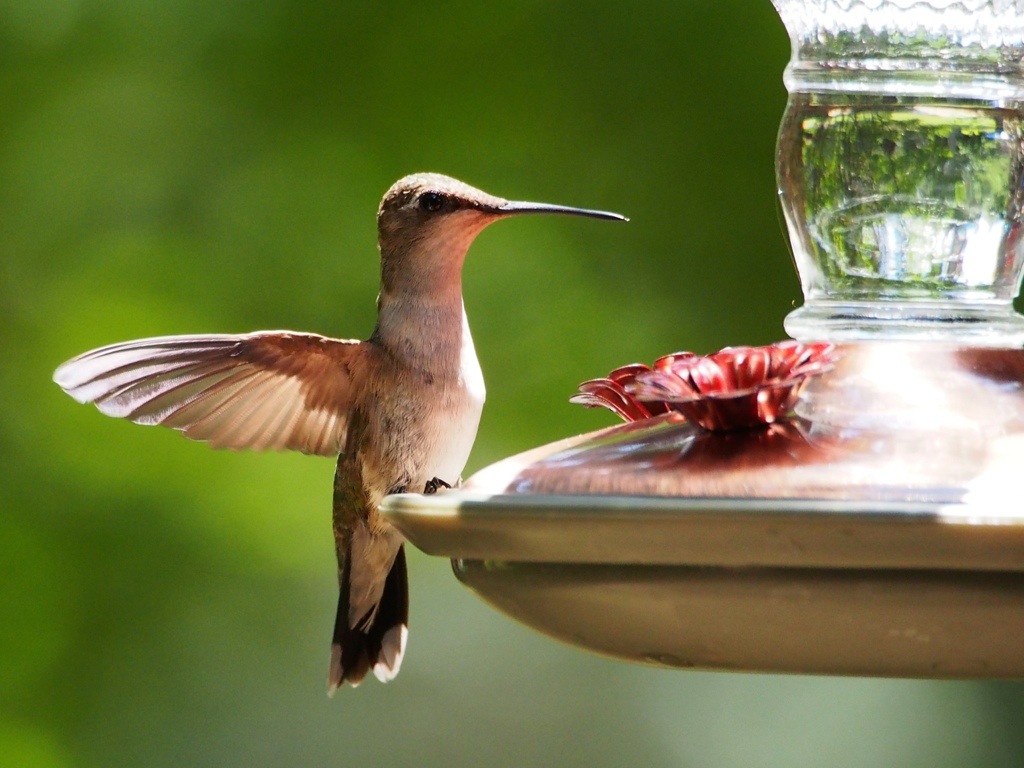
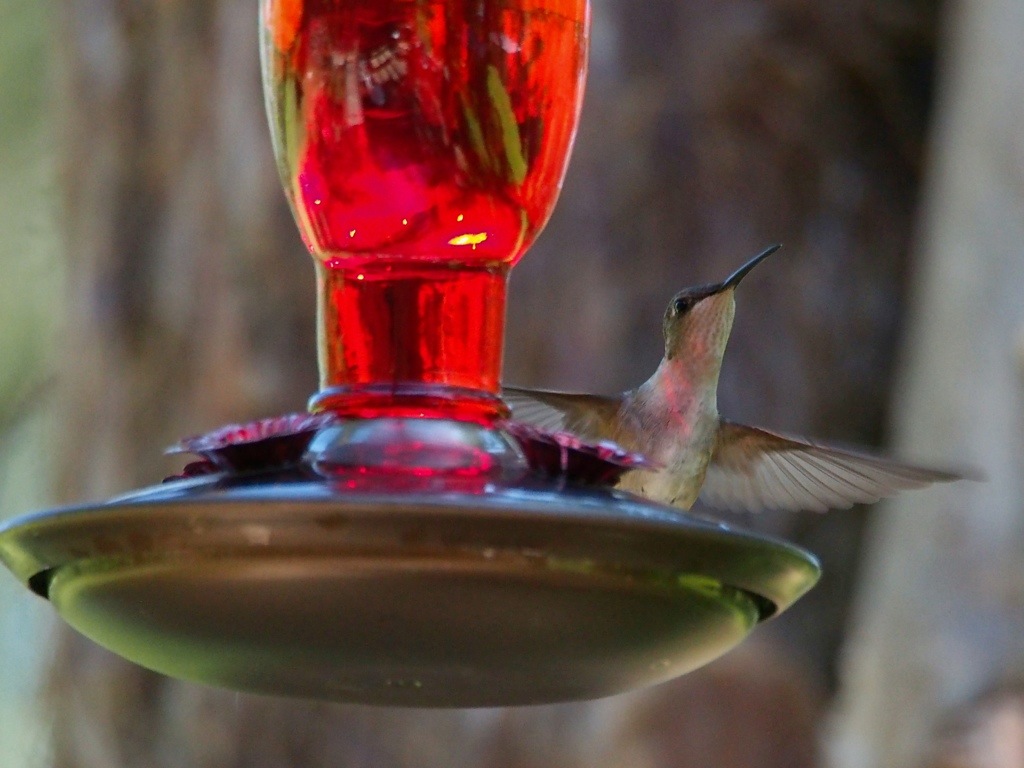
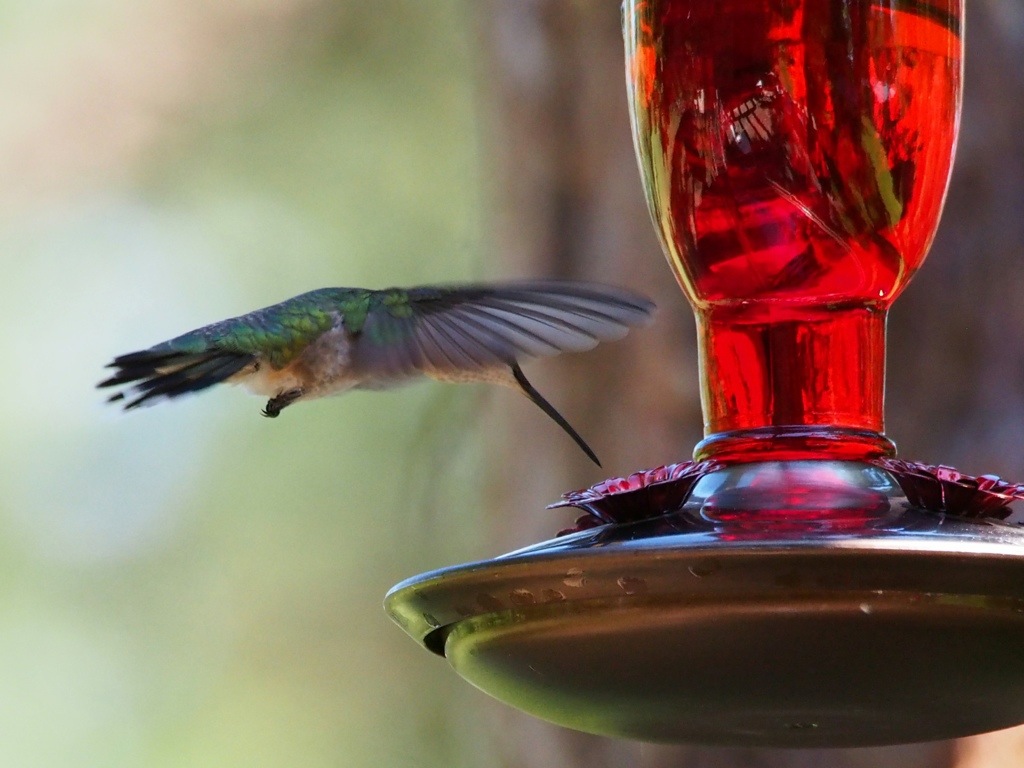
Shutter Speed Part 3 – Happy Accidents

This is the third post in a series on migrating away from my comfort zone – shooting in Aperture Mode – to exploring the wonders of shooting in Shutter Mode. In Part 1 I talked about the trade offs of Shutter vs Aperture Modes and the search for the structure of a hummingbird’s wings. In Part 2 I discussed some simple setting changes that let me get more shots off and have more keepers in a series on a visit from a bluejay. Today I want to discuss an unexpected byproduct of shooting in Shutter Mode – Happy Accidents.

In my typical Aperture mode I might have gotten an inflight shot by accident once a month that was useable. Now sometimes I got lucky when there was so much action that all I had to do was keep snapping and hope for focus like this. Apart from this flurry of activity those times when a bird launches into the air were mostly just unreadable blurs.

Now most of these shots are not really useable, but they are readable and I think I am learning more about the way a bird flies. That information will help me take better shots of birds as they launch themselves into the air – knowing the process helps me to make better guesses of where the action will be in a split second.

I have always imagined that birds launch themselves into the air by flapping their wings and lifting off – but no – they take a leap of faith, hopping or stepping off to catch the air before they even spread their wings…

Alley oop!

Alley oop! f6.7 1/1000 second ISO 1600

Geronimo!

Geronimo! f6.7 1/800 second ISO 3200

Cowabunga dude!

Cowabunga dude! f6.7 1/800 second ISO 3200

To infinity and beyond!f8 1/800 second ISO 2500

To infinity and beyond! f8 1/800 second ISO 2500

Like I said – not great photos, but they do give me a better feel for where to look for the action on take offs, but what about landings? I am learning that wings are much more open when a bird is landing – they flutter to catch their balance. Sometimes they even overshoot their target – it all happens in a split second and I always missed it in Aperture Mode…

Incoming!

Incoming! f6.7 1/800 second ISO 3200

Overshot the landing!

A real nail-biter! f6.7 1/800 second ISO 1600

All a flutter!

All a flutter! f6.7 1/1000 second ISO 1600

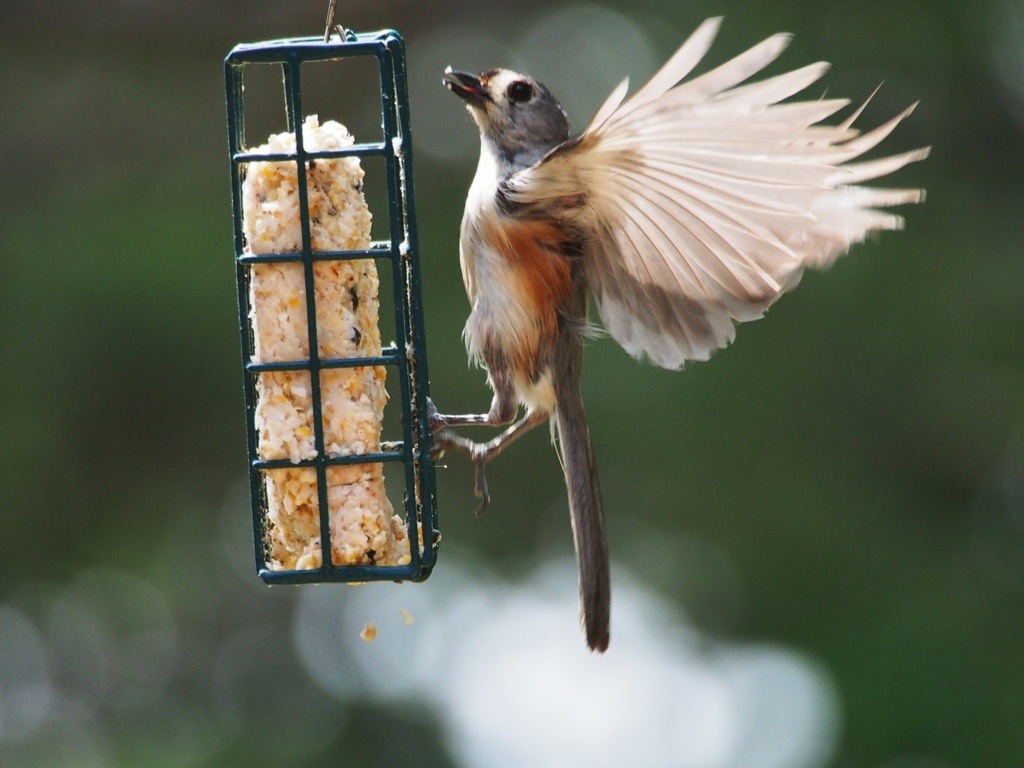
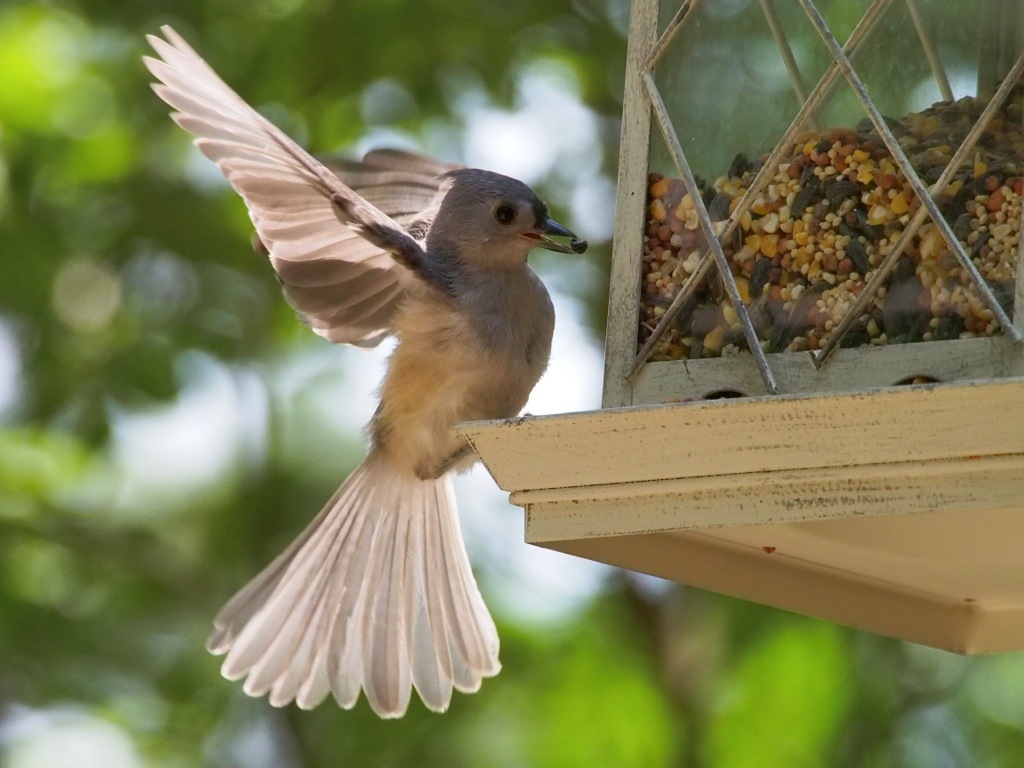
Knowing that the landing is the prime time to catch wing action was a huge advantage to shooting. I also noticed that certain feeders with narrower foot holds tended to require more wing flaps to land on, so this weekend I set out to try to make one good capture. I knew what was needed – bright light, fairly high ISO, fast shutter speed, a bird landing on a  tricky perch – not much to ask for – right?

A focused landing! f9 1/1000 second ISO 3200

A focused landing! f9 1/1000 second ISO 3200

I found this feeder a couple of weeks ago at Lowes and wondered if the birds would use it because of the narrow edge. It turns out that they do use it and if you can get into place before noon on a sunny day with the right camera settings you just might capture some wing action.

Shutter Speed Part 2 – Catching the Action = More Good Shots

In my last post I talked about my exploration of using Shutter Mode as a means of capturing action that was impossible when shooting in my beloved Aperture Mode. To make these shots I bumped up the ISO far outside of my own comfort level to make it possible to use faster shutter speeds in the available light. Since I am shooting a long lens, the aperture can never be exceptionally wide – there are no really fast zooms for the mirrorless platform yet. f6.7 is as fast as I can go at maximum zoom – so there are limits built in. In Aperture Mode I was shooting at around 1/250 second and I kept my ISO under 1000.

This set was shot with apertures between f6.7-f7.1 at 1/500 second and an ISO setting of 2500. Bluejays tend to be skittish, they bounce from tree to tree deciding whether or not to risk visiting the feeders.  I took these shots in the space of 10 seconds. There are 23 shots – I discarded three that were out of focus. As I mentioned in my previous post, I have disabled my preview so that I can keep shooting. If I had been shooting in Aperture Mode I would have gotten off about 6 shots hoping for one or two in focus, removing preview would have let me shoot more, but I am guessing my percentages would have been the same – 30% verses over 90%. Shooting in this mode gave me lots of options for that best shot.

I have also decided to leave my comfort zone in another way – my photos are in a gallery this time. I didn’t upload large size files because I am just using up too much storage space, but I think these work OK – on a future post I will use fewer images and try it larger. Click on the first image to see the images in the order in which they were shot – this feature shows the camera settings on the lower right of the screen for each image. If you click fast enough you will get a feel for what my encounter with the jay was like.

Shutter Speed Part 1 – It Gives You Wings!

In photography there are always trade-offs. Modern DSLRs try to balance the trade-offs to give you the perfectly exposed photo.

When it comes to shooting mode, I’m an Aperture kinda girl. I love the control I have over the DOF (Depth of Field). WIthout thinking I can spin that adjustment dial until the image is bright enough and the subject is isolated to my satisfaction. I developed my love of the Aperture Mode over the course of years of shooting things that don’t move a lot, like flowers and rusty things. When I started shooting birds, I started in Auto to see what the camera would choose for the situation. I noted the shutter speeds seemed to be between 200-350. Moving to Aperture mode, I kept that number in mind. Since I hate noise (grainy-ness) and love bokeh (the cool blurry swirly backgrounds in photos that make the subjects pop), I kept the ISO low and the Aperture pretty close to wide open. That is my comfort zone. Unless I am shooting in a studio under a light kit I keep to that formula.

That brings us to the trade-offs. What I give up for my love of a shallow DOF and lots of creamy bokeh is the ability to stop action unless there is a ton of light. Sometimes I have gotten pretty lucky, but not nearly as often as I would like. I see in focus action shots of wildlife all the time, I see them taken with mirrorless cameras too – there has to be a way. Trying a new mode would prove to be part of the answer. It’s time to leave my comfort zone and tread out into the wilderness that is Shutter Mode! After reading some articles I have decided that since this whole bird obsession thing is an exercise aimed at becoming a better photographer, I owe it to myself to try this long neglected mode on my camera.

This weekend I was pretty much house bound with a nasty bug courtesy of a tick bite acquired on a recent hike, so I read a few articles about shooting birds. Something I had never considered was increasing the ISO – for me the low ISO has been like a treasured idol in my toolbox of predictable outcomes, even though my camera has one of the highest ratings for performing at higher ISO settings. Another thing I had to give up was the image review feature – the more I shoot the more I have seen how that third-of-a-second image in my viewfinder has robbed me of shots, losing my subject as the image flashed onscreen. By Sunday I resolved that I was ready to take off the training wheels and try this out.

I decided to start a quest to understand the structure of a hummingbird’s wings. I have shot lots of hummers in the last year and have always focused on their eyes whenever possible. I still did that, but I did a few things to increase my odds of getting a good shot. First, I made my focus point as small as possible so that I did not have to pre-focus on the feeder first and hope to get a focus on the bird. Next, I chose certain feeders to focus on – ones that were in bright sunlight. Finally, I deleted all shots of birds not in motion – I have hundreds of clean focused shots of birds sitting still – I want to see motion. I also deleted shots where the wings were not definable. I took some test shots at different shutter speeds – 500, 640, 800, and 1000 – each of these settings required a change in ISO to produce an image bright enough to use. I used to work with ISOs from 200-800 – now I would work as high as 2500. Beyond that I was just not happy with the grainy nature of the test shots in the available light on that day. This required me to change settings as the light changed – it was a partly cloudy day so I got lots of practice.

The shots that follow are not great, but I am seeing that it is possible for me to get closer to capturing or potentially stopping movement. Stopping a hummingbird’s wing is an unrealistic challenge – but I do think that I understand the structure better now.

I started with some of my better shots in my old mode taken in the last week – usually in pretty good light to begin with.

f6.7 1/250 sec ISO 100o This is one of my better efforts in Aperture Mode

f6.7 1/250 sec ISO 1000
This is one of my better efforts in Aperture Mode

f6.7 1/250 second ISO 1600 This is a shot where I just increased the ISO - the light was almost perfect so even in Aperture mode I got a sense of the feathers.

f6.7 1/250 sec ISO 1600
This is a shot where I just increased the ISO – the light was almost perfect so even in Aperture Mode I got a sense of the feathers.

F6.7 1/250 sec ISO 1000 Switching to Shutter Mode and bumping up the ISO first

F5.9 1/250 sec ISO 1000
Still in Aperture Mode and bumping up the ISO first – still wonderful light

f6.7 1.250 sec ISO 250 Starting to loose the light - but because the feeder was close it still worked - I can see the ribs of the feathers

f6.7 1.250 sec ISO 250
Starting to lose the light – but because the feeder was close it still worked – I can almost make out some of the structure of the feathers – last shot in Aperture Mode.

Now onto Shutter Mode – these shots were all taken yesterday.

f6.1 1/250 sec ISO 1600  After a short rain shower I switched to Shutter Mode - kept the speed low and pushed the ISO a bit. I focused on the closer bird and can begin to see definition in the feathers.

f6.1 1/250 sec ISO 1600
After a short rain shower I start a new day in Shutter Mode – kept the speed low and pushed the ISO a bit. I focused on the closer bird and can begin to see definition in her feathers.

f6.1 1/250 sec 1250 ISO The same bird moves to the other side of the feeder - you can clearly see the layers of feathers that I have previously been unable to capture. The ISO is making a difference.

f6.1 1/250 sec 1250 ISO
The same bird moves to the other side of the feeder – you can clearly see the layers of feathers that I have previously been unable to capture. The ISO is making a difference. I only got this shot because I disabled the preview feature. With no image to review I can keep shooting.

f6.7 1/640 sec ISO 2000 The bird is scratching in flight - in Aperture Mode this shot is a goner, it would have been a blurry mess. In Shutter Mode it is fairly clear and you can see the underside of his wing.

f6.7 1/640 sec ISO 2000
The bird is scratching in flight – in Aperture Mode this shot is a goner, it would have been a blurry mess. In Shutter Mode it is fairly clear and you can see the underside of his wing, plus it stopped the action of his foot.

f6.7 1/800 sec ISO 2000 A bit too much sunlight, but this shot captures the recoil motion of a wing flap. Personally I like the inverted image of my pergola in the feeder too.

f8 1/800 sec ISO 2000
A bit too much sunlight, but this shot captures the recoil motion of a wing flap. The smaller Aperture setting has slightly reduced DOF – just a bit deeper focus on the bird and feeder. Personally I like the inverted image of my pergola in the feeder too.

f6.7 1/800 sec ISO 2000 This is more detail than I have ever seen on a wing - the sunlight was pretty intense, blowing out a couple of areas, but the grain is OK so far.

f6.7 1/800 sec ISO 2000
This is more detail than I have ever seen on a wing – the sunlight was pretty intense, blowing out a couple of areas, but the grain is OK so far.

f6.7 1/640 sec ISO 2000 It's clouding up and I'm losing light. More grain than I like but I am still seeing feather structure - managing ISO is the crucial.

f6.7 1/640 sec ISO 2000
It’s clouding up and I’m losing light. More grain than I like but I am still seeing feather structure – managing ISO is the crucial.

f6.7 1/640 sec ISO 2500 Same bird - another shot I would have missed if I hadn't turned off the preview feature and an angle I rarely capture because the movement is the closest thing making focusing a crap shoot. I' still seeing feather structures even in this lower light.

f6.7 1/640 sec ISO 2500
Same bird – another shot I would have missed if I hadn’t turned off the preview feature and an angle I rarely capture because the movement is the closest thing making focusing a crap shoot. I I’m still seeing feather structures even in this lower light.

f6.7 1/500 sec ISO 2500 The sun peaks back out and I get a shot with a bit lower speed - you can see how much feather detail is lost by moving below 1/640 second.

f6.7 1/500 sec ISO 2500
The sun peaks back out and I get a shot with a bit lower speed – you can see how much feather detail is lost by moving below 1/640 second.

So to sum up – speed + ISO + good lighting = better ability to stopping action, but the trade-off can be grain in your image unless the light is really great. My camera has a huge ISO range and I just need to push it to see how far it can go on a good sunny day. This probably seems like old hat to most wildlife photogs, I was probably doing things the hard way and I clearly was not making use of my camera’s capabilities. I have been resistant to trying to shoot fast-moving things like sports events because I have limited myself by staying in that comfort zone – it’s time for me to break things loose.

No Bird Left Behind

When sorting through my shots with an eye towards putting together a blog post, sometimes I find that some of my favorite images just don’t find a place. I have never really liked posting a single image – I like making sets, so what do I do with these shots? Today I decided to put the orphaned shots together into a set of my favorite leftover shots of the Spring of 2013.

Not all of these are perfect or in focus, with wildlife sometimes you take the shot because it just happens. Where a shot fits into a previous post, I have placed a link into the text.

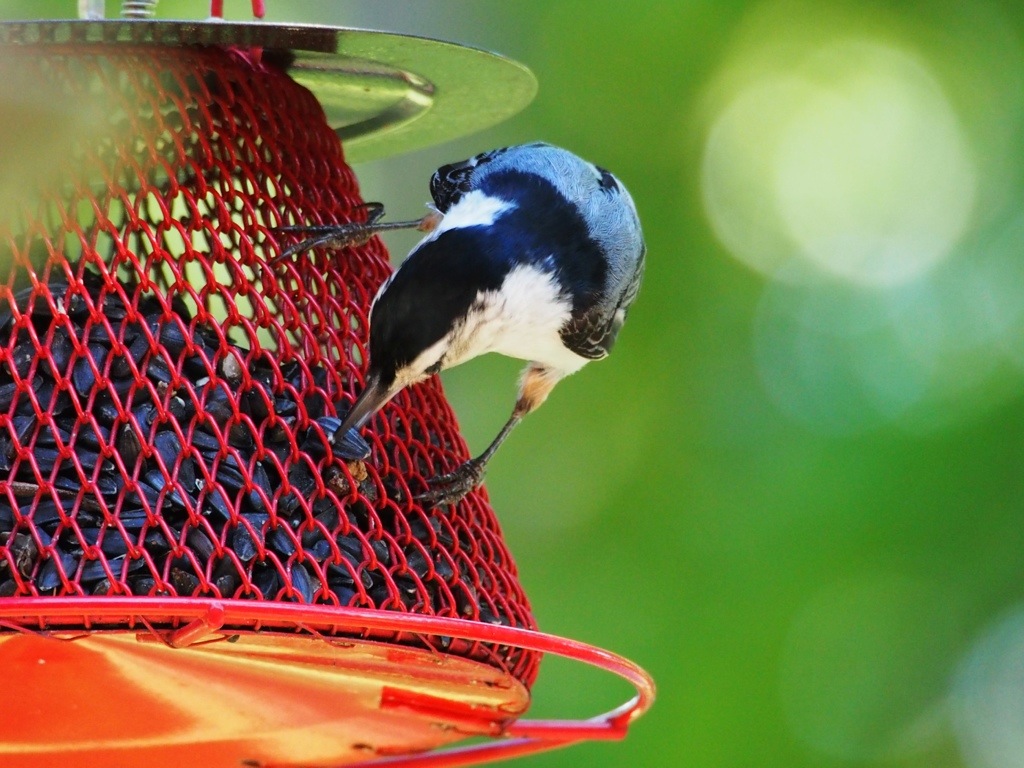
Precision extraction

Precision extraction

I adore nuthatches, but almost all of my shots are upside down or their swooning pose. These are really adroit birds and can climb almost any surface. I like this shot because it shows off his dexterity. He will take that single seed and fly to a secure perch where he will carefully open and eat it.

Rainforest Cafe

Rainforest Cafe

Robins are everywhere and I loved seeing them in the rain forests of Washington. They are usually spotted on the ground looking for worms – I like the chance to see one at eye level.

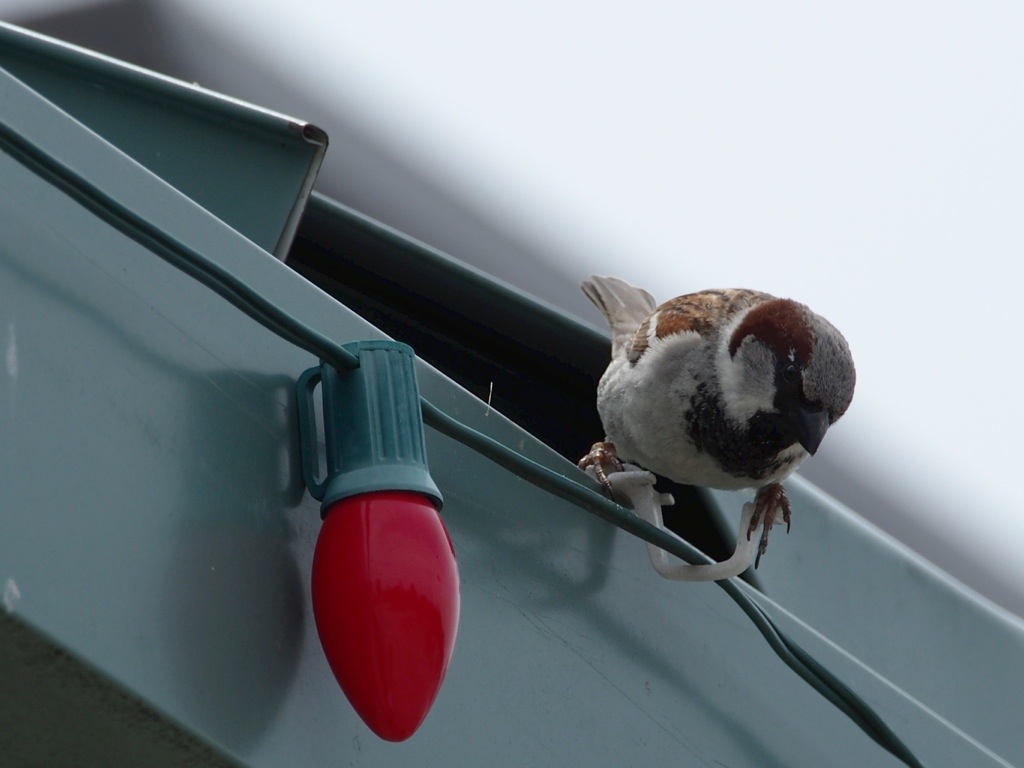
It's beginning to look a lot like Christmas

It’s beginning to look a lot like Christmas down there…

Our local hardware store has a facade covered with signs that the house sparrows nest in. They hop all over the roof and barely take notice of customers passing below them. I though it was interesting to see how this little guy has made use of even the Christmas light brackets as a perch. Ho Ho Ho!

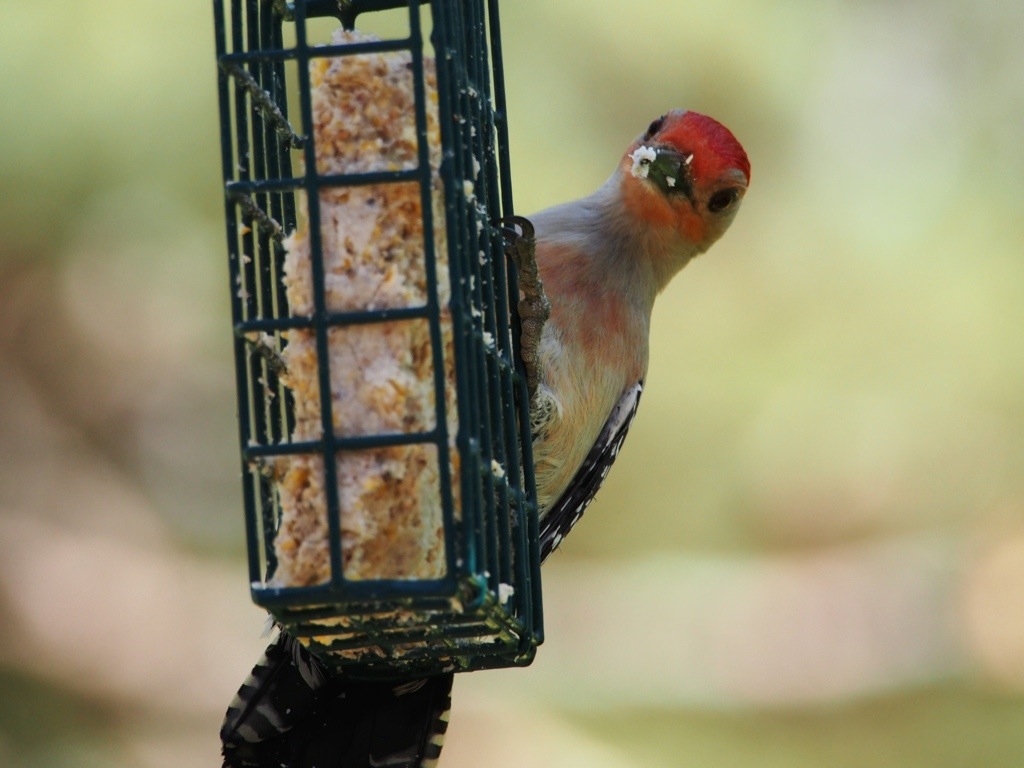
Talking with his mouth full

Talking with his mouth full

The red-bellied woodpecker is one of my favorite birds. They can be shy, but once they get used to your proximity to the feeders they stick around unless you make sudden movements. I love it when they look back at me.

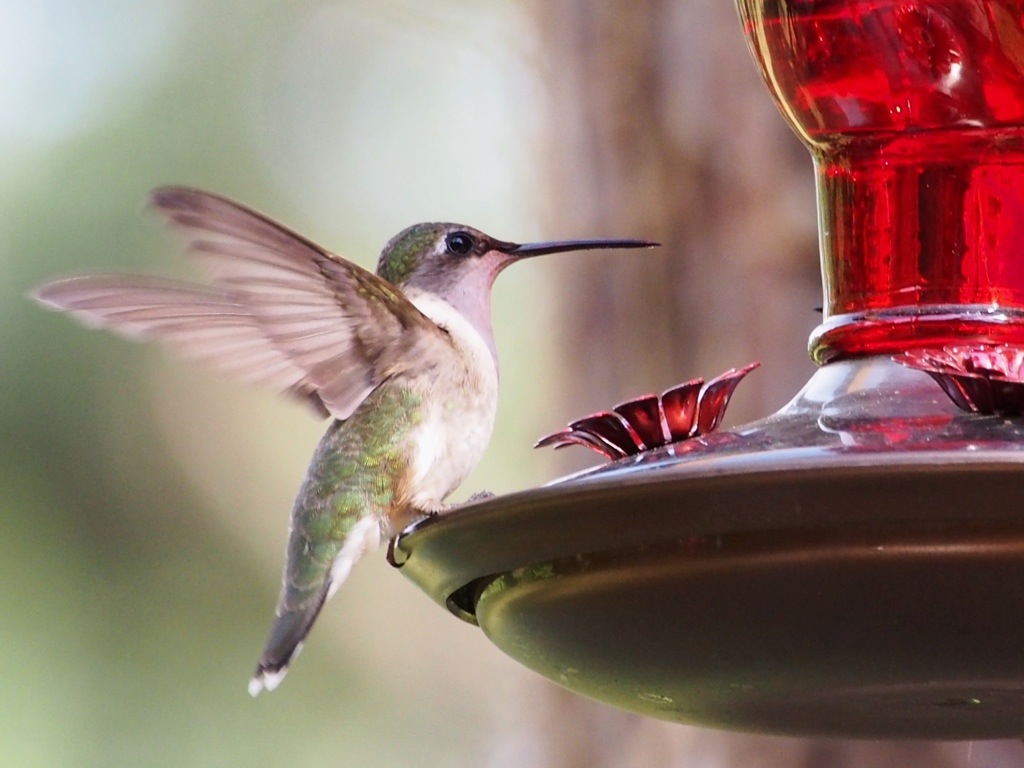
Off balance

Off balance

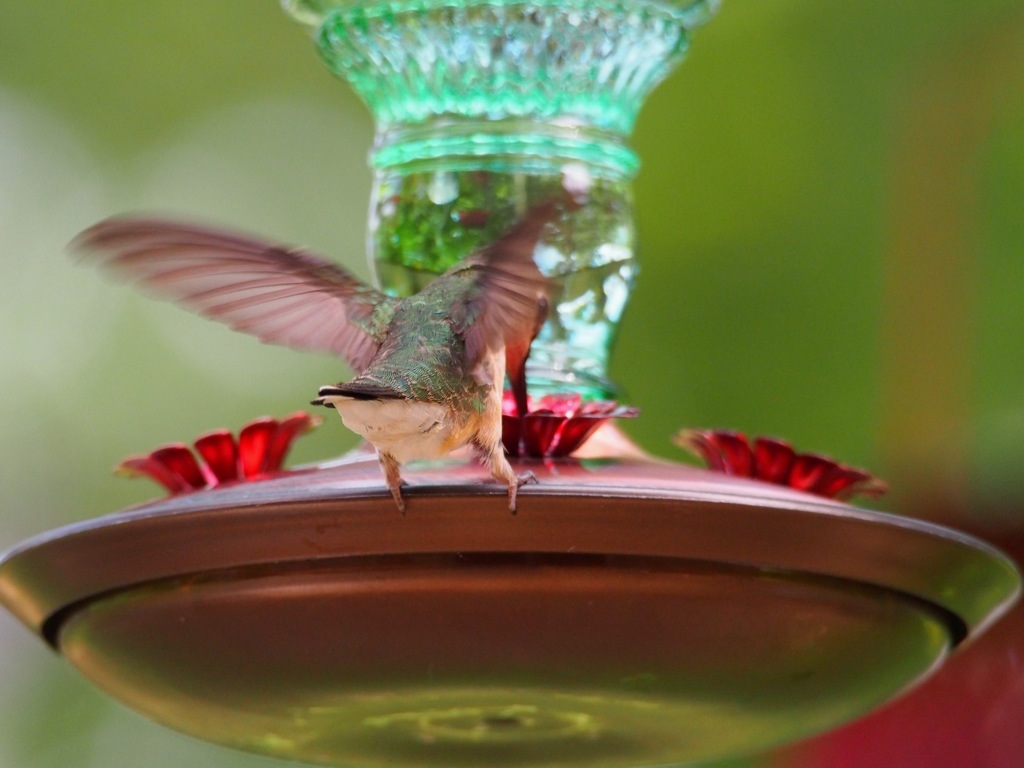
This hummer prefers to drink from the feeder with no perch, sadly she almost falls off every time she sits up after drinking. She flaps her wings to regain her balance before drinking more. I rarely get a good image of the wing structure of a hummer. She reminds me of a gymnast trying to stick the landing.

Out on a limb

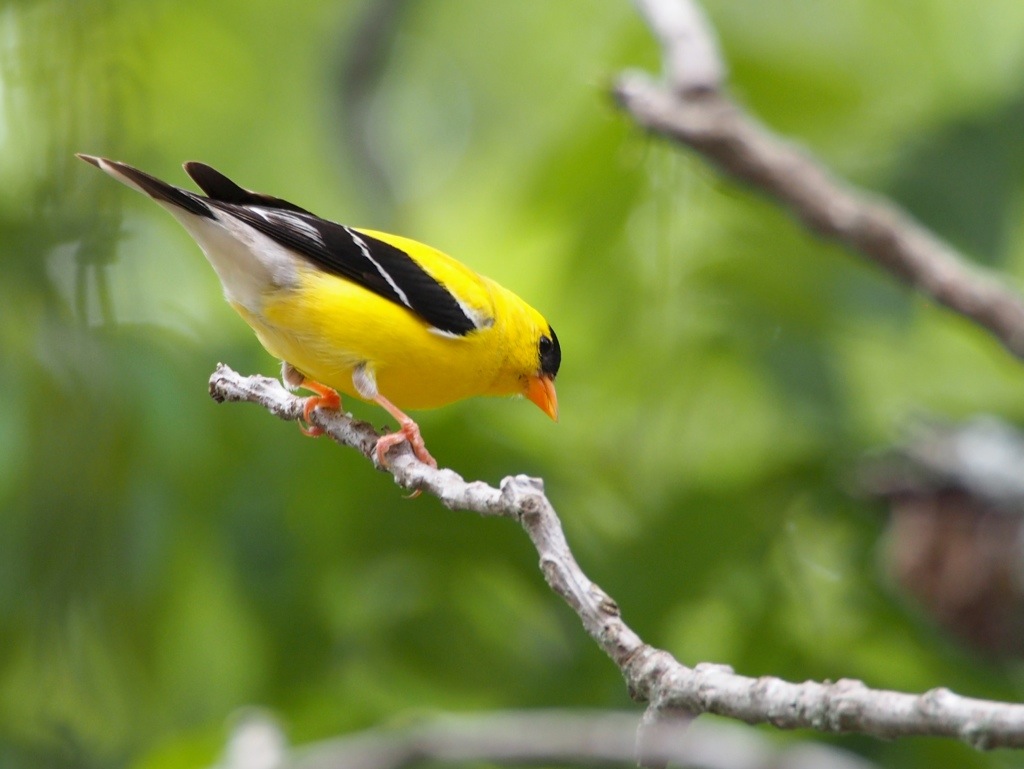
Out on a limb

This male goldfinch was the first to return with his new yellow summer outfit. He is unflappable. Dogs barking and racing below his feeder don’t bother him. Yesterday a crow zipped by and almost carried him away – I watched in horror as the collision happened right in front of me. He did a tumble and landed on his feet on the porch – I saw some white down float upward. He took a perch a few feet off the ground and caught his breath. 10 minutes later he was back on his perch feeding. As I have said before, goldfinches are badasses.

Hunkered down

Hunkered down

There is just so much going on when you look at the feathers on a peacock – stripes, eyes, shimmer – I liked getting a shot of most of it happening in one spot.

That boy's wearing polka-dot panties

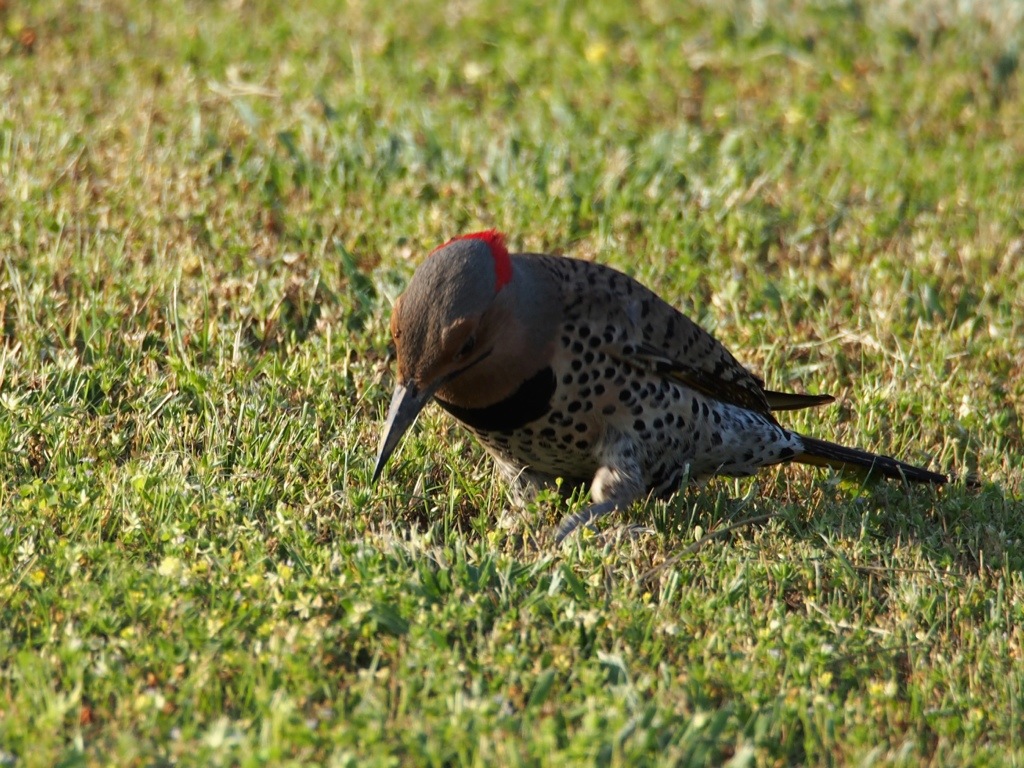
That boy’s wearing polka-dot panties

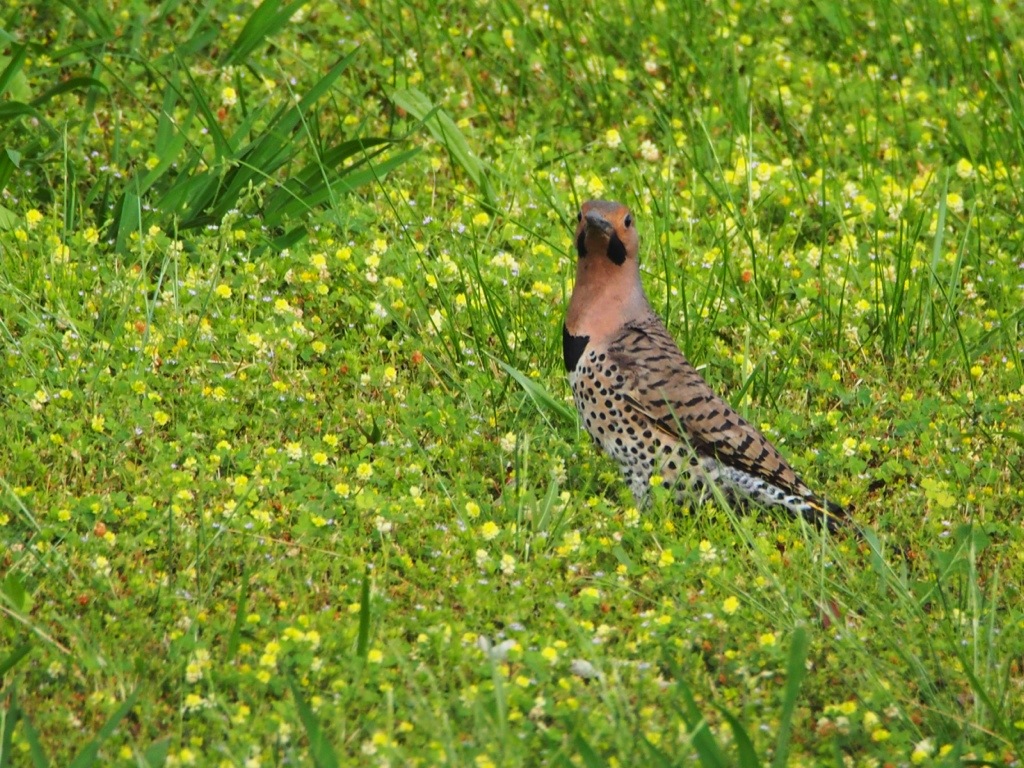
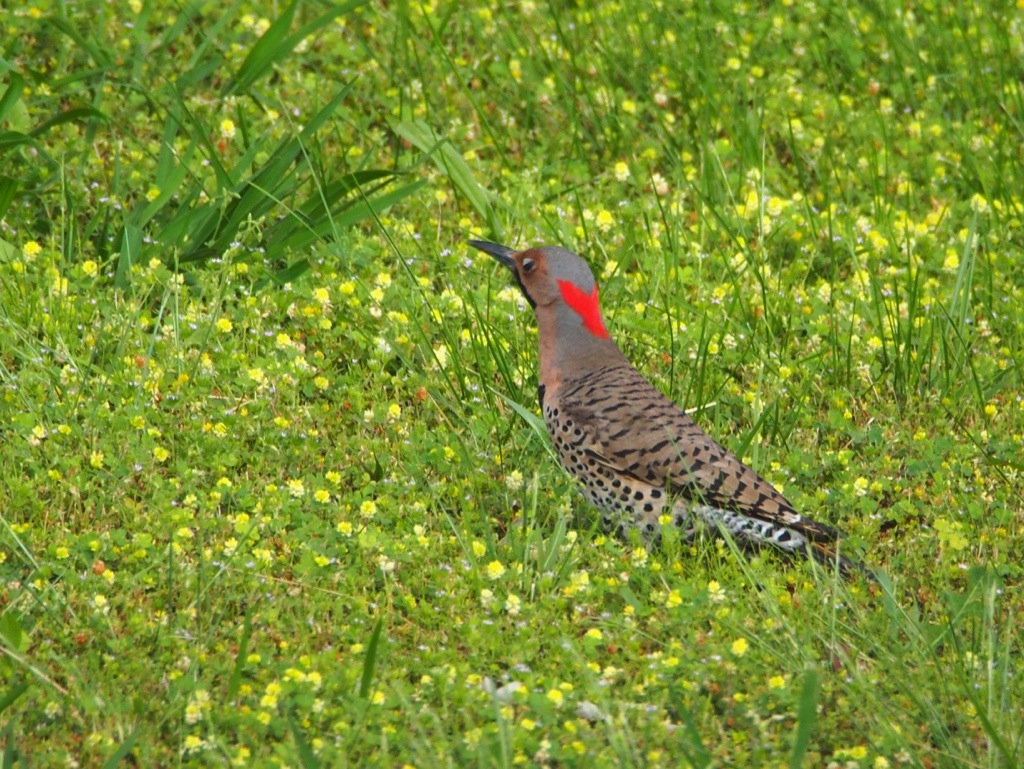
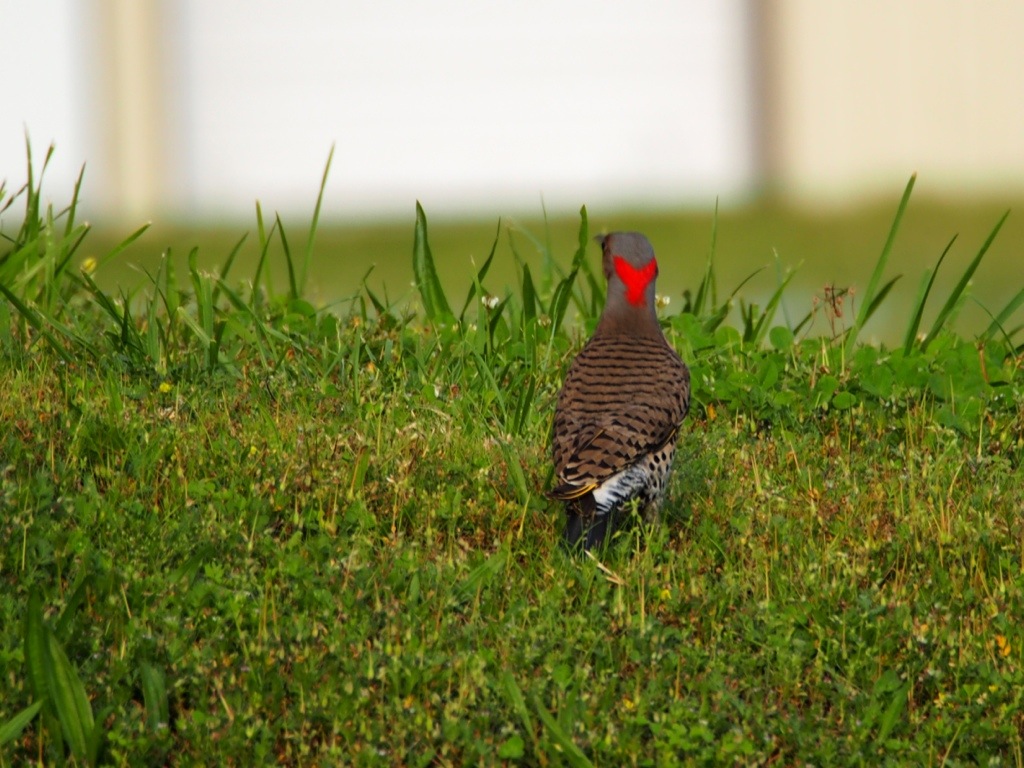
If you’ve read my blog before you may recall that I have recently discovered a northern flicker near the grocery store where I shop. I am officially his stalker now. I know where he lives and I know where he likes to eat. Kinda creepy, I know, but he’s the one with the silly underwear.

Solar lighting

Solar lighting

These late spring evenings have been producing some interesting lighting – as the sun sets behind the trees at the Stone House the light breaks into pieces – when that combines with iridescence it can make for some interesting shots. I love how the feathers on this guy’s throat switched from black to this amazing bronze as he turned his head.

Covert operation

Covert operation

The pileated woodpecker was shot through a window, he’s so shy that it’s taken me a year to get an in-focus shot of him, and as soon as I moved closer to the window to frame a better shot without the pane showing, he bolted. Lesson learned, always take the shot before improving your position.

Mohawk

Mohawk

My goldfinch friend reacts to me whistling – often they will cock their head in an effort to catch the sound in one of the earholes they have on either side of their heads, but this time he just puffed up his head – I’ve never seen that before.

Puff Daddy

Puff Daddy

This male hummer is guarding his feeder. As intruders approach he leaves his post, flying sortis to defend his position. When he lands back at base he puffs up to add to his intimidating presence.

Krishna in the grass

Krishna in the grass.

My friend Krishna is a little camera-shy these day. The lawn has been cut down at the Grange Hall and he is lacking cover, so he heads off towards the woods. Sometimes a man needs to be alone with his thoughts and away from the prying eyes of the paparazzi.

Seeing red

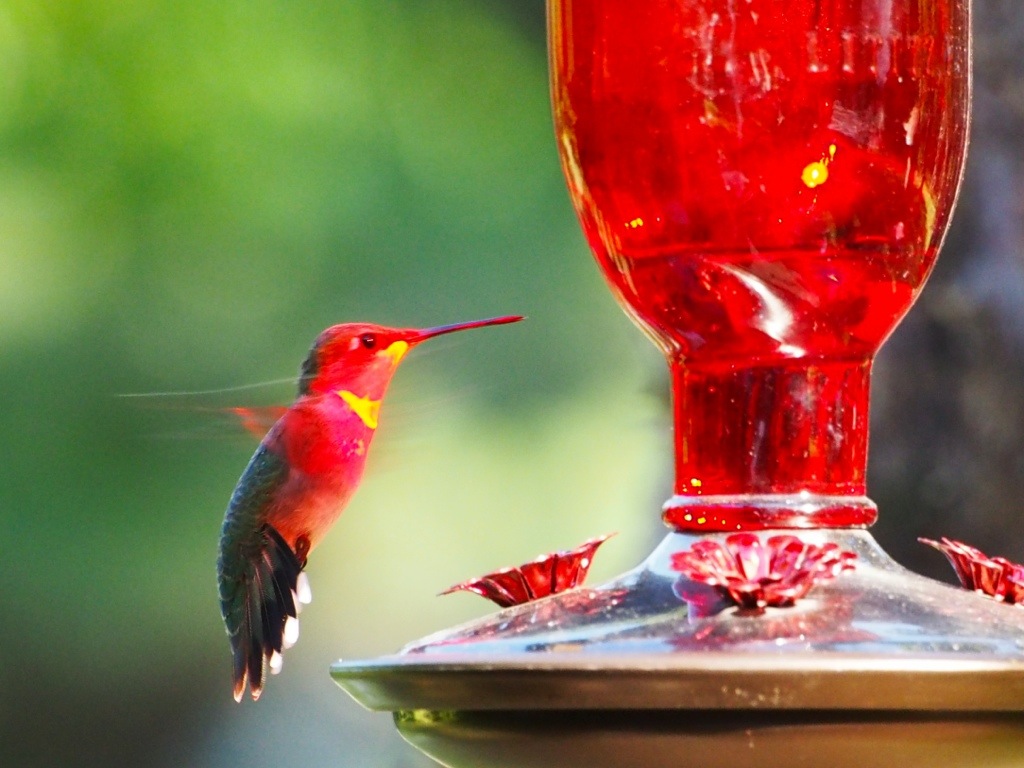
Seeing red

Another shot of that late evening sunlight – for just a moment the sun shone right through the red bottle and onto the hummer – this is one of those you wish you could get another crack at – in low light focussing is more difficult. Imperfect or not – it was an unusual moment.

Focused on his next meal

Focused on his next meal

I rarely get a shot at a hawk near the house. I spotted this guy yesterday on my drive home. The woods here are so thick that I almost never see one in flight, but he passed right in front of my Jeep. I pulled up and turned off the motor. Shooting through thick woods made focussing tricky but I finally dialed in on his eyes and then he took off – an encounter of seconds. I love his intensity, but I am glad that he feeds far away from my feeders.

Bliss

Bliss

This photo is the one that made me decide to write this post. I almost posted it alone, but decided to give the library another once-over after deciding against it. Who knew that hummingbirds have eyelashes? I rarely suggest clicking on an image, but I do on this one – the structure of this birds eyelids are amazing! I occasionally get a shot of a bird in the process of blinking – and I typically discard those, but this one seemed different – serene, graceful, poetic – and none of those things have to do with me and a camera. It was just a moment and I happened to snap at just the right time.

So far the springtime has been amazing – birds are singing, I am shooting, and all is well with the world – at least it is here at the Stone House.

The Sentries

As we move into summer here at the Stone House, there is a battle raging. Volleys are launched from every side. Airstrikes, dive bombs, there’s chatter in the wind. The fighting is fierce, but before summer is over one will reign supreme…

Back off!

Back off!

…over the Hummingbird feeder.

Today I salute those bold men and women on the front lines – staking their claim to that sugary water and holding off all comers.

Here’s to the heroes of summer – the sentries.

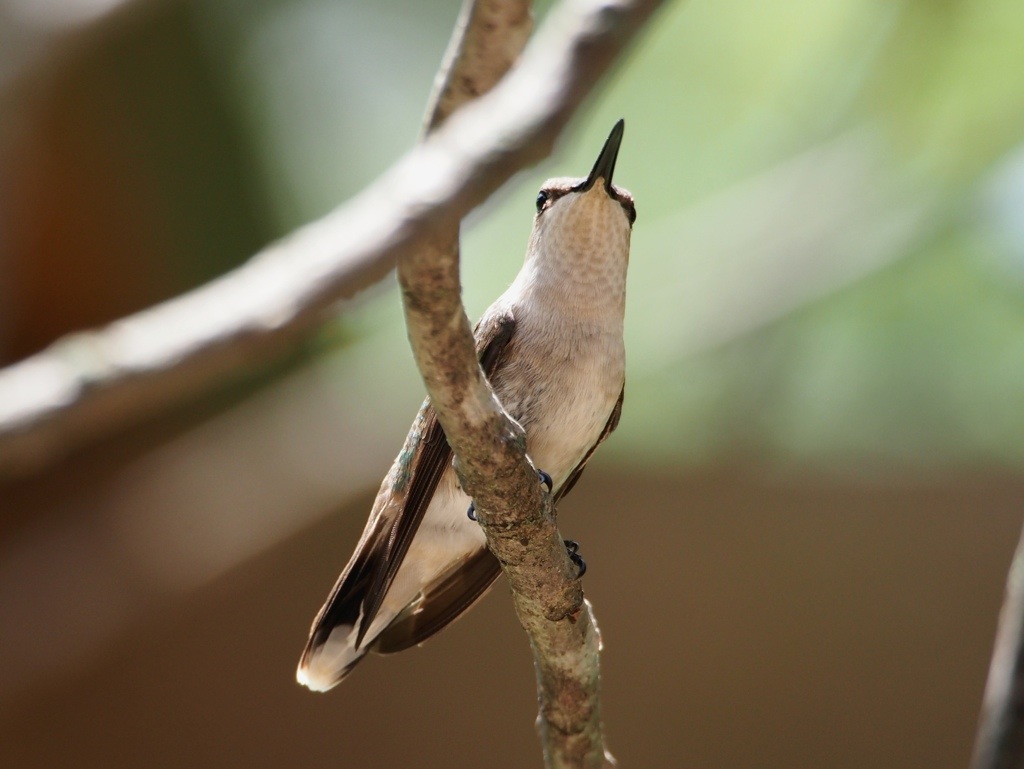
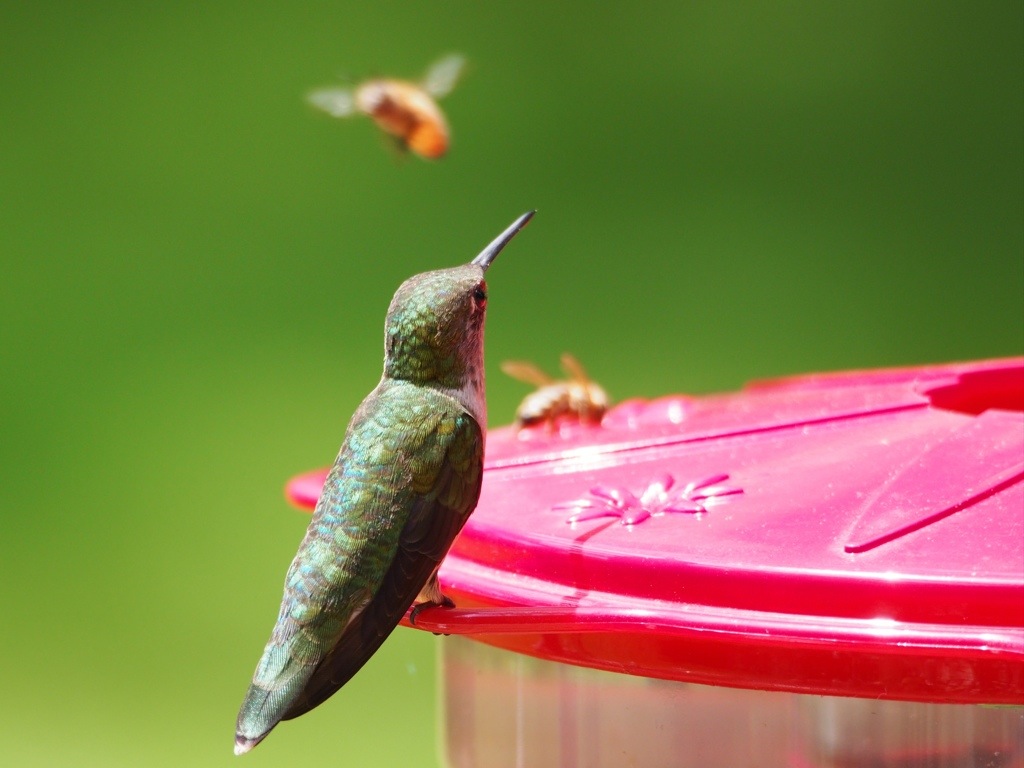
Looking skyward

Looking skyward to face the enemy

Fending off an alien invasion

Fending off an alien invasion

Keeping watch over his prize

Keeping watch over his prize

Watching for an areal assault

Watching for an aerial assault

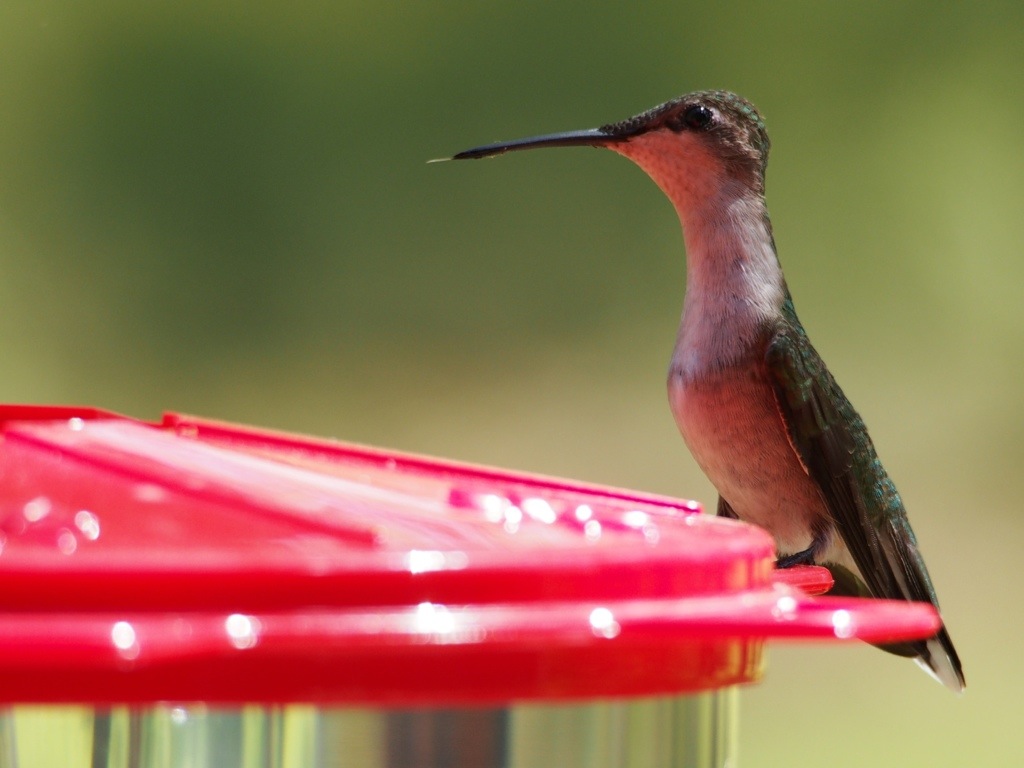
Keeping the enemy in her sights

Keeping the enemy in her sights

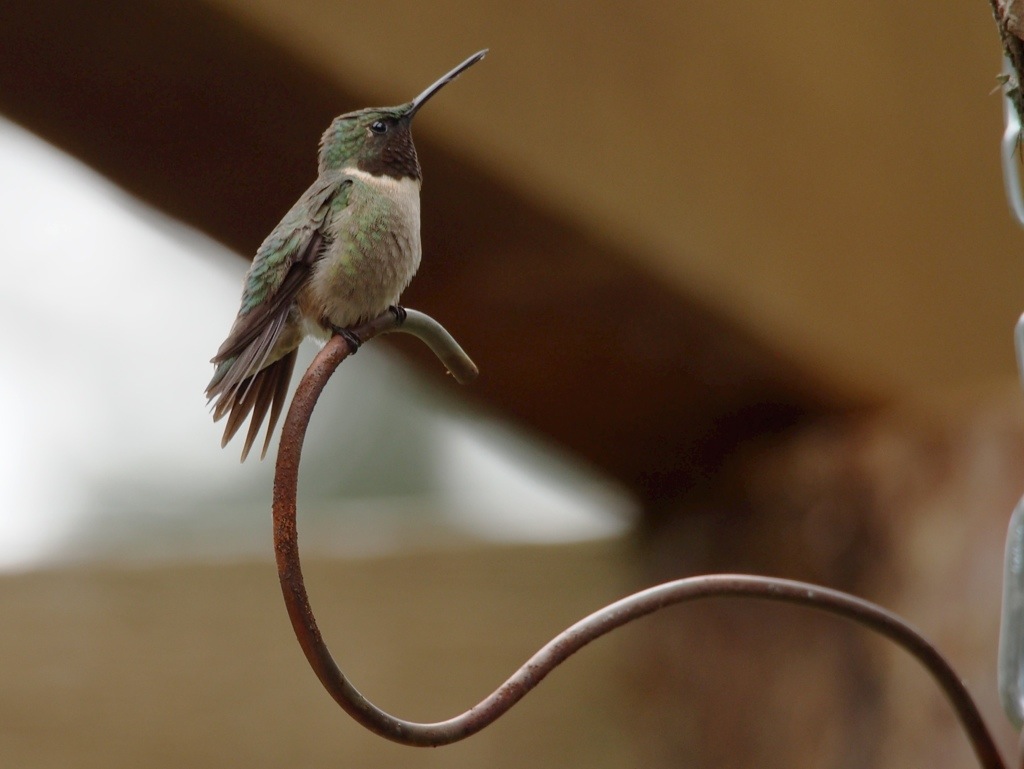
Out on a limb to protect his supply line

Out on a limb to protect his supply line

Going the extra mile to spot the threar

Going the extra mile to spot the threat

Stalking the enemy

Stalking the intruders

Staring down the enemy

Staring down the enemy

Ducking for cover

Ducking for cover

Tracking the enemies movements

Tracking the enemy’s movements

Arial reconnaissance

Aerial reconnaissance

Preparing to strike

Preparing to strike

Holding onto the high ground

Holding onto the high ground

The summer skies belong to you – the bold, the fierce, the hummers.

Why do Birds Suddenly Appear…

…Every time – I am near?

OK – I stole that from my friend Honie. It was in her comment on my recent post about seeing a Northern Flicker for the first time. She’s clever like that.

Anyway, I don’t think they appear when I am near, I think I have just learned to notice them. I lived at the Stone House for 9 years before I really paid attention. I only took note because I bought a bird identifying app for my iPhone. It plays the birds calls and I wanted to see if I could call birds with my phone. I took an old crate out into the woods and played the cardinal call and was thrilled when they started talking back to me. I tried taking their photos, but I just didn’t have the patience or focus to catch them. A little over a year ago I decided to really work on shooting birds with the thought that it would improve my ability to make quick decisions behind the lens. I thought I would try it for the remainder of the calendar year, but I was hooked. I find shooting birds to be the most relaxing thing and I do it several times a week. I have come to know some of them personally and I think it has made me a better photog in ways I never imagined it would. I have learned to shoot better in weather and low light situations, I do a better job of getting a sharp focus, I’m more patient about getting the best shot.

I notice birds absolutely everywhere now and I use that same app to identify and learn about them all along my way. On my recent trip to the Pacific Northwest I got a chance to see some amazing birds, and some ordinary ones too – as if any bird is really ordinary…

The Raven

Although ravens have an amazing ability to fly and soar with the eagles, they often seemed content to walk around on the roadsides. Watching them I can see where the Looney Tunes got that silly bird walk from.

Although I can soar with eagles, I prefer to stalk park visitors and con them out of Apricots

I loved seeing so many ravens, I had no idea that they were such characters and that they could be so playful. I recently read that they can fly upside down for great distances – why, well because they seem to like to show off.

The American Robin

Don't even think of letting your dog out of the car...

Don’t even think of letting your dog out of the car…

I see robins everywhere – I almost don’t think of them as birds who really live in the wild away from people, but this was shot in the Hoh rainforest.

Barn Swallows

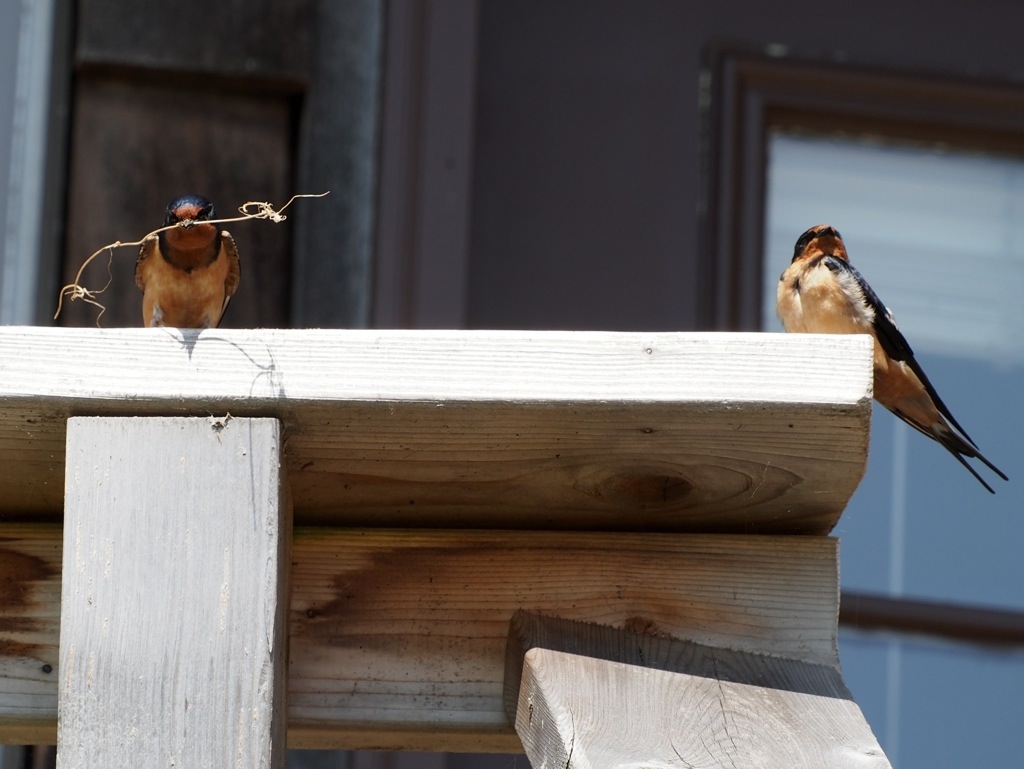
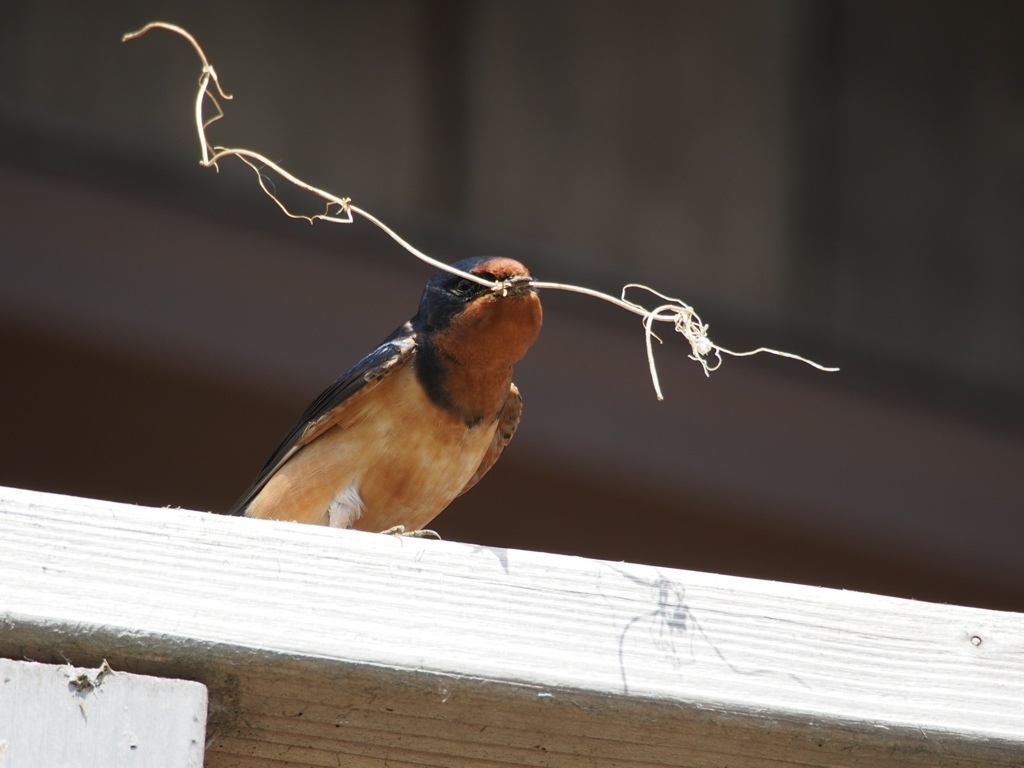
I picked out this stick just for you honey - do you love it? It'll look great right above the mantle...

I picked out this stick just for you honey – do you love it? It’ll look great right above the mantle…

...sigh

…sigh

Do you like this stick better?

Do you like this stick better?

I felt for this guy – he showed her several sticks and even tried to put them into the nest to please her – she never gave him the time of day.

Rufus Hummingbird

Against the wind

Against the wind…and the ocean, and the barn swallows with sticks…

This hummer was perched on a limb overlooking the Pacific Ocean – he was singing his heart out as barn swallows swooped by – the wind was howling, the waves were crashing, still he sang.

Stellar’s Jay

Nothing more natural in a National Park than a plumbing vent.

Nothing more natural in a National Park than a plumbing vent.

These remind me a lot of blue jays here in the Ozarks but they are not nearly so shy and skittish. This park office in the rainforest has a little path that is meant for them to feed on, when they have had enough of the tourists they hop up on the roof.

Cliff Swallows

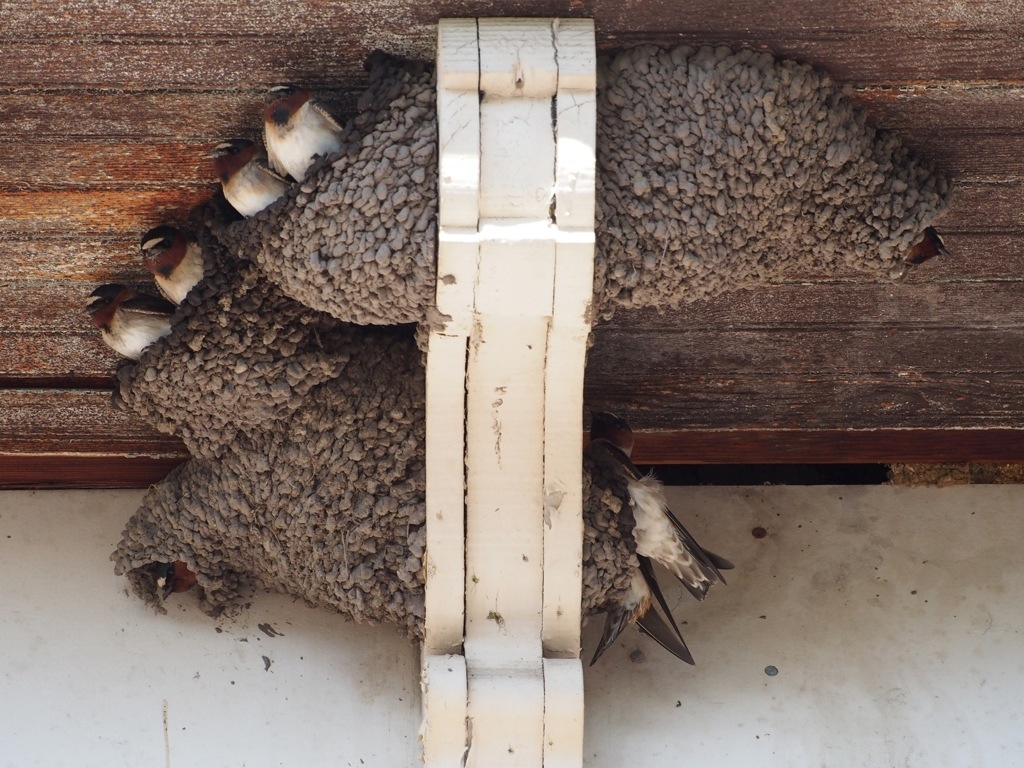
No Vacancy!

No Vacancy!

There were probably over a thousand cliff swallows swirling around the facade of this building making nests – it looked like birds had to stake their claim or face eviction – their mates continuously added to the complex as they sat and watched.

Brewer’s Blackbird

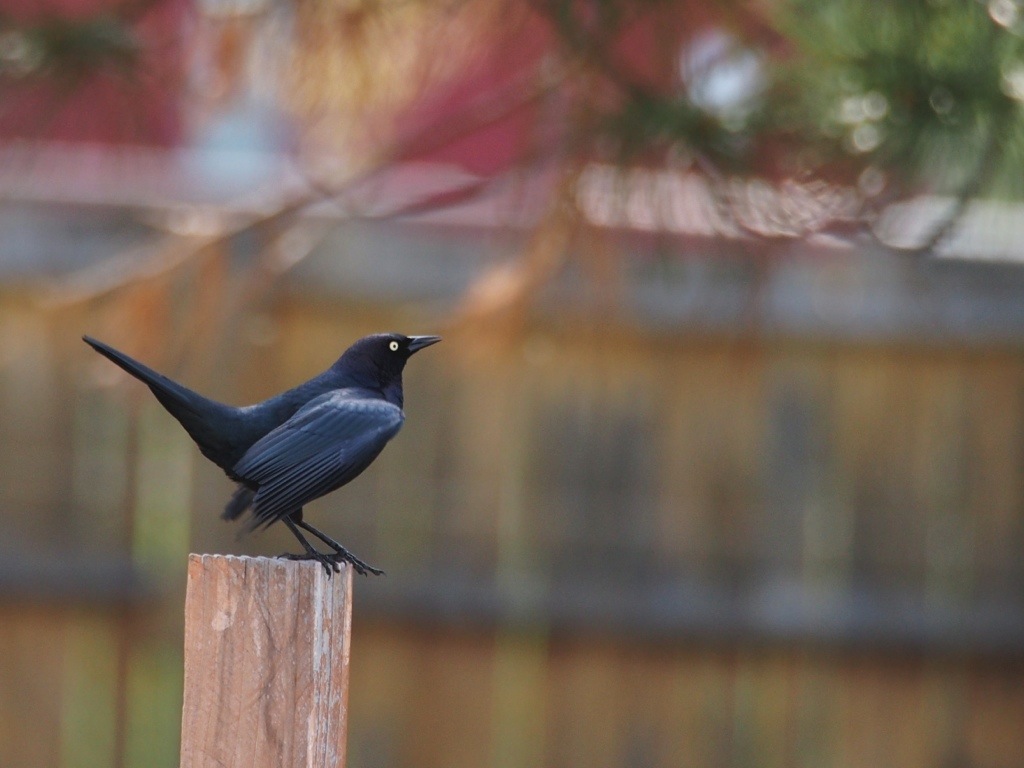
Pants off - dance off!

Pants off – dance off!

Eek!

Eek!

Mating dance? War dance? Rut? I have no idea – but these birds are posers. I recently spotted some of them near my home, sometimes you gotta travel to appreciate what’s in your own backyard.

Tree Swallows

I've found the perfect apartment!

I’ve found the perfect apartment!

Talking to her is like talking to a rock...

Talking to her is like talking to a rock…

This female made dozens of trips to that barrel with twigs as her man sat by on the rail above her talking to that rock instead of helping. That’s what you get when you fall for a pretty boy.

An aside – I think the swallows were confused. I saw barn swallows gathering mud and sticks off ocean cliffs, cliff swallows nesting on the facade of an old building, and tree swallows nesting in a barrel – no one knows their place these days.

Red Bellied Sapsucker

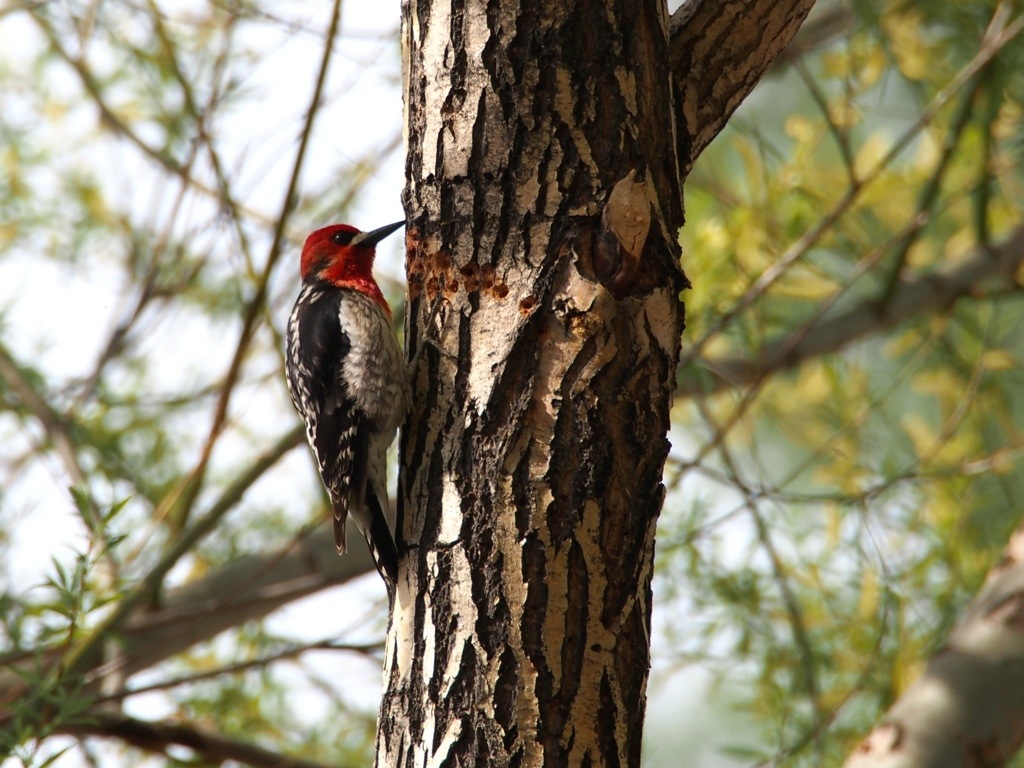
Time to get to work...

Time to get to work…

...always remember to punch in.

…always remember to punch in.

I saw red and had to shoot. Such an adorable bird, my favorite of the trip. He actually checked each hole to see if there was more sap or insects. A bird watcher told me that they check these holes every day or so instead of drilling new ones constantly.

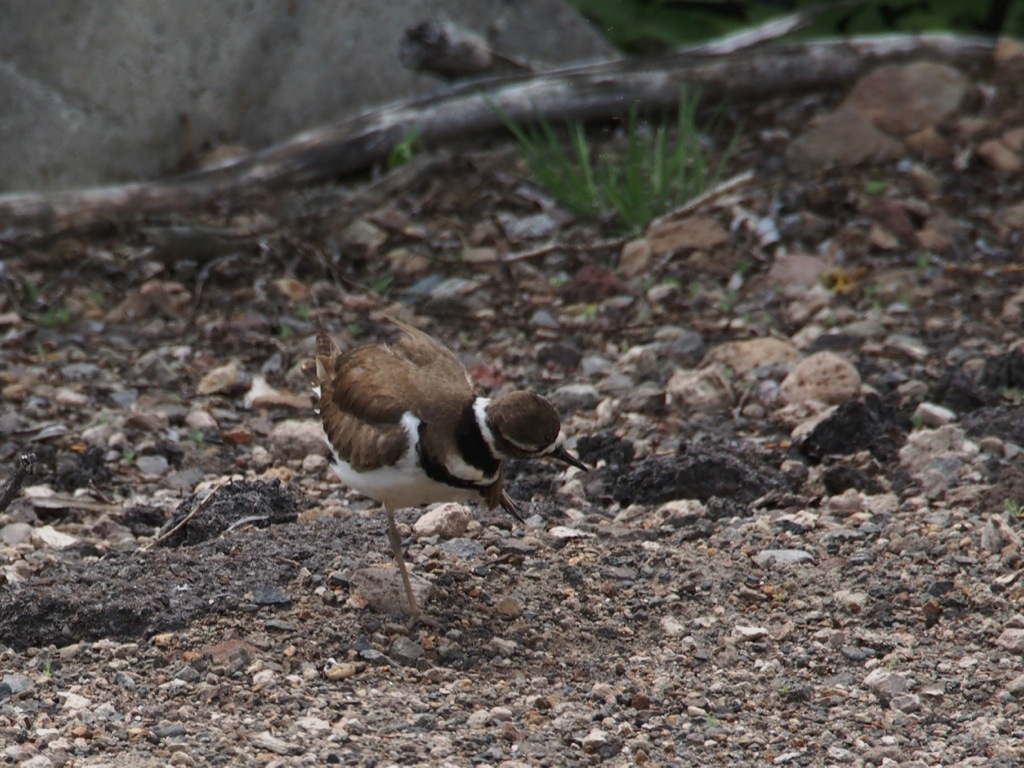
Killdeer

Doing the deception dance...

Doing the deception dance…

...maybe she'll think these rocks are my eggs.

…I’ll lead her over this way…

...maybe she'll believe these rocks are my eggs.

…maybe she’ll believe these rocks are my eggs.

Such amazing camouflage – killdeer can blend into a pile of rocks or leaves or roadside gravel like this. The male actually walked away from the nest and stopped to lure me away. When I looked back the female put on this show to try to convince me her nest was a few feet from its actual location. I respected her show and never approached the real nest.

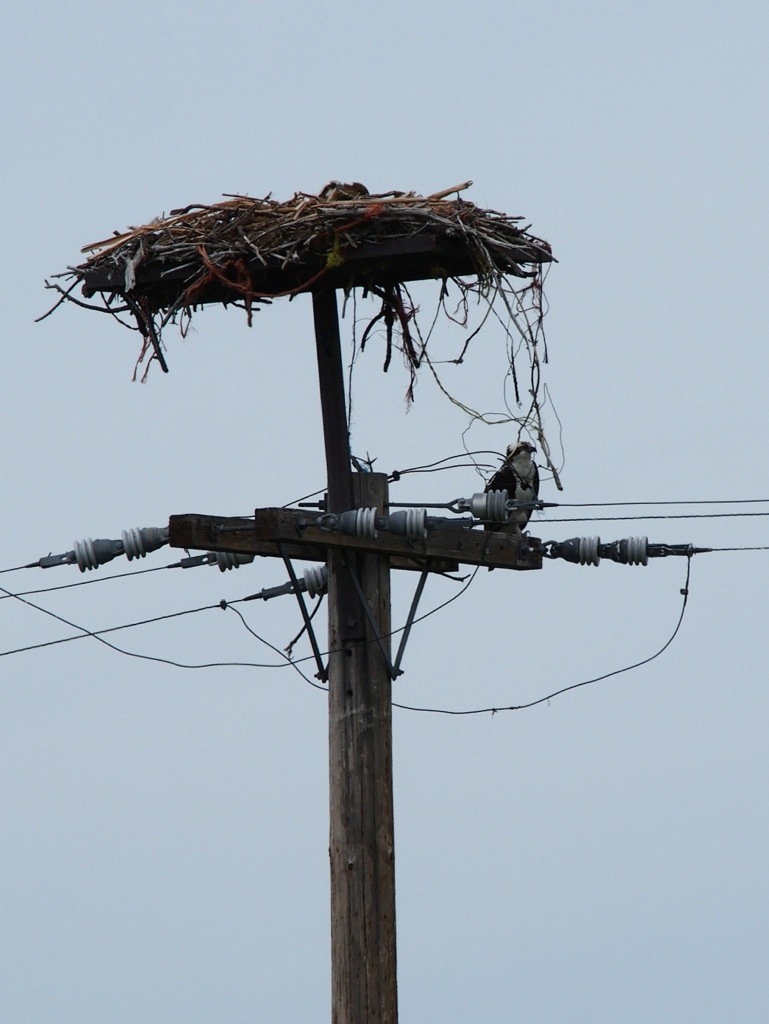
Osprey

I'm so blindingly handsome...

I’m so blindingly handsome…

...I bet she doesn't even notice my nest.

…I bet she doesn’t even notice my nest.

I got to see a bald eagle pull a fish out of the ocean when we were crossing a narrow bridge – it was an amazing moment I will always remember, but was unable to photograph. I hoped I might see another bird of prey and this Osprey almost went unnoticed. The nest is high in the air – they place these platforms for them atop power poles. It wasn’t until I got home and checked this shot on my computer that I noticed the bird’s mate is in the nest. I was shooting this at midday and the glare was awful so I struggled to get something besides a silhouette. I tried to walk past the pole and get the light behind me and he flew – he was stunning and huge. He flew to another pole to divert our attention from the nest. I didn’t understand that at the time, but clearly he was keeping us away from his family.

I read a post a while back about birds and their “like ability factor” and the author made the case that birds of prey are more desirable. Now I disagreed at the time because I love my cardinals and hummingbirds or even my titmice — but having seen and photographed that osprey, I think Lyle is onto something – it was amazing. I was unable to get a great shot of it in flight, but that is something I plan on working on this year.

I’m sure that just like I ignored the birds in my backyard for years, that people visit these places and never notice these birds too. Maybe someday they will wake up and feel like birds are suddenly appearing in their path too.

Love is in the Air

A few years ago a female peacock showed up in the neighborhood. We searched for her owner, but no one came forward. Over time she became the queen of her corner of the highway. She spent most of her time on the porch of the Heating and Air place or in my neighbor Barbara’s back yard. Barbara eventually took her in and named her “Pretty” because she loved to stare at herself in the mirror.

The next spring this fellow showed up unannounced…

I'm just here to pick up chicks.

I’m just here to pick up chicks.

He was young and out on the town. Again we tried desperately to find his owner to no avail. He fell head-over-heels for Pretty and all attempts to relocate him failed. A neighbor right across the road had a problem with snakes and decided that this handsome lad might be just the ticket. Poco took him in and he thrived, but sadly Pretty did not. She was killed crossing the road to see her beloved.

A solitary man

A solitary man

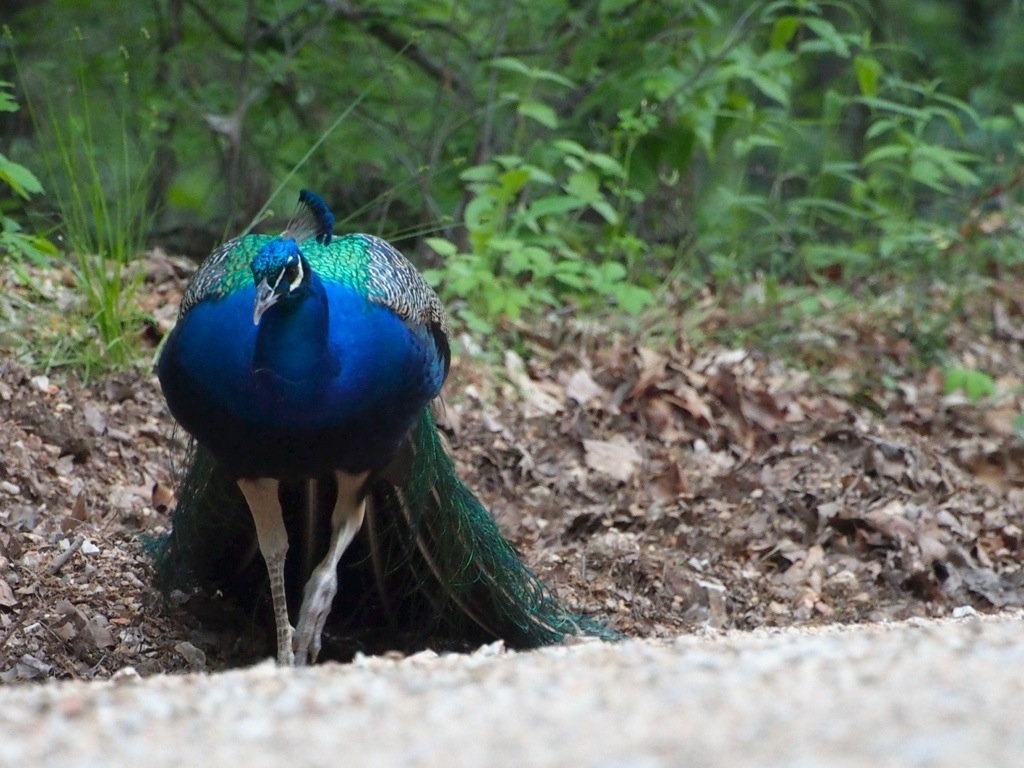
Our young fella spent weeks crossing back and forth after Pretty passed. Eventually he settled into a routine and he can be seen at the Grange Hall on the swing set, at the Heating and Air, and even on Poco’s chimney. He is a wonder in flight. Poco named our mystery man Krishna. In a sea of green and brown, he is hard to miss.

Oooo - that birdie in the window is mighty handsome.

Looking for love in all the wrong places…

A couple of winter’s back we installed new french doors on the old Grange Hall that serves as a community center for the neighborhood. Immediately our lovesick boy found solace in the windows – each afternoon he could be found on the porch admiring the mystery bird inside the Grange Hall windows. I went to get closer after taking this shot and he audibly scolded me. I learned that you can’t come between a man and his own reflection.

Peacocking around - strutting my stuff.

Peacocking around – strutting my stuff.

Krishna has grown from a young buck to a glorious sight. He walks upright along the road and struts, but something has been missing in his life – love. Each spring Krishna will call out with all his heart, he will display his plumage on the swing set and from the chimney top, but to no avail – until this spring…

Hubba hubba!

Hubba hubba!

Just a couple of weeks ago I saw this little beauty on my drive home. She was strutting her stuff about a quarter-mile from the Grange Hall. There are reports around the neighborhood of the two love birds getting cozy at the Heating and Air place.

I'll stick my neck out and take a chance on love...

I’ll stick my neck out and take a chance on love…

I regularly see them on the road – most often one is searching for the other. Krishna will pace along the dirt road and look for his lady-love in the woods, and she does the same. I heard a report of her watching him on the swing set as he displayed his plumage. I’ve yet to get a shot of them together, but after all, lovebirds want their privacy.

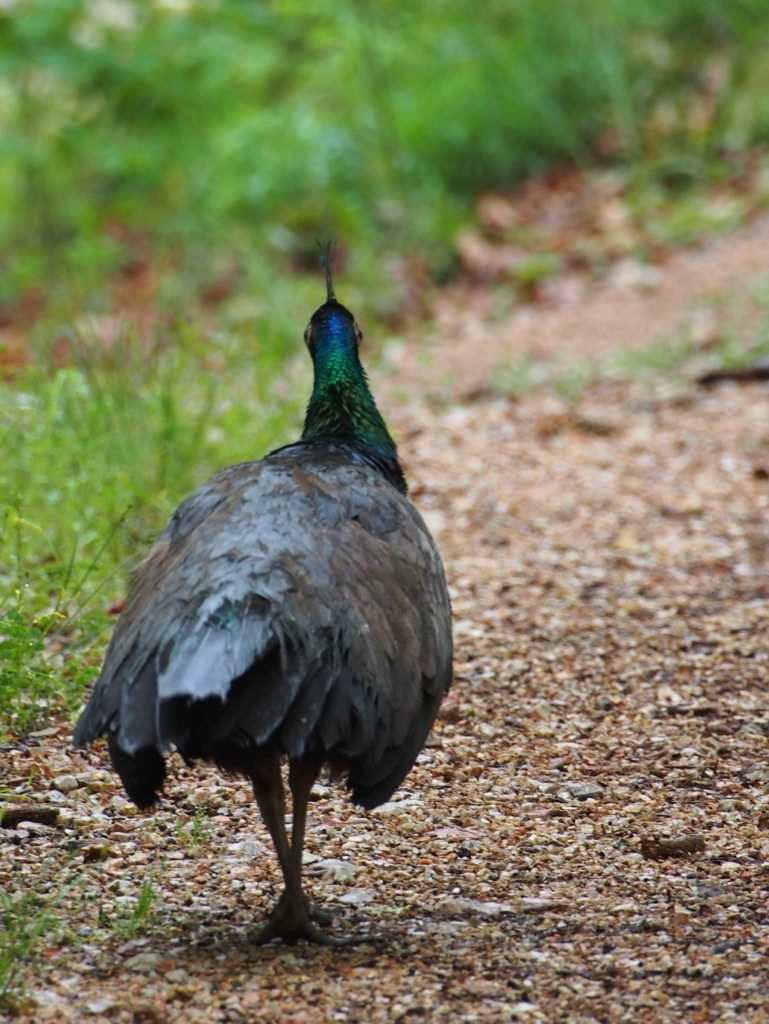
Baby got back

Baby got back

Unlike Pretty, the new girl in town appears to be the same type of Peacock as Krishna – even though she is green, she has the same face mask. And when she walks down the street, she really shakes her stuff.

I'd walk a mile for you...

I’d walk a mile for you…

Krishna is old school – I see him making the trip to pick up his girl, across the road, around the corner, through the woods to the dirt road. He’s never looked better. He’s quit chasing after that bird in the Grange Hall windows, there is something real in his life now.

Ready for a hot date.

That long and winding road that leads to her door.

Perhaps Peachicks are in our future?

My Friend Flicker

Actually, he’s not my friend – he probably sees me as more of a stalker.

I was coming home from the grocery store and spotted some sparrows nesting behind the sign at the hardware store next door. I got some cool shots and loaded up my gear and wilting groceries and headed for home. As I started to pull out I spotted him across the parking lot in the median separating it from the highway. At first he caught my eye because he was large, then I saw the flash of red and the large spots. I slowly pulled over to a parking spot nearby because I noticed that he had no concern about passing cars as he fed…

20130528-121413.jpg As he dined curbside, I slowly opened the Jeep door and grabbed a couple of shots with his face buried in the grass, then I made a serious misstep. I moved from behind the door and he flew off. I jumped back in the Jeep and gave him chase across the highway and into a housing development where I lost him. I took out my iPhone birding app and made the identification and headed home to gaze at my photos of a bird with his nose in the grass, all along wishing that I had continued to snap until he had at least raised his head for me.

I get so excited when I spot a new species, and this time I had assumed he would be as calm as the woodpeckers I have cultivated relationships with at the Stone House. Having just come home from a trip where I shot lots of birds in park settings I just jumped the gun. He was gorgeous – Northern Flicker – a variety of woodpecker that often feeds on ants and forages on the ground. The black mustache marks on the sides of his face identify him as a male. His flight was stunning, the underside of his feathers are a gorgeous gold color. At first sight I mistook him for a mourning dove, but his movements were so much more deliberate, that’s what drew me from across the parking lot.

Later that afternoon, it struck me. My woodpeckers are creatures of habit. They fly from tree to tree in a pattern before approaching the feeder. I have found that most birds seem to have habits and like certain spots, so while there was still light I loaded up and headed back to the grocery store for another crack at the Flicker. When I pulled into the parking lot I came in from the side that would give me the best shooting angle and drove past the spot where he had been, but he wasn’t there. I shot a few blackbirds and starlings and headed around the corner for home when I spotted him 10 feet from that spot on the other side of the median. This time I got the car close and just stopped and shot. He tolerated me and flew towards the housing development – but then he stopped, not caring that I was there…

20130528-122530.jpgHe started at the curb again and worked his way up the hillside…

20130528-122631.jpgHe shot me a look back…

20130528-122725.jpgGlanced left…

20130528-122810.jpgLooked right…

20130528-122902.jpgAnd headed up the hill out of camera range.

You can bet I’ll be stalking him again real soon.

An Even Wider View

Recently I posted about the challenges of landscape photography and the thought and planning it takes in A Wider View. Today I thought I would share something a bit more touristy – no thought of the light being right, no aperture settings, no shutter speeds – just me and my iPhone.

I love to play with the panorama feature. I can shoot panos with my good camera, but it requires stitching them together in another program, so there’s no instant gratification. With the iPhone you just get a good footing and rotate. Sometimes the bumps show up and the exposure settings are based on that first frame, but it can give you a sense of the vastness of a place. Go ahead and click on the images so you get a better sense of the panorama.

20130527-125037.jpgThis is the first panorama I took, it’s in the observation car as we traveled along the Columbia River towards the Portland station. There is a bump in the middle – trains experience bumps, but it does give you a sense of what that car is like in the morning.

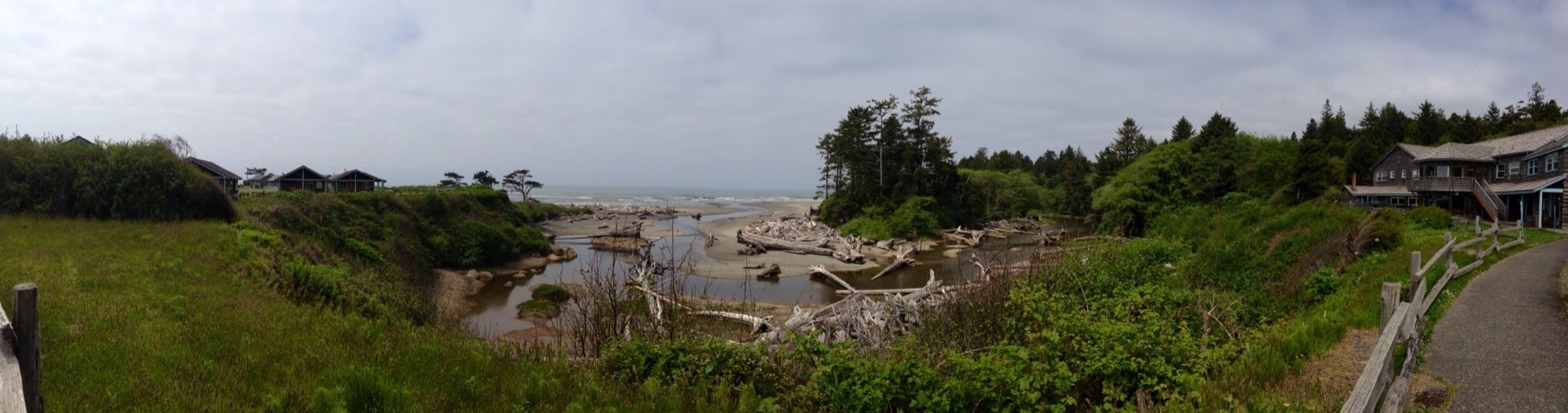
20130527-125055.jpgThis is Klaloch, in my earlier post I shot the two sides of the beach as separate images – the panorama really compresses the scene when you are up high like this. The scene was much more open than this, but it does give a good sense of the height. A stunning place.

20130527-125114.jpgWe took a ferry from Port Townsend to Coupeville to cut a few hours off our trip to Northern Cascades and Mount Rainier. I shot this on the deck. The process is pretty cool, it’s basically a floating parking lot. The air on the sound was wonderful as it blew across the decks, like the ocean without the waves.

20130527-125131.jpgDeception Pass, this was another spot that was elevated – again, it compresses the space. It does give a sense of all that’s going on at this spot, rocks, cliffs, bridge, island, water – you really can’t get this all in one traditional shot.

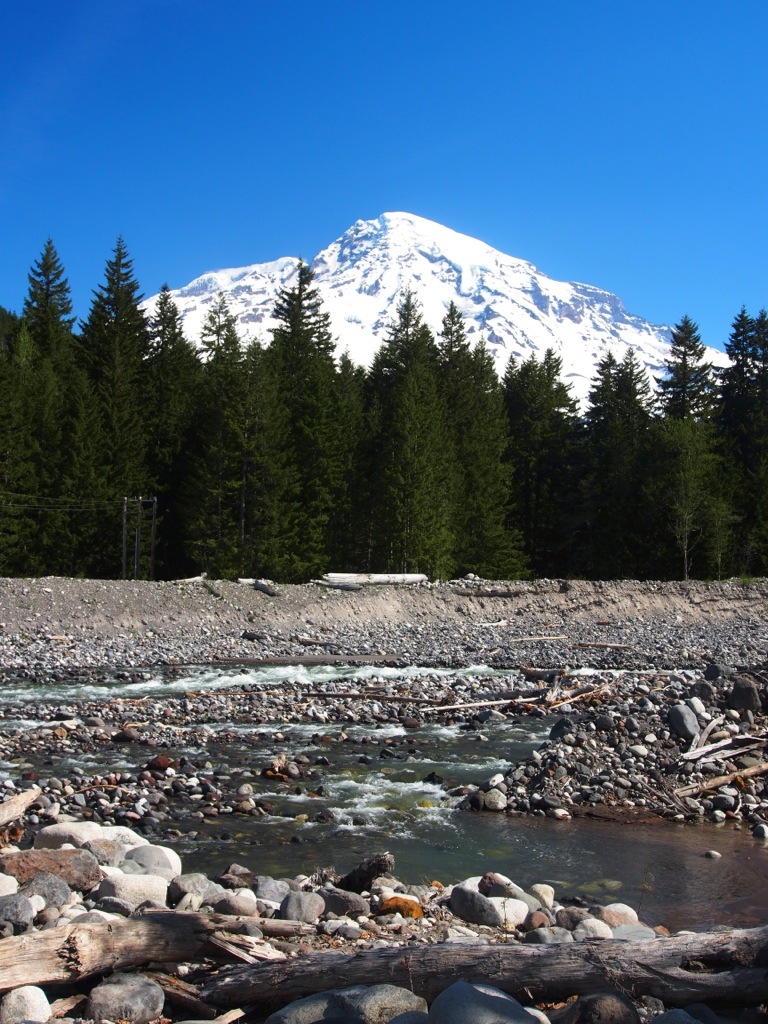
20130527-125718.jpgMount Rainier above the Nisqualy River. This spot was amazing for more than the mountain and the river – the sound was wonderful too. So I took the opportunity to record a bit of it, using my iPhone again, so that I could experience it any time I like.

20130527-125301.jpgAhhhhh, Crater Lake. I shot this right next to the lodge. I had to climb up on a short rock fence to get a view over the snow bank. No photos capture the full beauty of this spot, but I’ve looked at this one over and over reliving the details.

20130527-125504.jpgOne last look at Crater Lake, I shot this at the vantage point above Wizard Island – it was as far as the rim drive had been plowed. This has the distortion created by the pivot, bit it does shot the lake surface like glass, the clouds in both the sky and the lake, the snow, the pines – pretty much everything but the cold air.

Sometimes it’s good to put the kit down and just be a tourist.

A Wider View

Photography has many facets, and like most photographers I have my strengths and my weaknesses. I love shooting still life, I could spend all day behind a macro lens, shooting just about any animal challenges and excites me. There’s one type of photography that totally intimidates me. Landscapes.

I know a good landscape when I see one. I admire it when a photographer can capture the whole horizon and direct my eye to just that right spot. I can stand in the woods and be in awe of the sheer volume of trees, but when I try to capture that it’s just a mass of vertical lines. I will hike for miles to see a waterfall, but my photos have never quite capture the serenity my eyes see.

I just got back from a cross-country adventure with my sister. We call it “Planes, Trains, and Automobiles”. This year we even added a boat to the mix. We each flew to Chicago, took a train to Portland, and rented a car and managed to get to five National Parks in the Pacific Northwest – all in 10 days. Somewhere along the way we even took a ferry. The places we saw were amazing.

Last year we took a similar trip into the central plains and saw so much wildlife, that I almost forgot about taking photos of the places. This year we saw very little large wildlife, I had upgraded my long zoom in preparation for this trip – and I used it to capture some birds here and there, but mostly this trip was about the places, beautiful places – I was going to be forced to shoot landscapes.

What follows are some of my better attempts. This is my photographic journey across the Pacific Northwest.
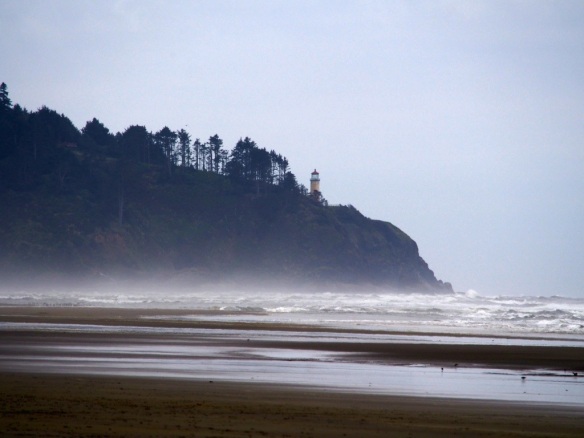
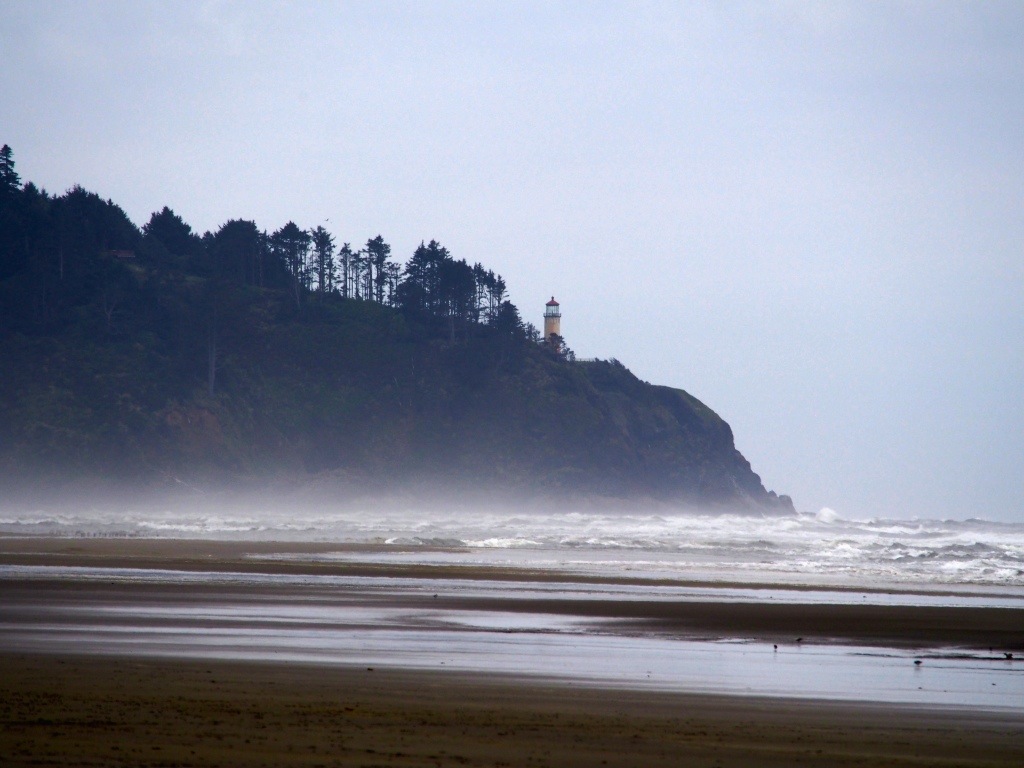
20130523-212053.jpgThe surf at Cape Disappointment. This is the spot where Lewis and Clark finally reached the Pacific Ocean. They had such depressing names for places – Dismal Nitch, Point Disappointment, and the Cape. They missed a supply ship by a couple of days, a ship had waited for months for them. After an upstream journey of a couple of years, the name seems to fit.
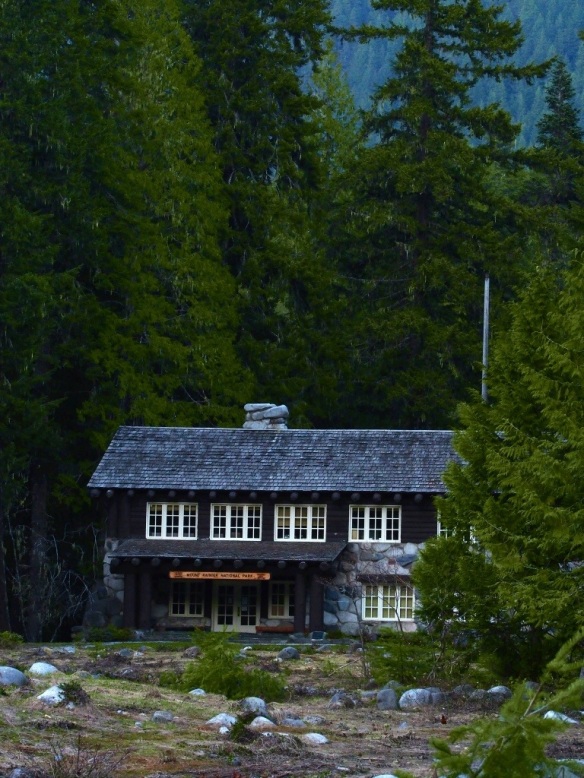
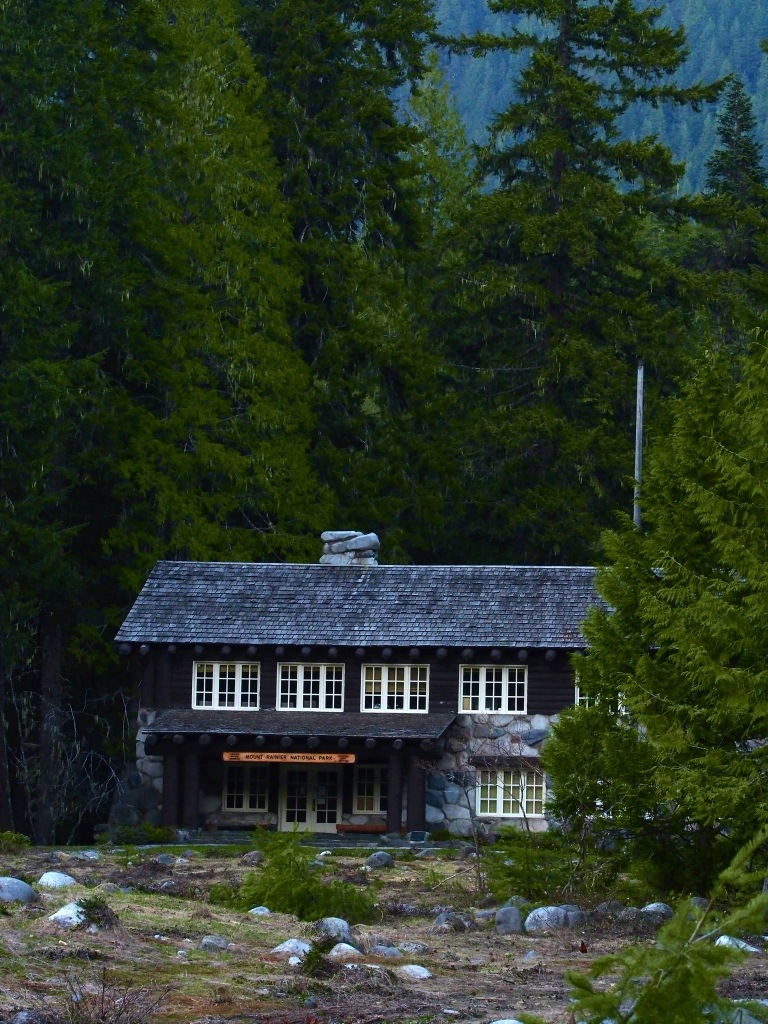
20130523-202058.jpgLongmire Ranger Station, Mount Rainier National Park. Several of the shots at Longmire were taken after sunset, this one was taken about an hour after sunset with a long exposure. I braced the camera on a fence post. Shoulda packed a tripod.
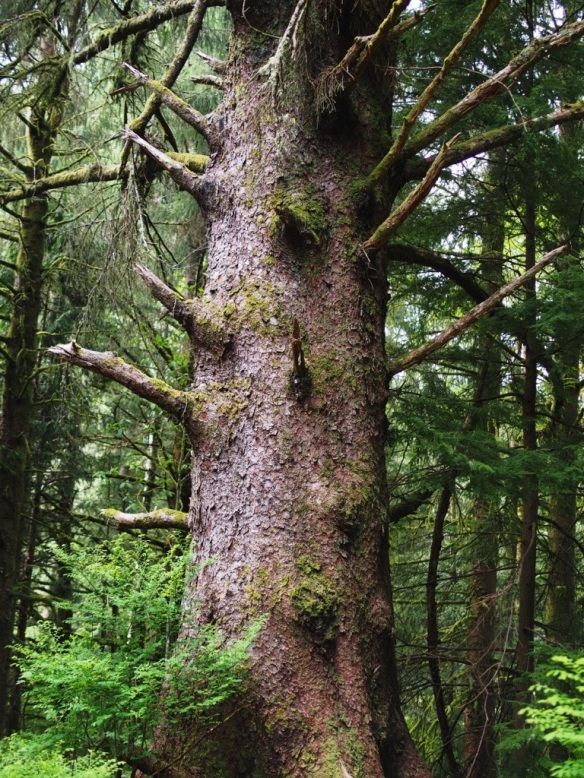
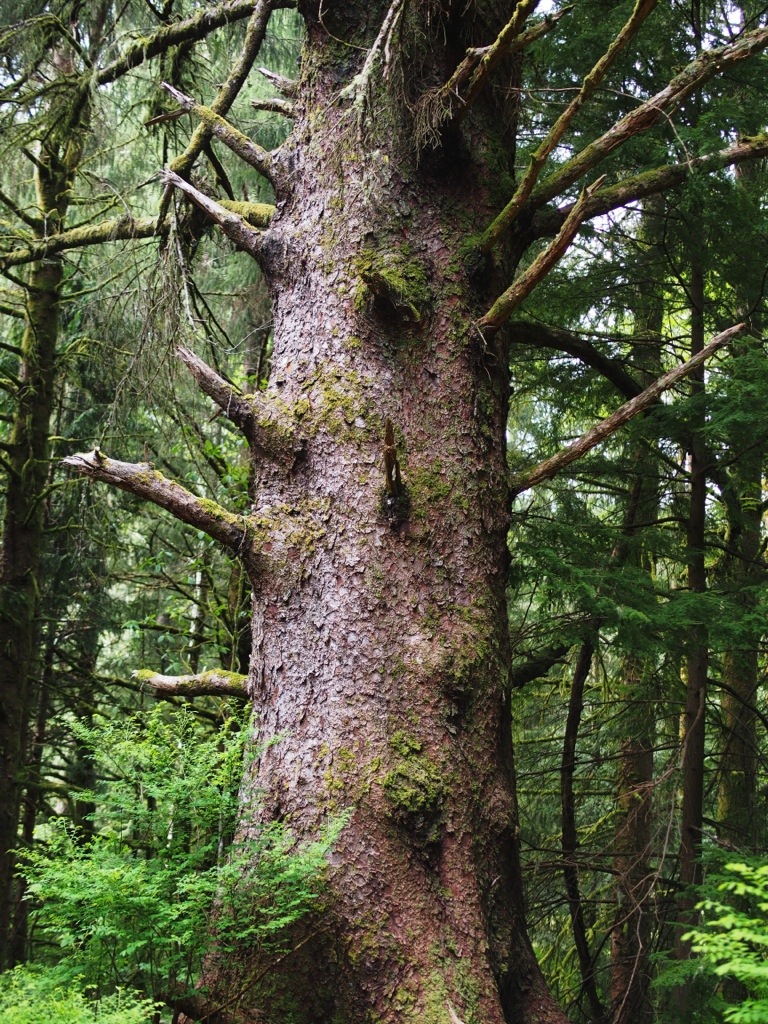
20130523-201145.jpgA huge Douglas Fir at the Fort Klatsop National Monument in Lewis and Clark National Park. This was one of the first mossy trees I saw and it was stunning. I decided that rather than shoot a mass of woods, that I would focus on one tree. For me this seemed more familiar, getting close is my thing.
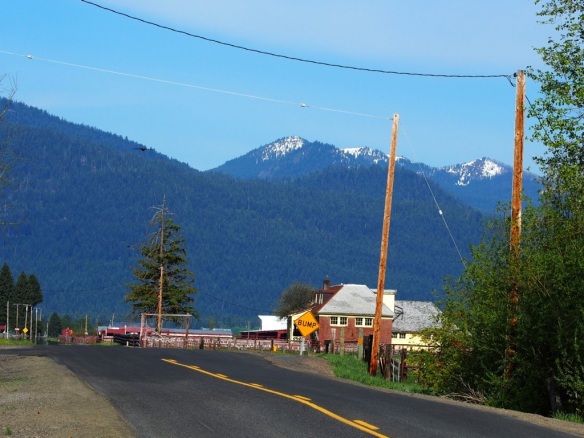
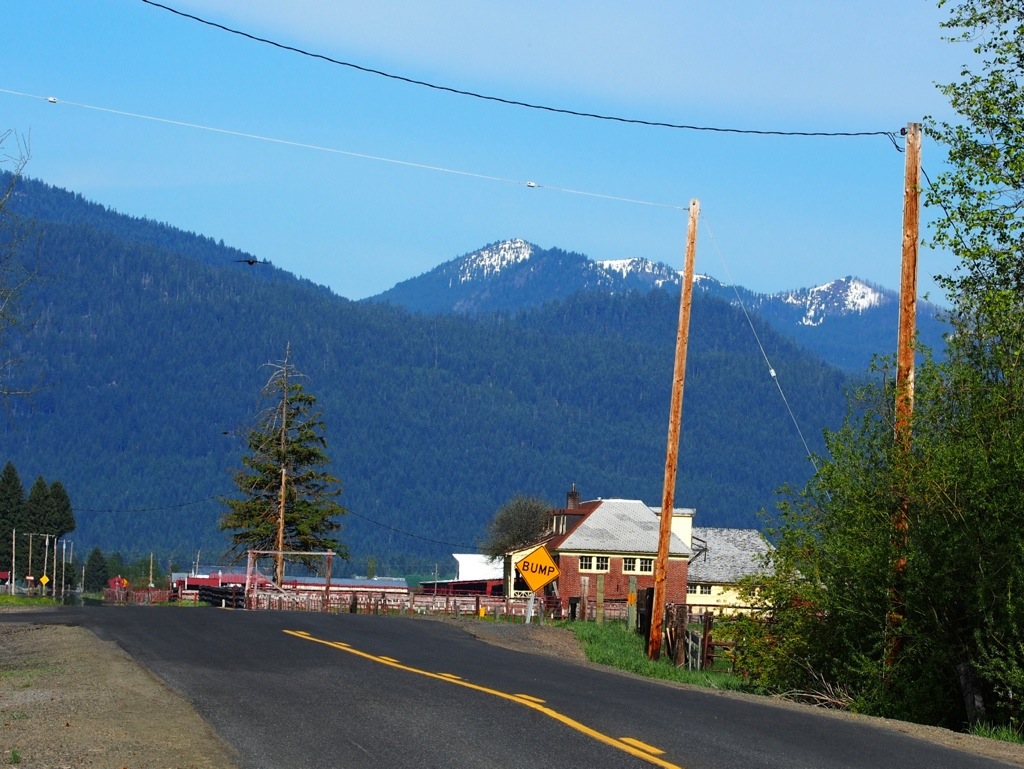
20130523-201750.jpgFort Klamath, Oregon – the last outpost in the high desert. I lived about 30 miles south of here for about 10 years and I miss these wide open spaces and rugged mountains. In truth, I found it challenging to shoot and capture the feel of the place, it’s flat there was no way to get close without losing the feeling of space.
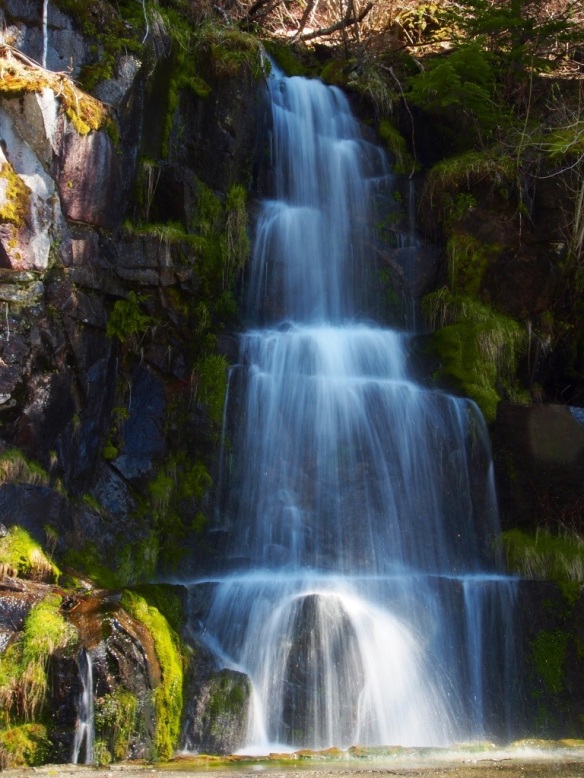
20130523-201204.jpgAn unnamed waterfall just below Paradise in Mount Rainier National Park. In May the snow melt races downhill to fill the Nasqualy River. I had been wanting to try a long exposure on moving water and this trip gave me lots of opportunities. I have never used a neutral density filter, but I have been reading on their use in shooting moving water, I think this is something I want to work on. A side note, I participated in an art sale last weekend and this was one of my most popular prints. I almost didn’t show it because I see a hundred things wrong with it.
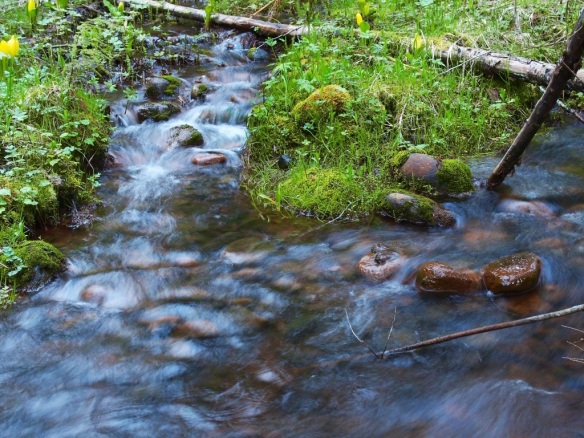
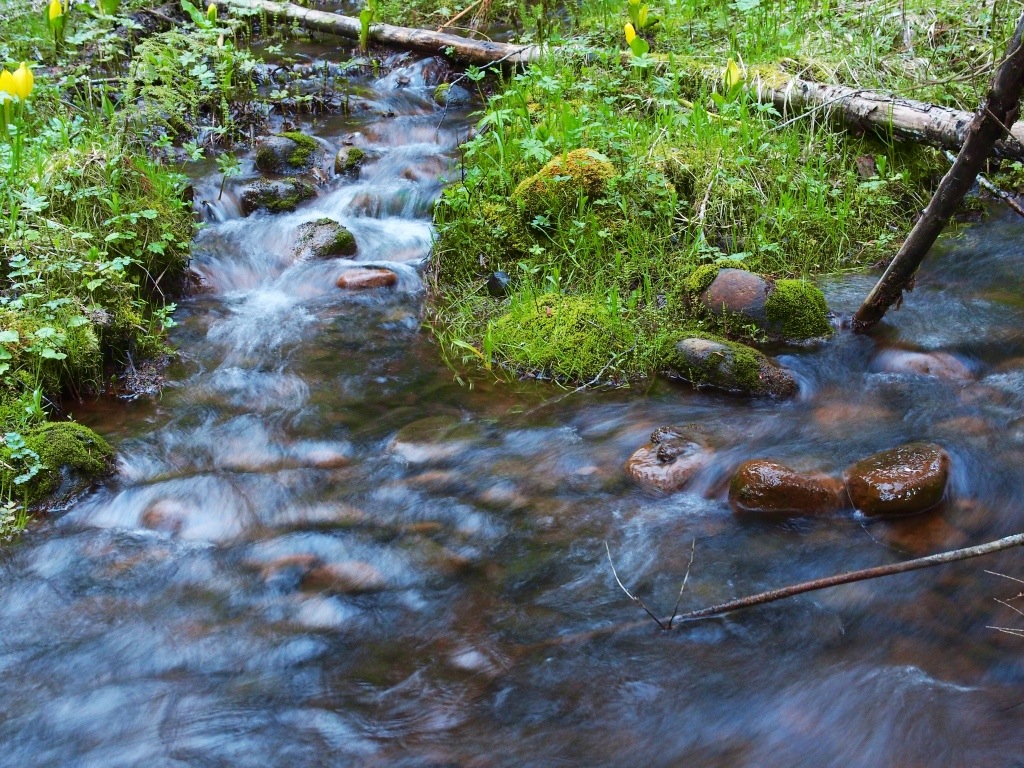
20130523-201643.jpgA small creek at Longmire, Mount Rainier National Park. I shot this right after sunset in the woods, and without a tripod I had to brace the camera on my knee for a long exposure. It took several tries to get the grass in focus – I found that in leu of a tripod, holding your breath helps.
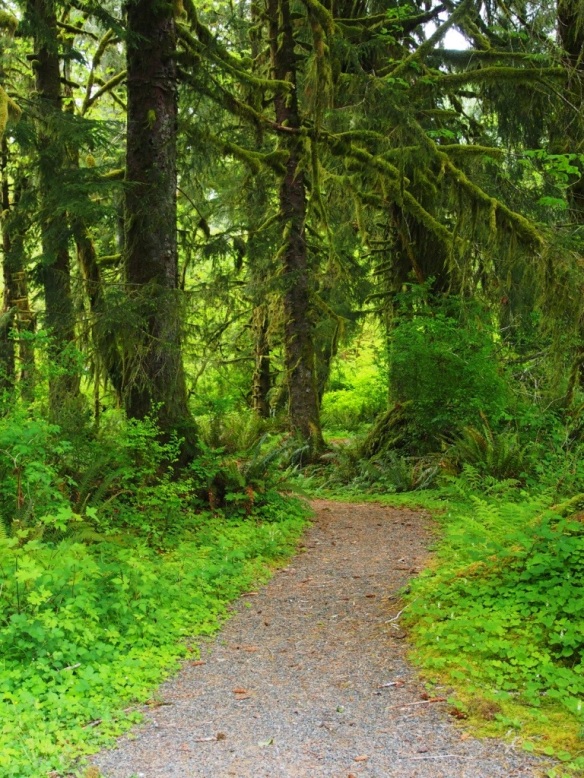
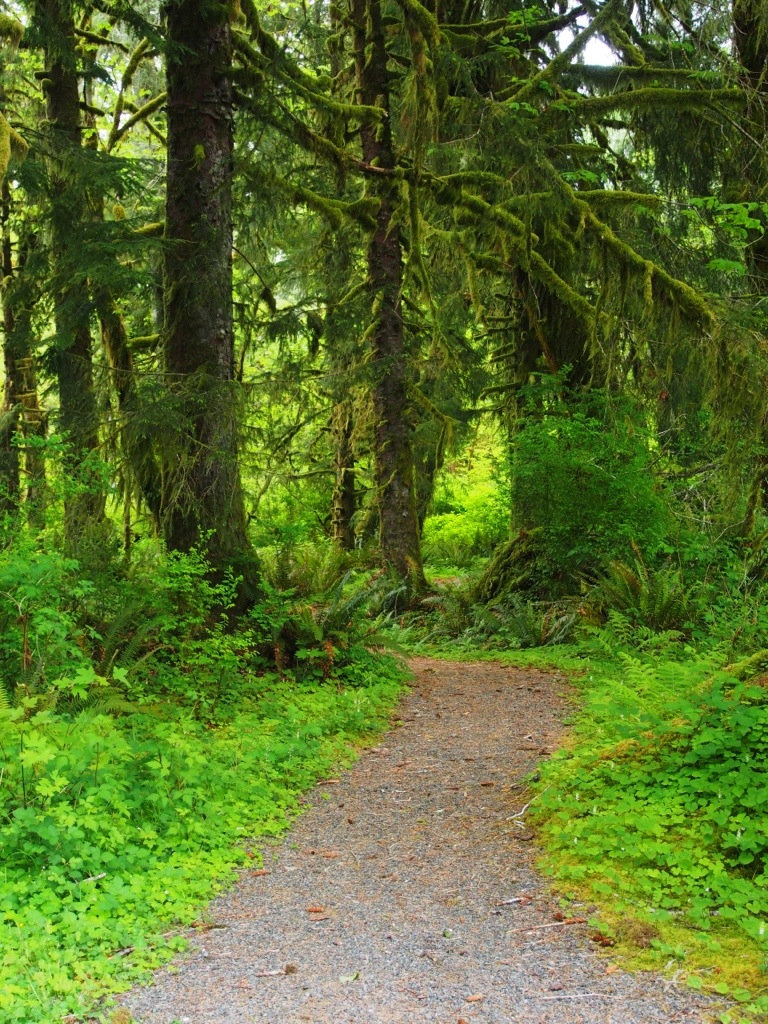
20130523-201236.jpgHiking trail at the Hoh Ranger Station, Olympic National Park. We got to this station hoping it would be open, but it was still shuttered for the winter season. The green here was just so stunning. I shot lots of close things, but this was the one place that gave me the sense of entering the rainforest.
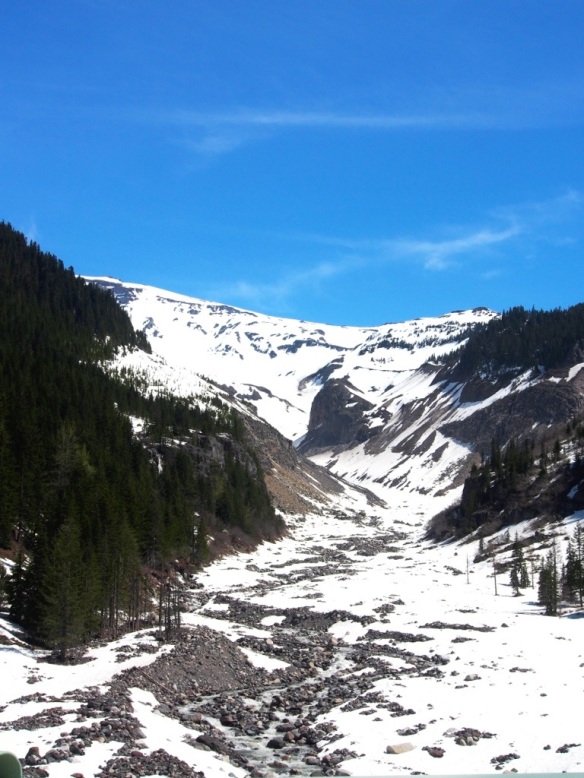
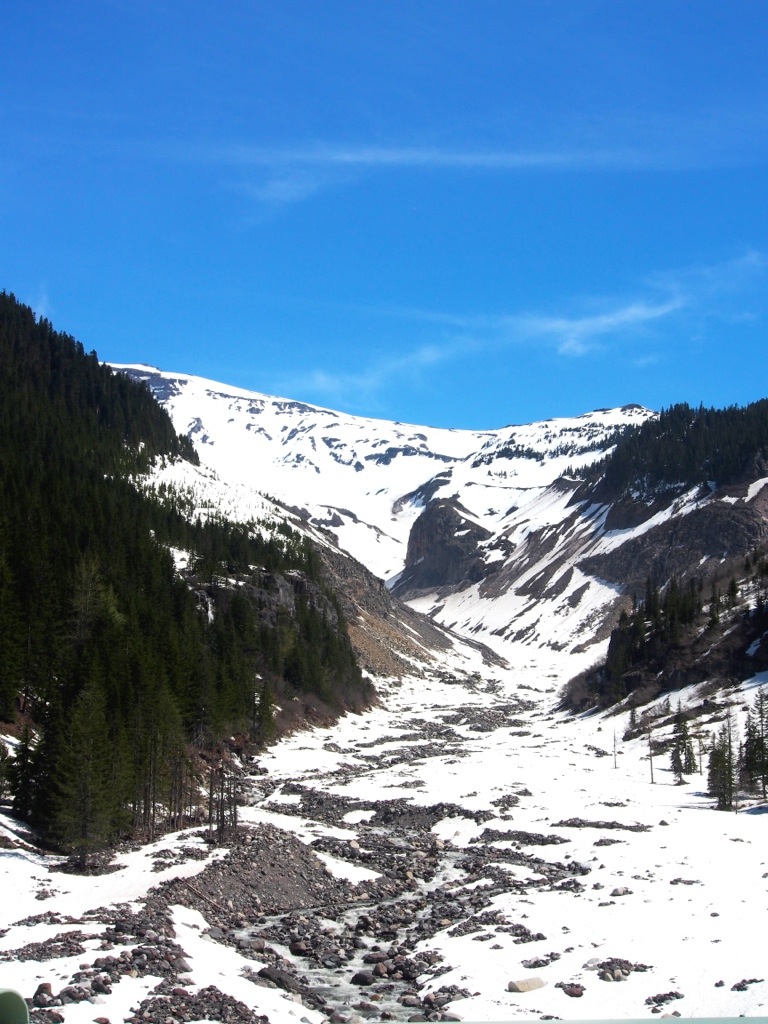
20130523-201312.jpgThe birth of a river – this is where the Nasqualy River begins. Snow and glaciers melt at high altitudes – this small trickle will become a raging torrent as it descends. Mount Rainier National Park.
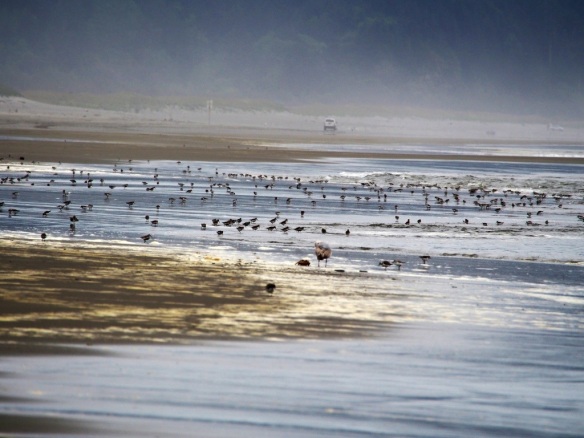
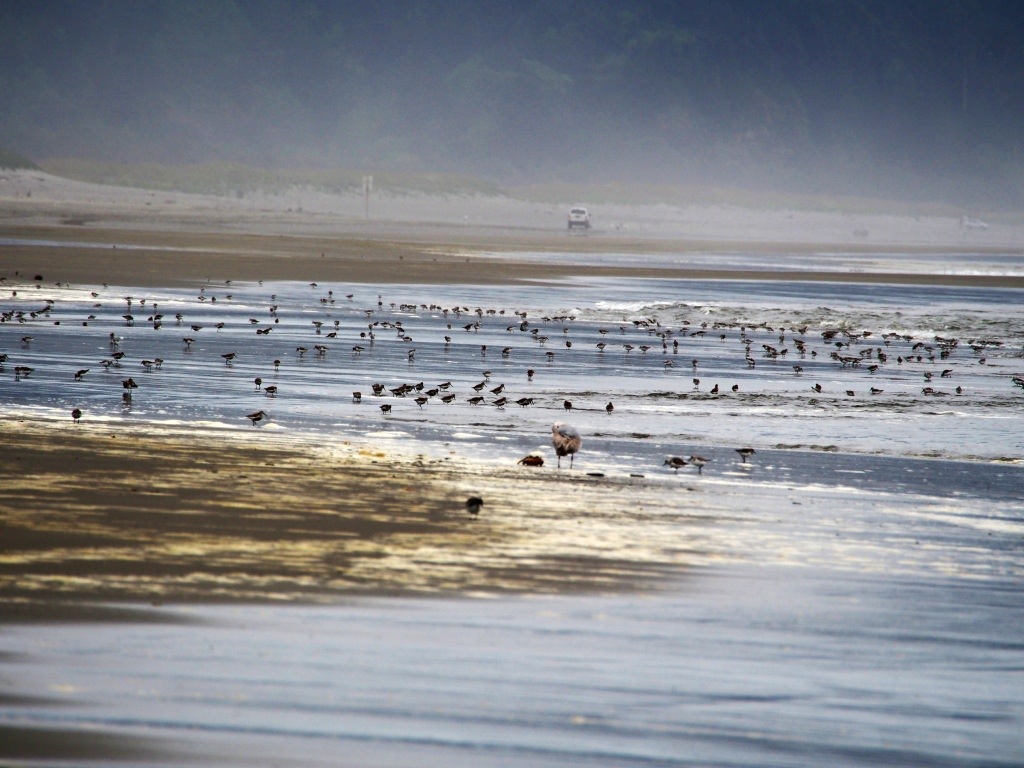
20130523-201336.jpgBirds on the beach below Cape Disappointment, Lewis and Clark National Park. I once gave my mom grief about shooting white caps on an overcast day on a white sandy beach in Oregon – I was similarly drawn to the scene, despite its lack of contrast.
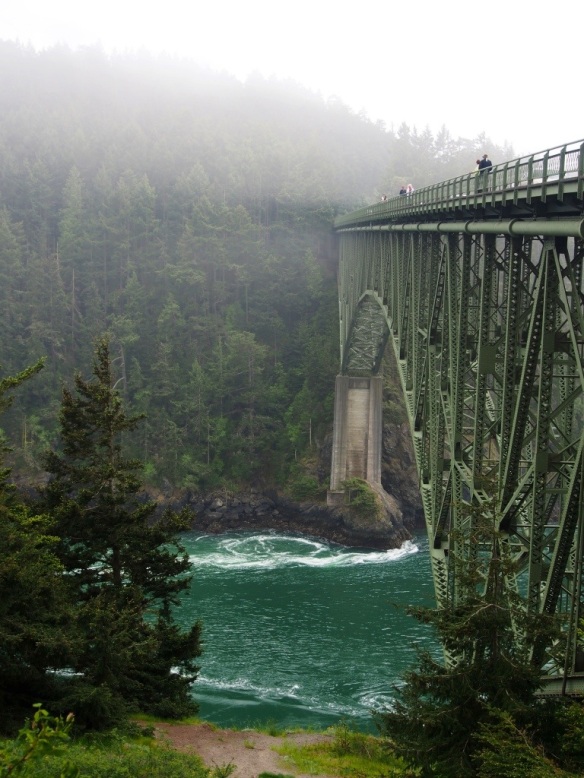
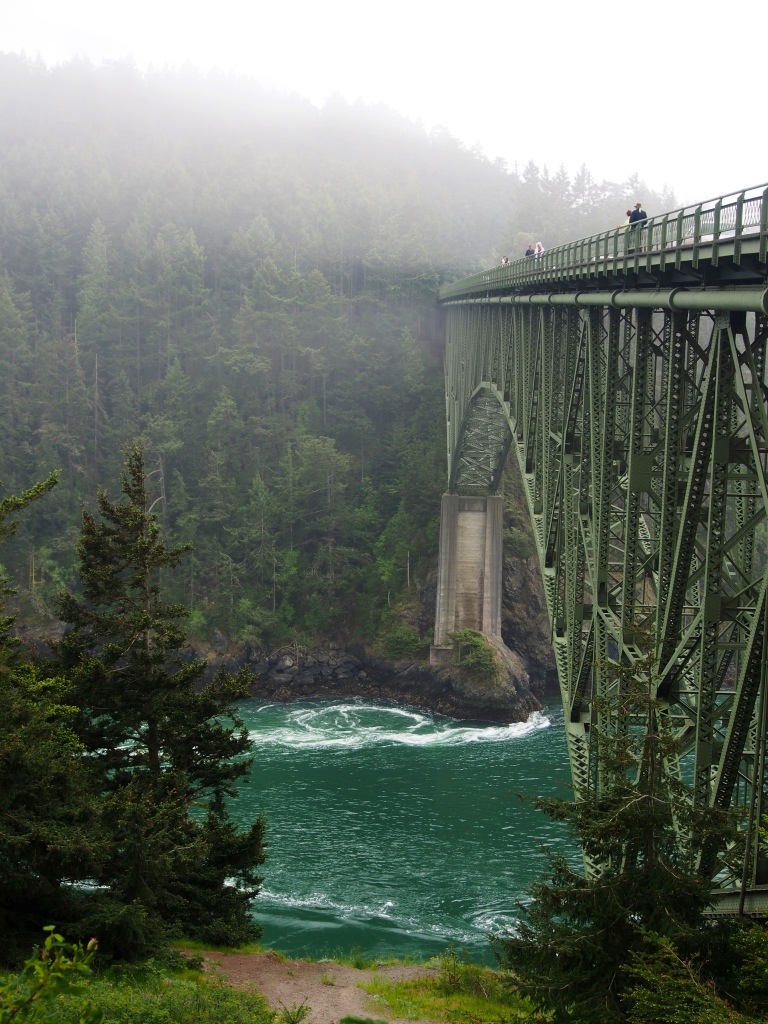
20130523-201419.jpgDeception Pass, although the name sounds like it, this place was not named by Lewis and Clark. I have read the plaque on the bridge, a Wikipedia article, and a brochure, and I still don’t understand why it’s named that. Oh well, I loved the green water and the eddy at the shoreline.
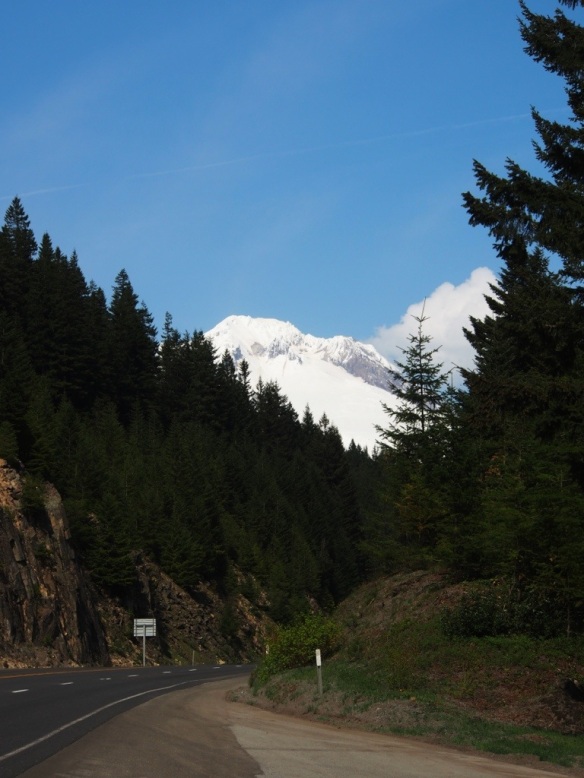
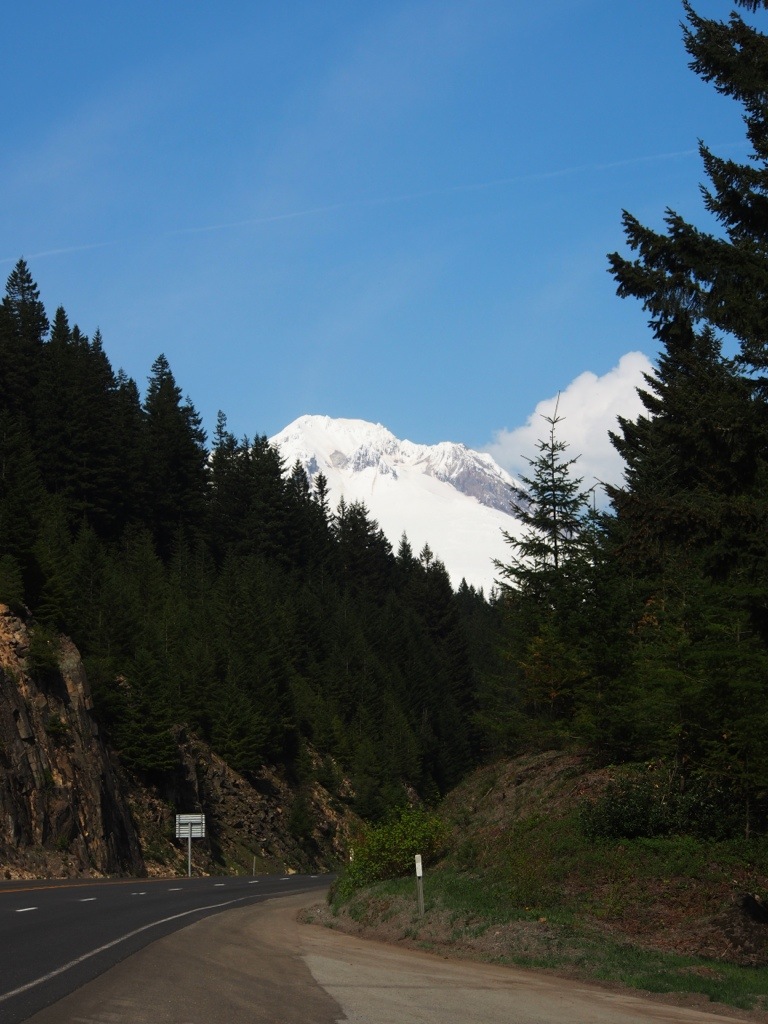
20130523-201506.jpgMount Hood, in Oregon. This peak is snow covered all year round. Over the course of our trip we passed it three times and its not easy to find a good angle to shoot it from. This was one of very few pull outs on the southern side of the mountain. I took some shots on the train and from other vantage points, but found then uninteresting, the sense of scale just wasn’t there.
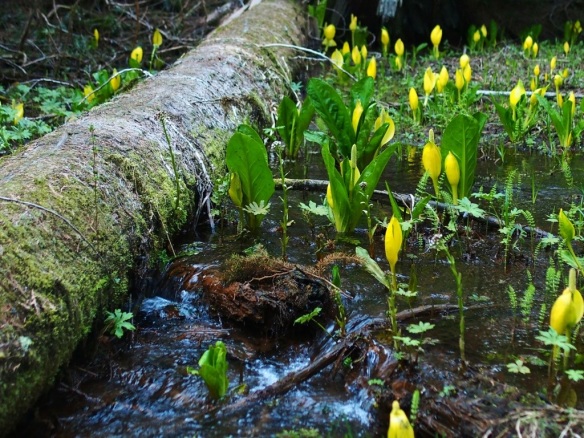
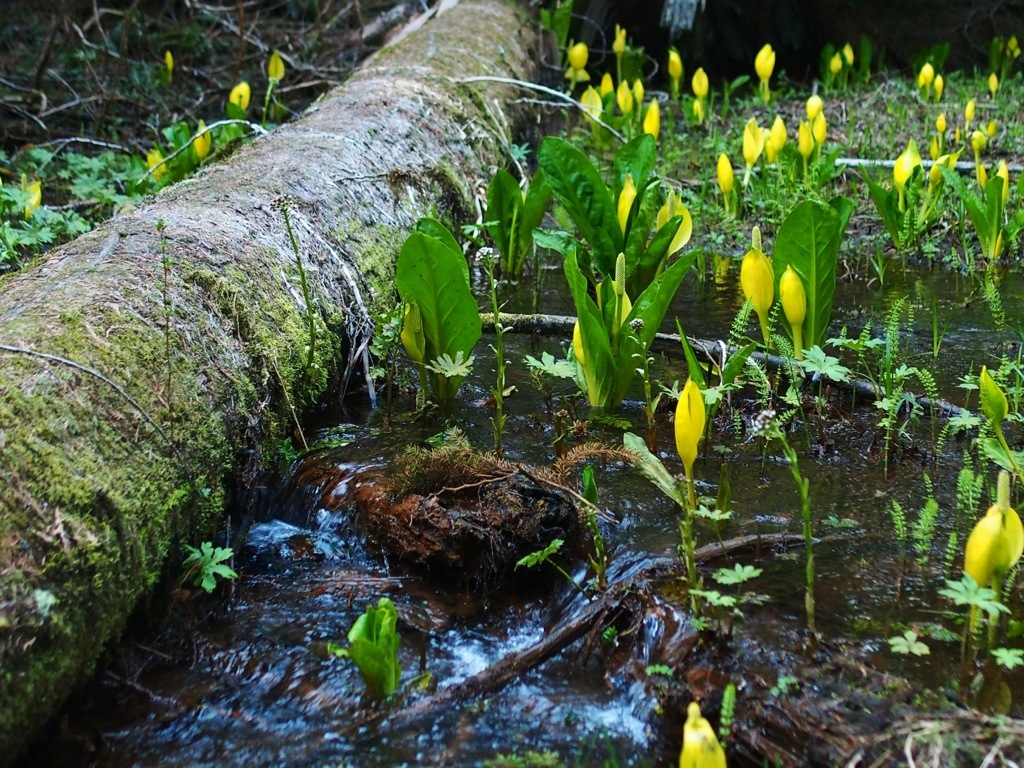
20130523-201947.jpgSkunk cabbage in the creek, Longmire, Mount Rainier National Park. I shot this after sunset, but opened the aperture and didn’t increase the shutter speed very much. This was my first attempt at shooting in the dark and that open aperture meant less bracing, but also less focus.
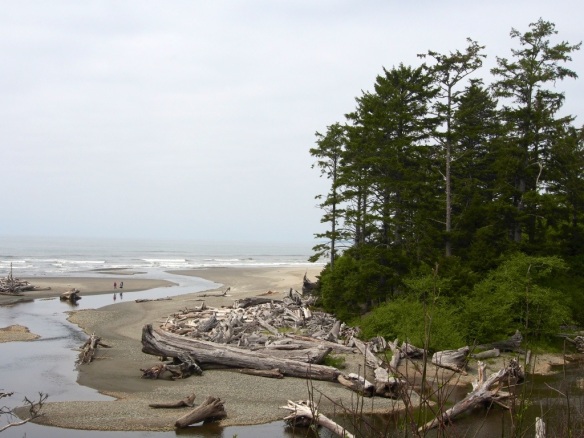
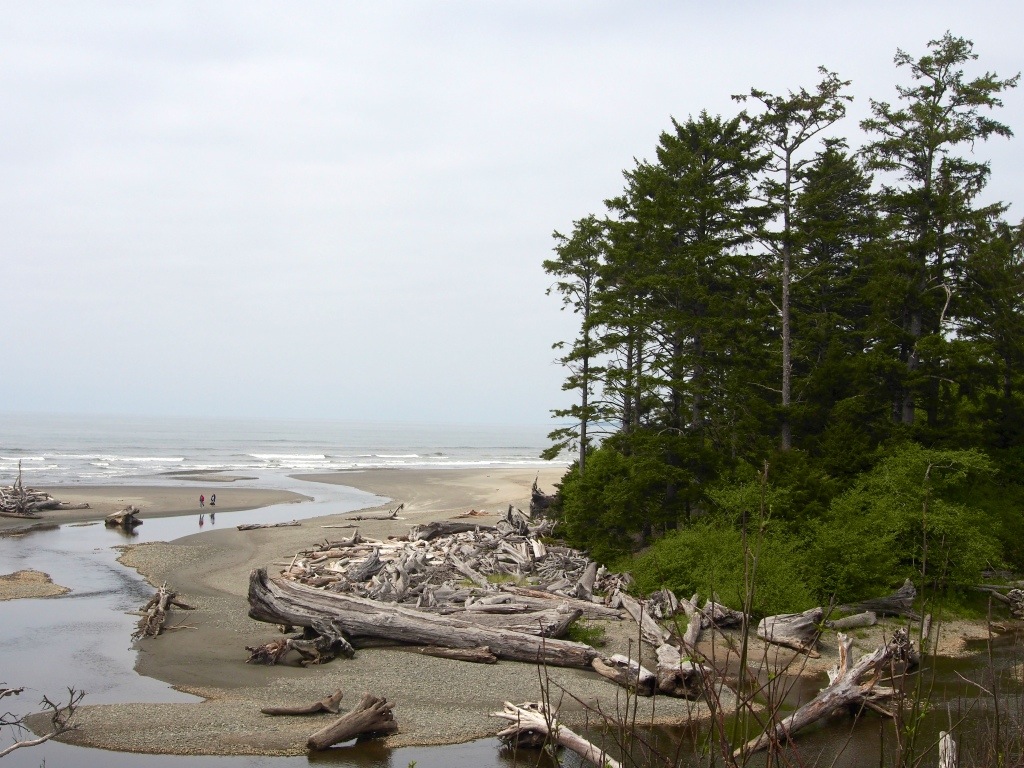
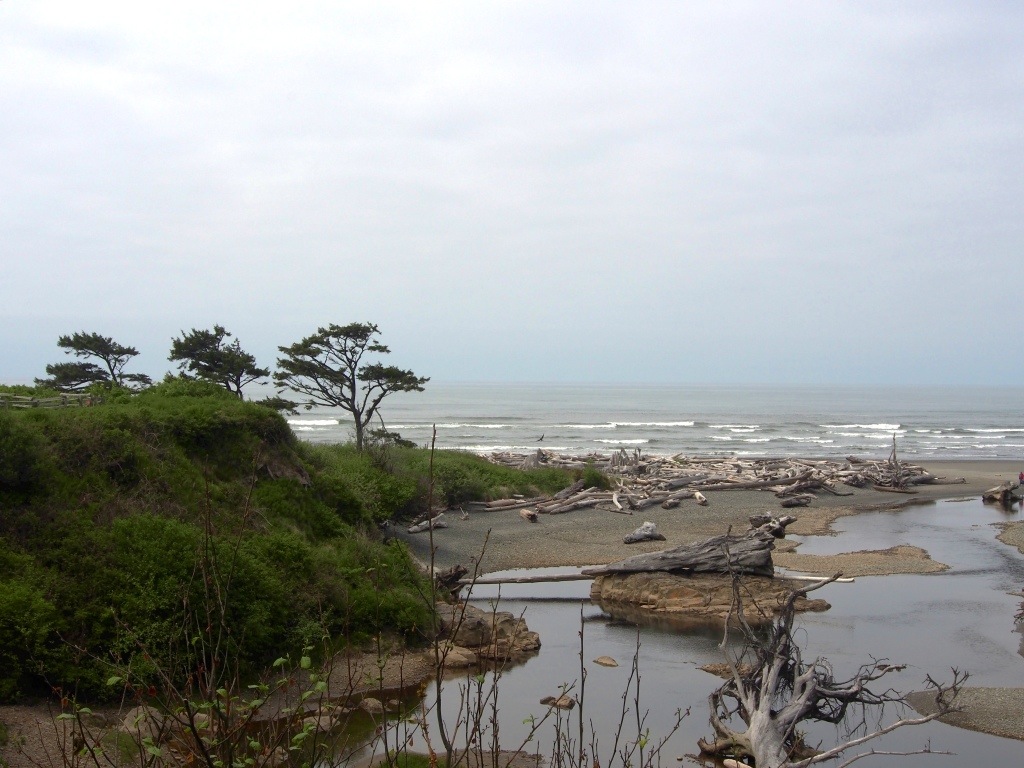
20130523-201616.jpgThe Pacific Ocean at Kalaloch, Olympic National Park. This shot is all about scale – those driftwood logs are just huge. I shot this spot and walked away. When I noticed the hikers below I shot it again. It had no sense of scale without the hikers.
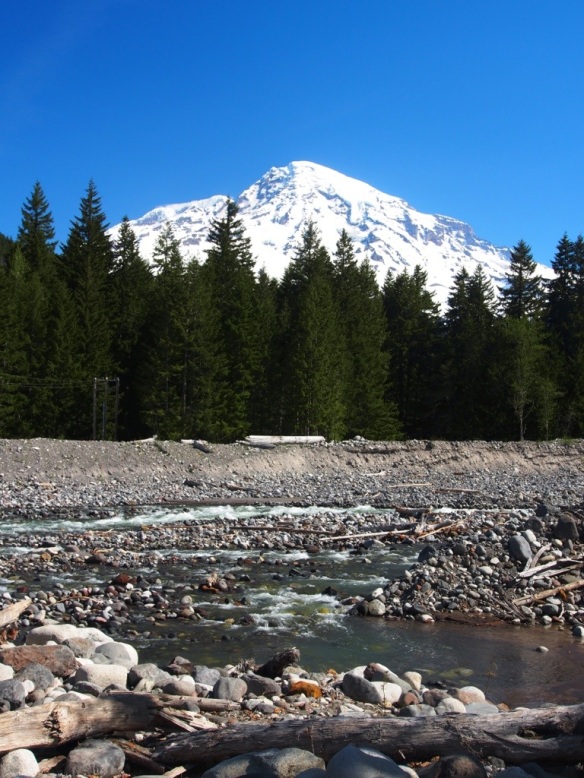
20130523-201715.jpgThe Nisqualy River, below Mount Rainier. The sound of this place was amazing, the view was pretty special too. A park ranger gave us directions to this spot when he saw our camera bags. I have recorded video of the spot, mostly to relive the sound of the river.
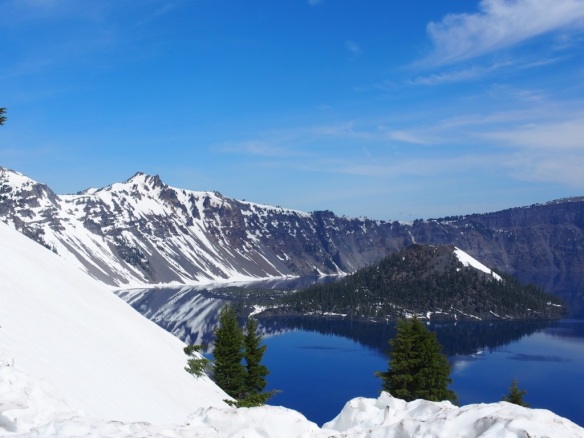
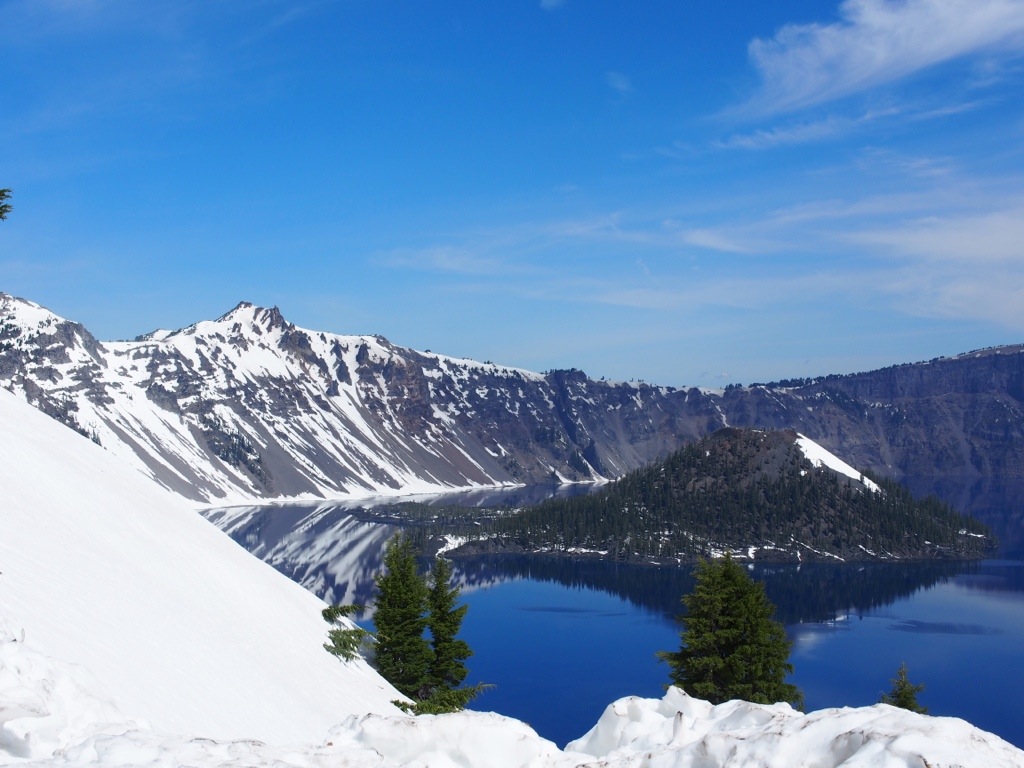
20130523-201736.jpgWizard Island – just off the west shore of Crater Lake. Full disclosure, Crater Lake is my absolute favorite place on the surface of this big blue marble. I hadn’t been there in 20 years and the first sight of it made me tear up. The beauty is overwhelming, and I know I am ill-equipped to capture it in a way that adequately conveys it. This shot has not been edited at all, the water is that blue, the sky is that stunning. I could have sat in that spot for weeks.
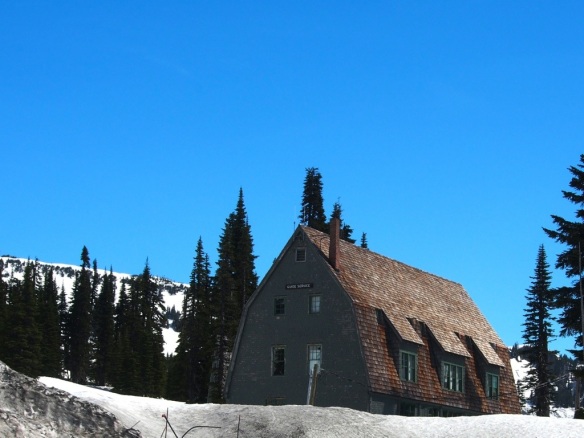
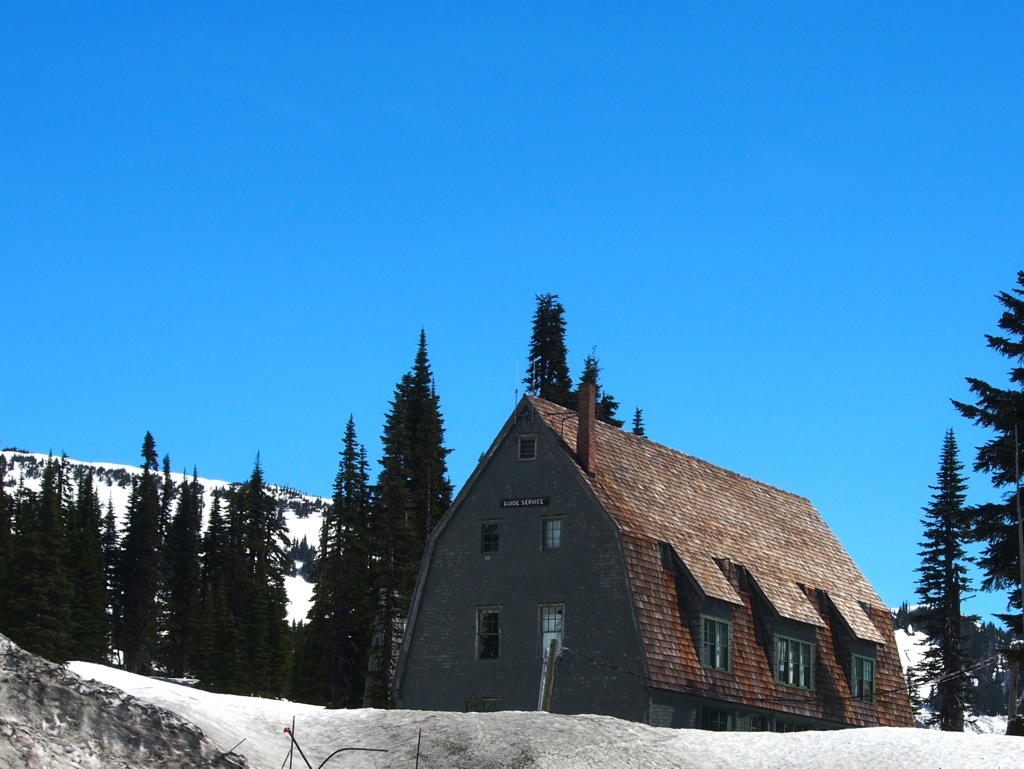
20130523-201804.jpgMount Rainier Guide Service. The snow was still 14 feet deep on the slopes here. There were people in shorts snowshoeing with the rangers. Paradise, Mount Rainier.
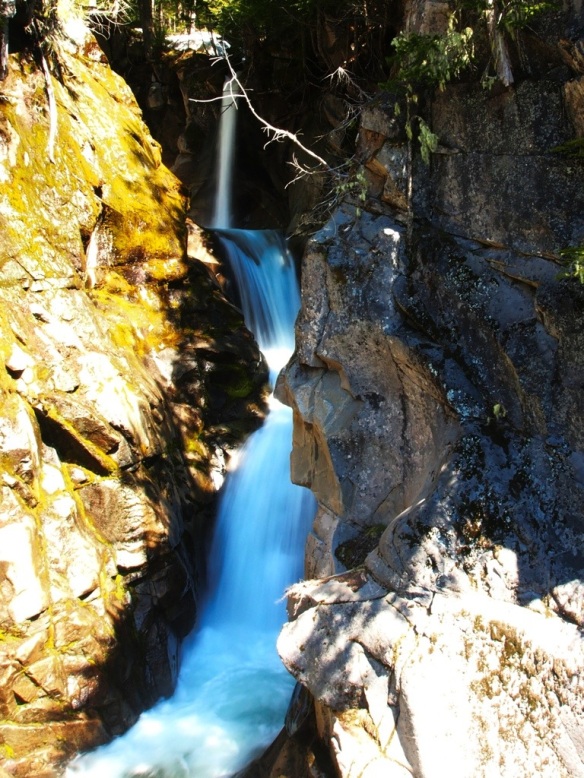
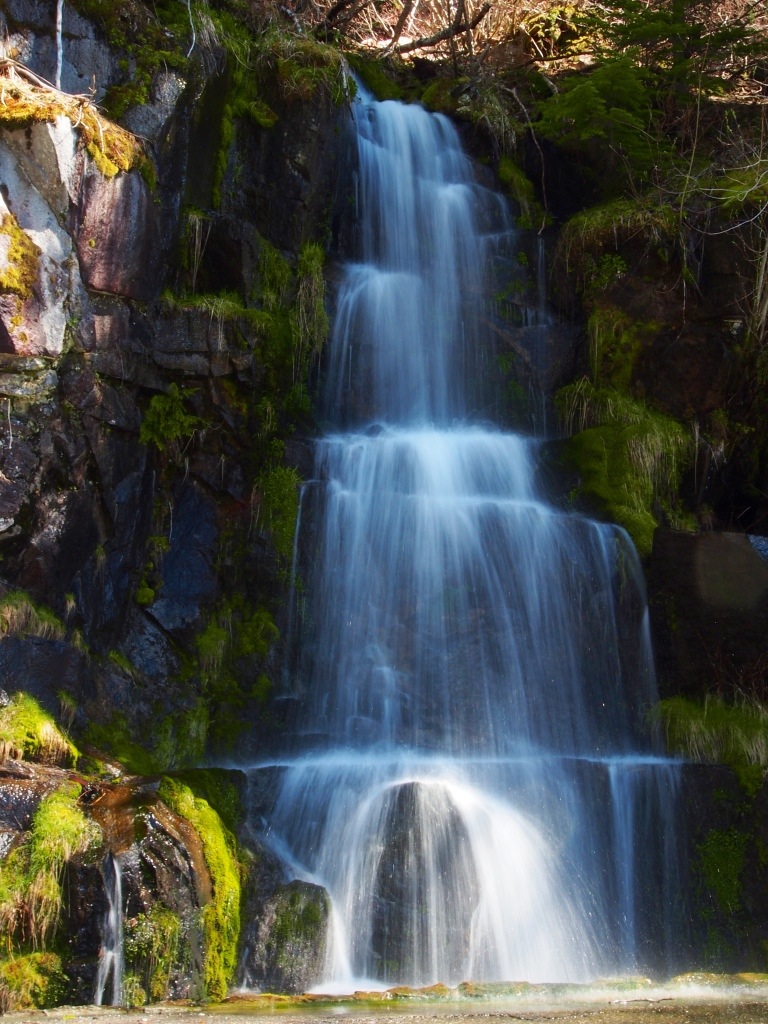
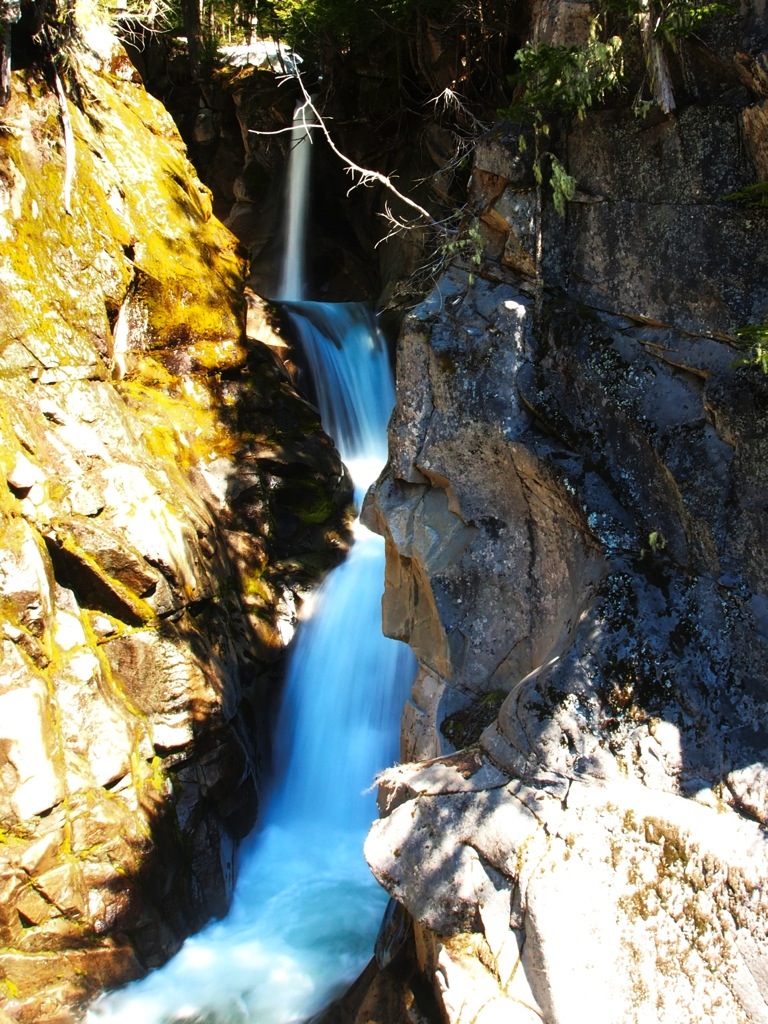
20130523-201540.jpgChristine Falls, Mount Rainier National Park. These falls are glacier fed and this is just the top two tiers. It’s named for a disabled 8-year-old girl who managed to climb to the 10,000 foot point on the mountain in 1889 – I love that. She may not have conquered the mountain, but she conquered something bigger by tackling the beast. I wish the sun had not been so direct, I would loved to have shot this earlier or later in the day. I braced myself against the bridge wall and took a long exposure on this one, the lights are too bright, but I like the effect of the long exposure on the water.
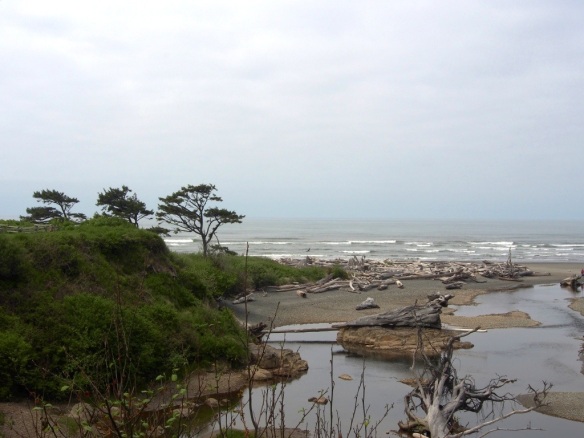
20130523-202010.jpgKalaloch, Olympic National Park on the Pacific coast.
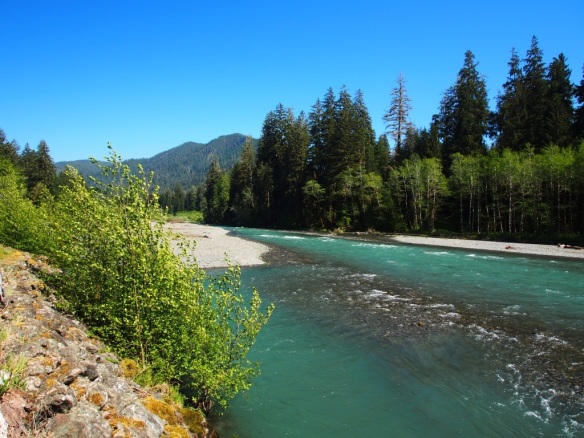
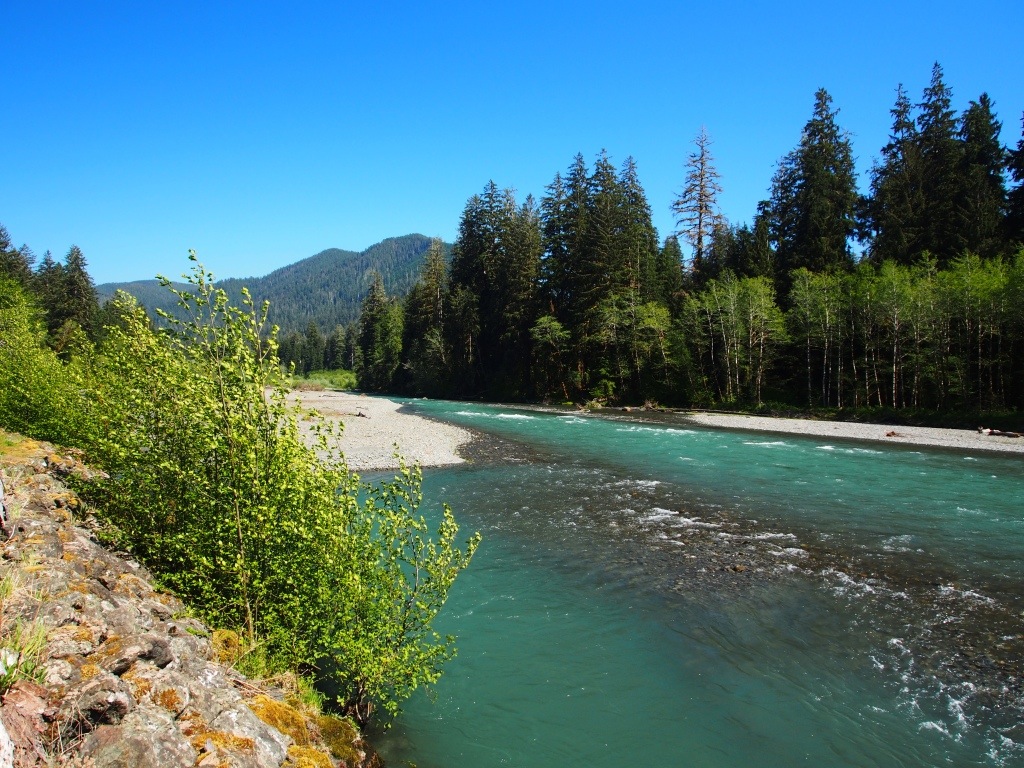
20130523-201256.jpgThe Hoh River in Olympic National Park. A river filled by snow melt – we actually got into this river and it was unbelievably cold. The river channels here were so much wider than those in the Ozarks – and there were lots of huge logs along the banks. It looked like massive earth moving machines had been down there, but this was all created by moving water.
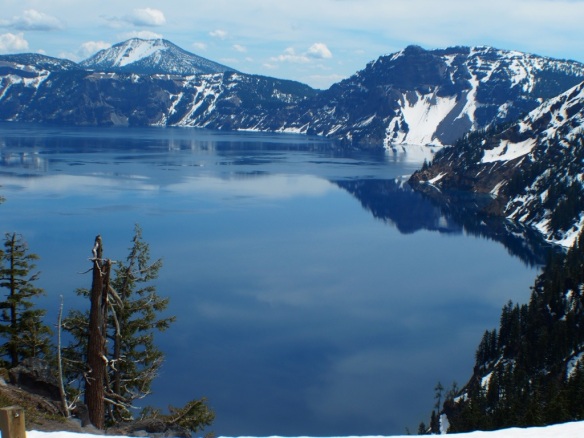
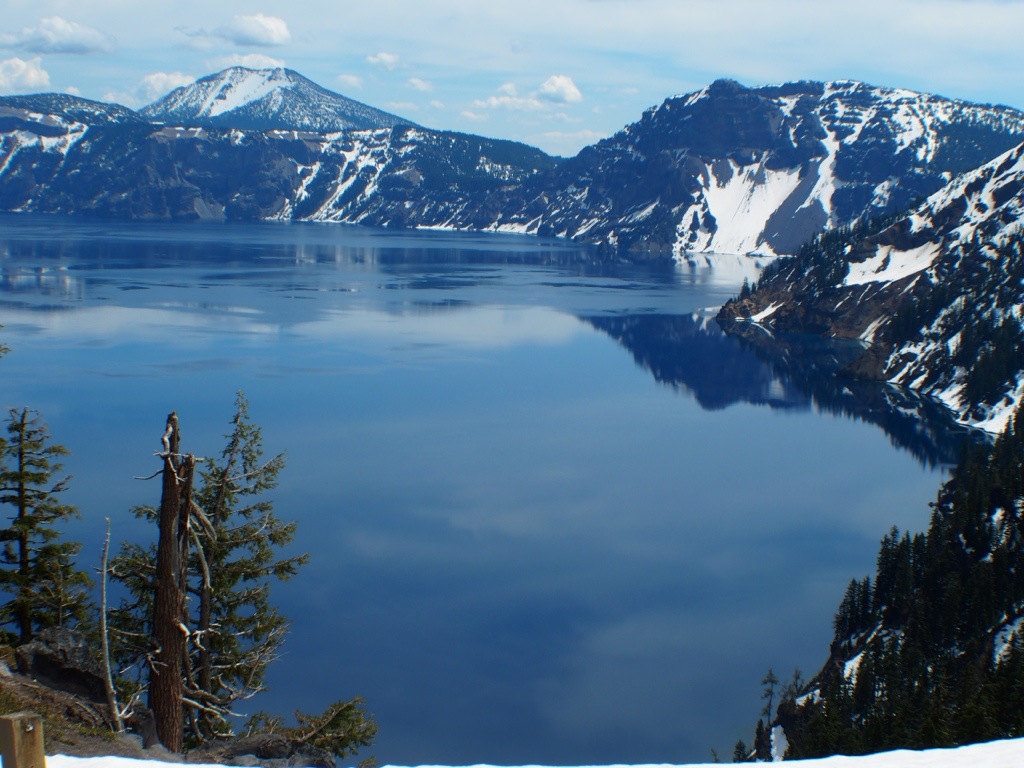
20130523-201830.jpgThe eastern edge of Crater Lake – its surface like glass. Bliss.
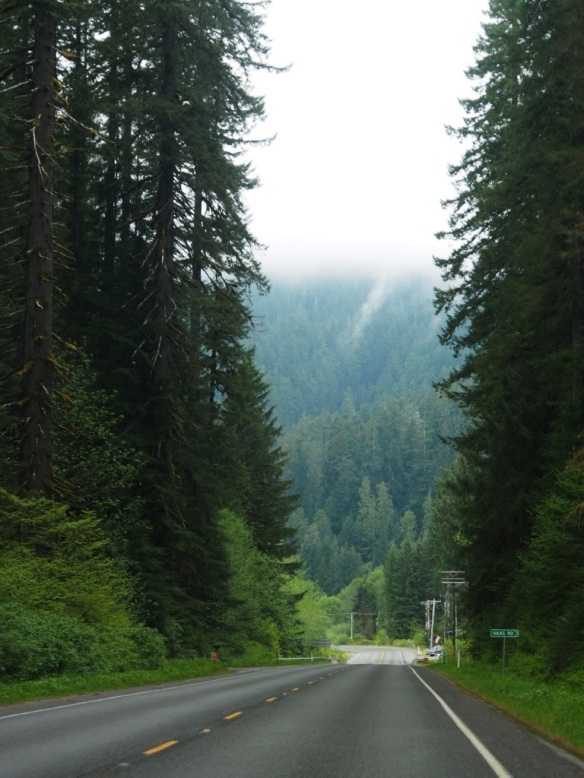
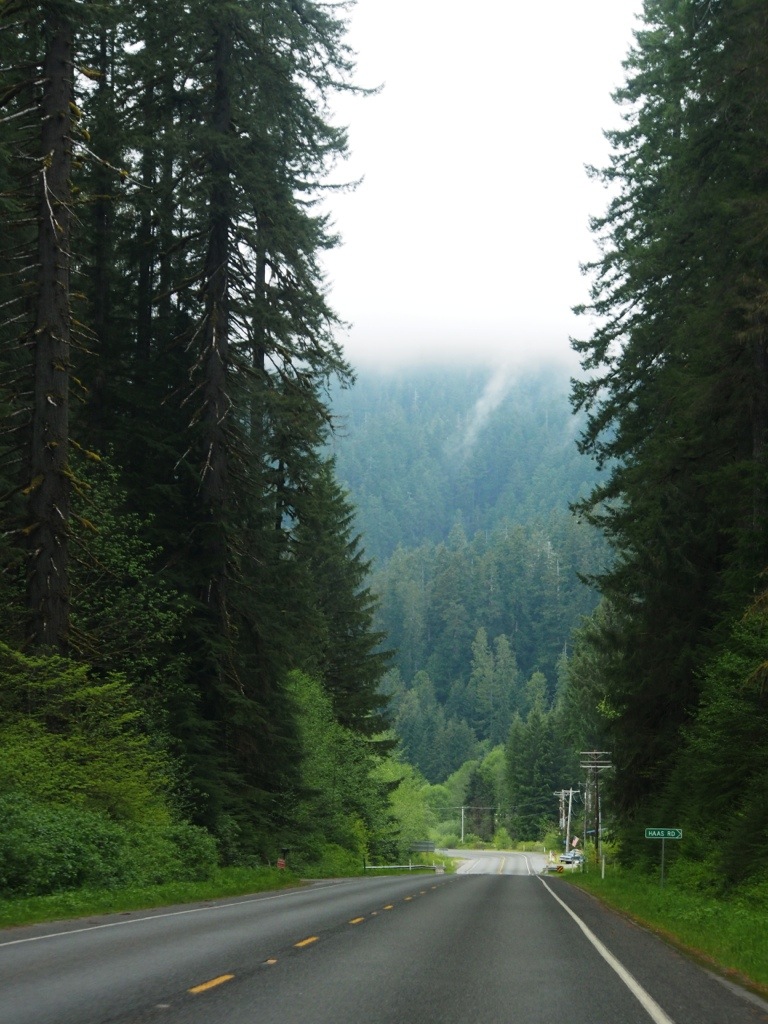
20130523-223218.jpgQuinault National Forest in Washington. We turned down this road because we saw a National Fishery sign. The top of the photo is not sky, it’s actually clouds that are lower than the treetops.

My natural inclination is to square up – but on this trip I looked for diagonal lines, hoping these would draw the eye into the image. Sometimes I think it works, and sometimes I’m not so sure. I know that a tripod could have improved many shots, but I haven’t invested in a good travel-weight one yet. The sky in the west is so much bluer more consistently than it is here, so there weren’t a lot of white washed out skies. The wide open spaces allowed me to focus a bit more on parts of the scene than I could have here in the hills and hollows.

All in all, I think this trip pushed me to try new things, to make myself solve some problems. I don’t think landscapes are my thing, but I did my best and think I did OK. I will always prefer getting close to my subject, it’s more intuitive – very right-brained. Landscapes take more thought.

I can’t imagine having seen all this beauty and not having tried my best it capture it.