Didn’t Your Mama Ever Teach You Any Table Manners?

Mid summer is a time when the Bird Buffet is inundated with fledglings – last week I wrote about a titmouse who was unwilling to cut the apron strings. I’m glad to report that I witnessed him opening and eating his own sunflower seeds today. Still, his screeching for his mama continues unabated. I have the feeling he’ll be living at home until his student loans are paid off.

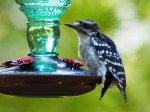
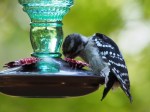
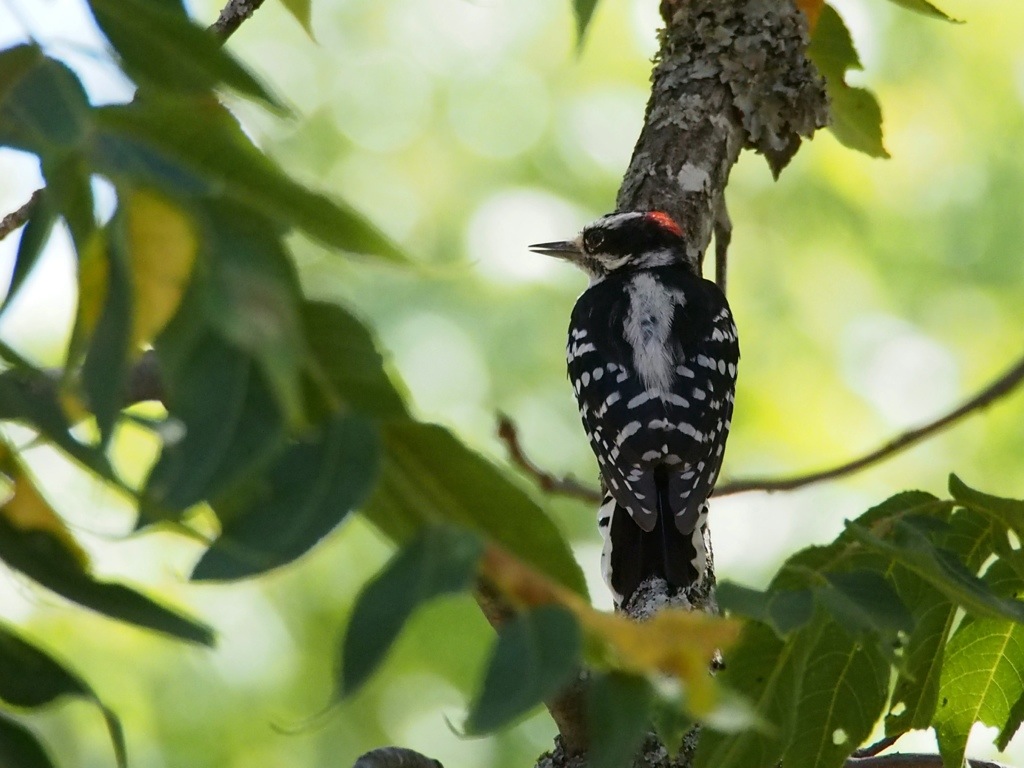
Todays subject on Fledglings Behaving Badly, is not a mischievous titmouse, it’s a youngster from a fine upstanding family, known for their fine manners. They don’t screech, they don’t fight, they don’t hand upside down from the chandeliers. The Downy Woodpecker is the very picture of a well-mannered bird.

This is a Downy being a Downy - walking along a tree limb looking for bugs.

This is a Downy being a Downy – walking along a tree limb looking for bugs.

Downies are sweet birds, they become accustomed to humans very quickly and even share their feeders easily. They are likable little birds – the kind who grow up to be upright citizens. Every once in a while there’s a bad apple, a bird that no amount of parenting and discipline can manage – a hellion that upsets the whole neighborhood.

This kind of behavior cannot be tolerated at the Buffet! I suppose she thinks that if it’s alright for the hummers to dive bomb each other over this feeder that she can do whatever she likes, well she’s wrong – dead wrong (not really, I could never hurt her).

Click through this next gallery to see our stop action surveillance of the perpetrator.

After this incident, the youth in question was seen hanging upside down on the woodpecker feeder. She was last seen leaving the Buffet on a motorcycle with a sketchy looking bluejay.

She's gonna have one heck of a hangover in the morning.

She’s gonna have one heck of a hangover in the morning.

Parents – tell your fledglings about nectar. There’s nothing sadder than a young woody throwing her life away for a sugar high.

It’s a boy! An Update on the Friendly Fawn

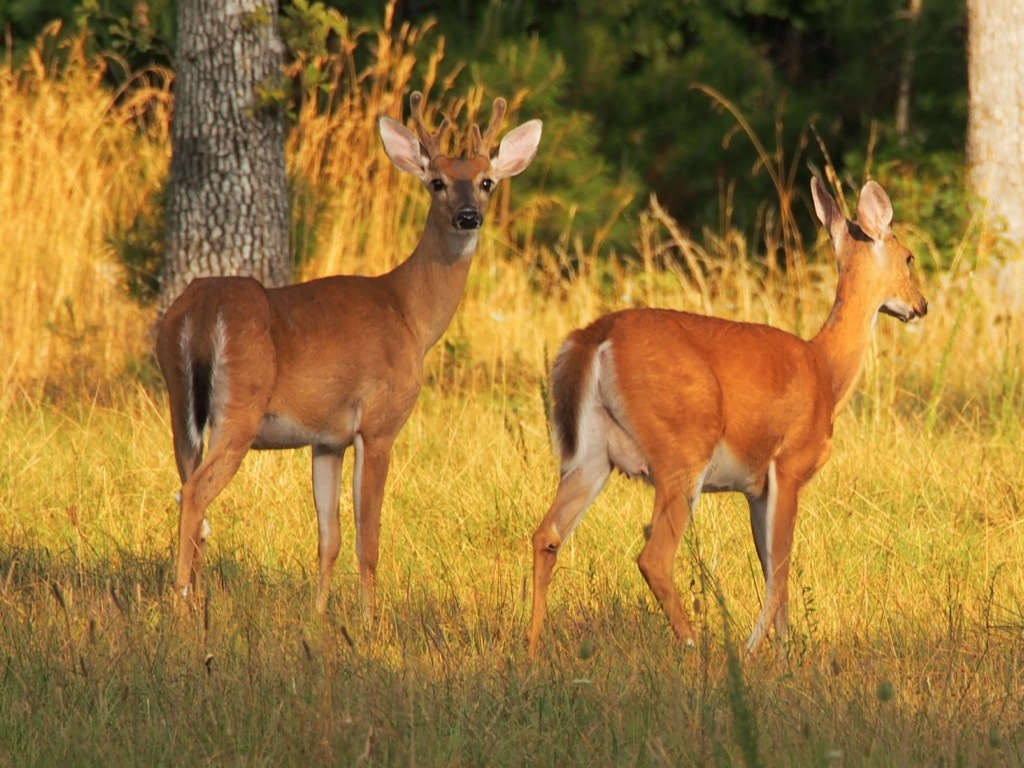
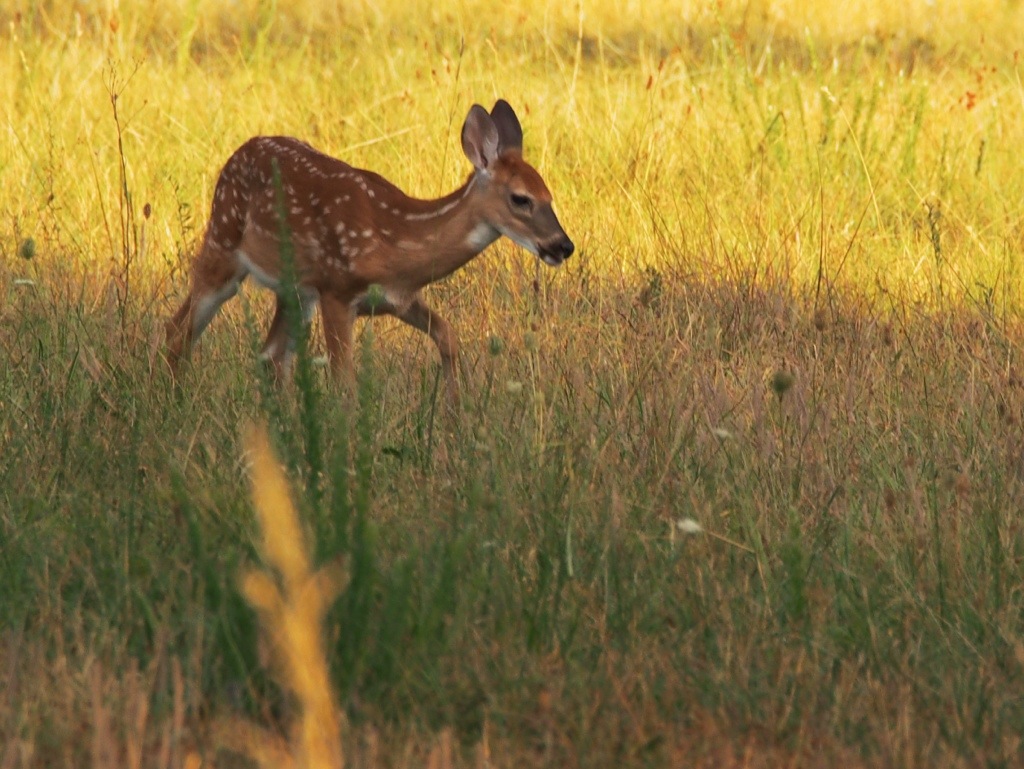
Earlier this year I had an encounter with a yearling in the woods – it was an old friend, a friendly fawn. Last night I ran into the fawn again, but he’s all grown up!

These aren’t the best photos – I was not very close and was loosing light, but it is my fawn! I think I’ll just call him “Friendly”. He’s sporting velvet now.

His white mustache shaped marking is there - but I knew it was him because of that look!

Friendly’s white mustache shaped marking is there – but I knew it was him because of that look!

His eyes are unmistakable and the white mark on his nose is there – but that’s not what clued me in at this distance. It was his manner. He was with three other deer. The doe with him in this shot is his aunt – I have several shots of her over they years and she is not very friendly.

Here you can see the posture of the doe - she is not approachable and is not friendly. Her sister is the friendly guy's mom.

Here you can see the posture of the doe – she is not approachable and is not friendly. Her sister is the Friendly’s mom.

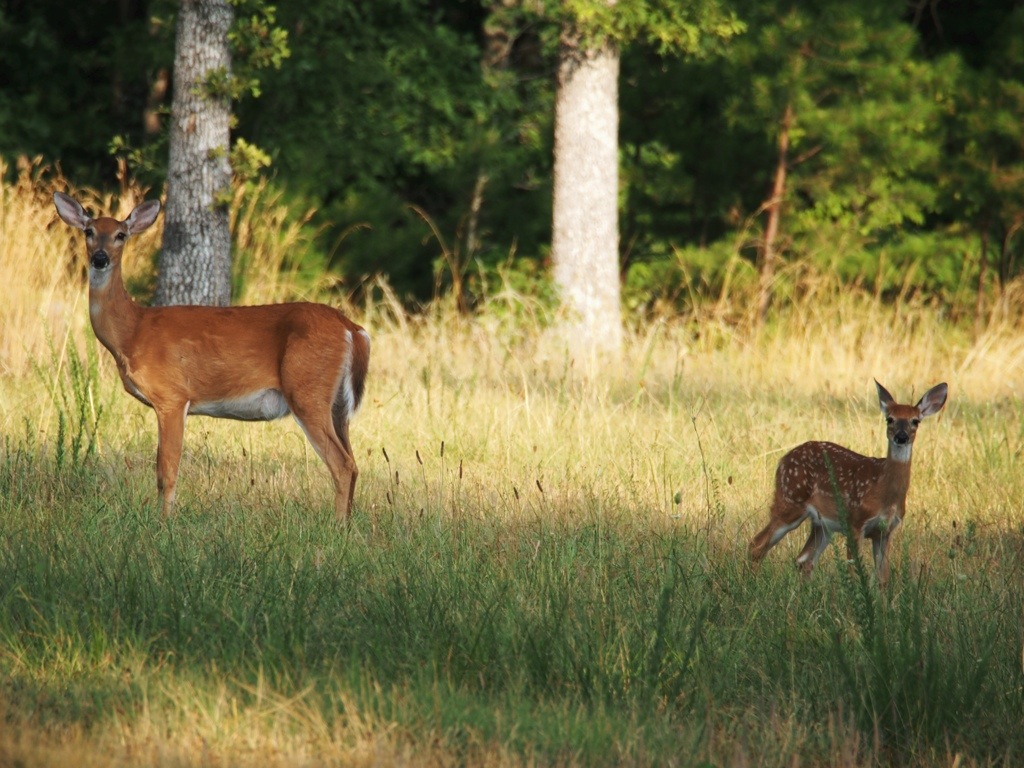
Looking at her in this shot she is getting ready to snort and bolt. But not Friendly – he’s watching me, tail down and calm. This was actually the first photo and you can see that his position is unchanged as I got closer. Here’s a shot of his mother with his newest younger sibling.

Doe is pretty calm as always but this baby was not - no white mark either.

Doe is pretty calm as always but this baby was not – no white mark either.

Doe typically has twins or triplets so this is a light year for her. Both her and Friendly stayed put as I got closer.

Not a great shot - but this is Friendly's new sibling, Spot

Not a great shot – but this is Friendly’s new sibling, Spot

On this evening Spot made the call and bolted, the others followed.

See Spot Run! A raised tail is a sign of danger, Spot doesn't know I'm harmless...yet.

See Spot Run! A raised tail is a sign of danger, Spot doesn’t know I’m harmless…yet.

They all bolted into the woods…except for one…

Friendly stayed behind to watch me turn and head back to the Jeep

Friendly stayed behind to watch me turn and head back to the Jeep

I think this is the beginning of a beautiful friendship – I think that “friendliness gene” does exist.

Shutter Speed – A Month of Hummers

Over the course of the last month I have been experimenting with shooting in Shutter Mode – a departure from my beloved and comfortable Aperture Mode style of shooting. You can read about my progress here, here, here, and here.

If you don’t want to bother with clicking all those blue words – here’s my journey in a nutshell:

1. I like to shoot birds and wish I could capture more action shots.

2. Shooting in Aperture Mode focuses on light and not speed, so while I can easily control the depth of field, I miss a lot of that action.

3. Most wildlife photogs shoot in Shutter Mode, because controlling the speed gives you a better chance at stopping motion – this prompted me to get out of my comfort zone and give it a try.

What I have learned in the last month is that great light increases your camera’s ability to get you great results, and that you need to know the limits of your camera’s ability to handle lower light with higher ISO settings. ISO is crucial in allowing more light in when you increase shutter speeds even in sunlight.  I was pleasantly surprised to find that my camera can push these settings pretty far and still yield good results. I would encourage you to find a review that assesses your camera’s capabilities to see where the experts draw the line on ISO performance. For my camera, the line seems to be at 6400 with the experts in a controlled lighting situation – in the field I find I prefer the results at 3200 and lower. That’s twice the limit I have ever been comfortable trying, and reading up on my camera convinced me that my thinking on ISO and grain was stuck somewhere in past with my first Canon Elph (circa 2002).

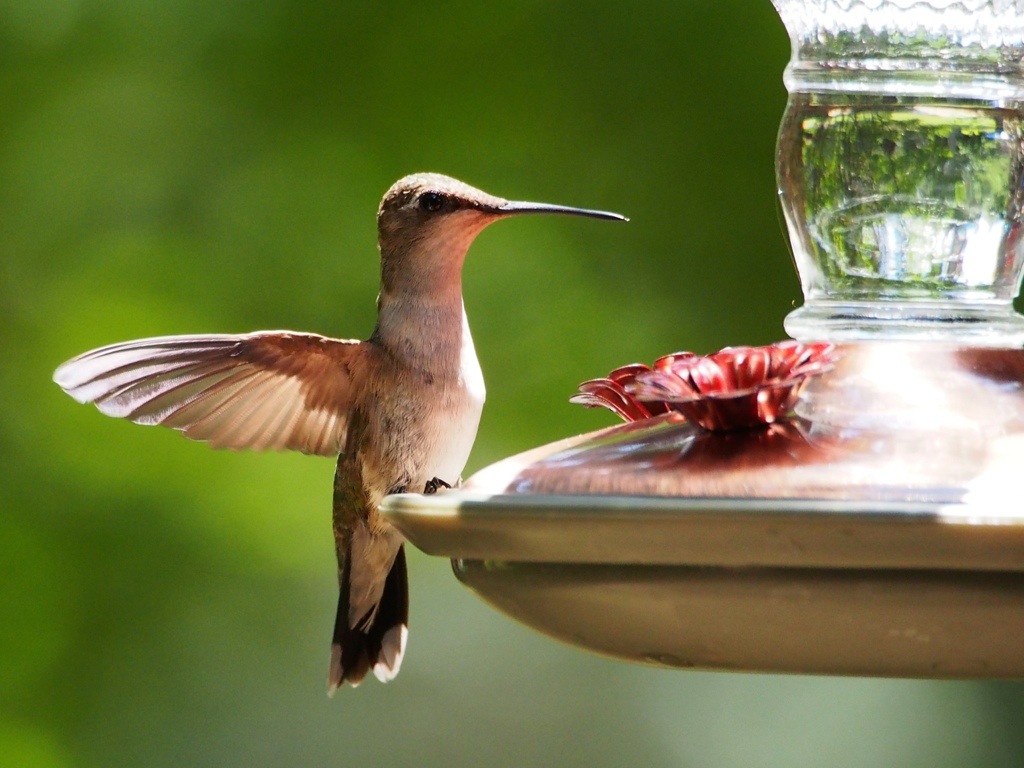
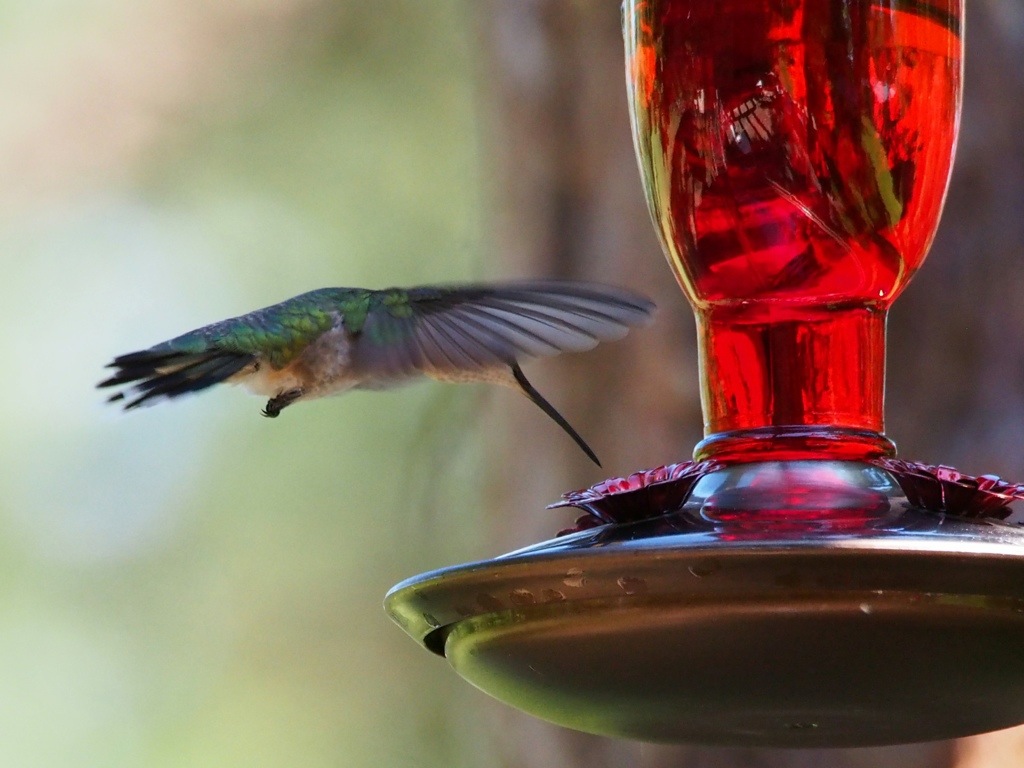
When starting down this road my goal was to try to get shots of hummingbirds with definition in their wings. I have hundreds of shots from the last year with eyes in focus and wings that are barely discernible – now I love some of these shots, but getting wings with actual feathers defined was a rarity. Now I am not at the point where I am completely stopping motion on a hummingbird – honestly, I think that to do that dependably would require the use of a flash, and that is way outside my comfort zone. What follows are my favorite shots from a month of shooting in Shutter Mode.

Click on any image to start the slide show!

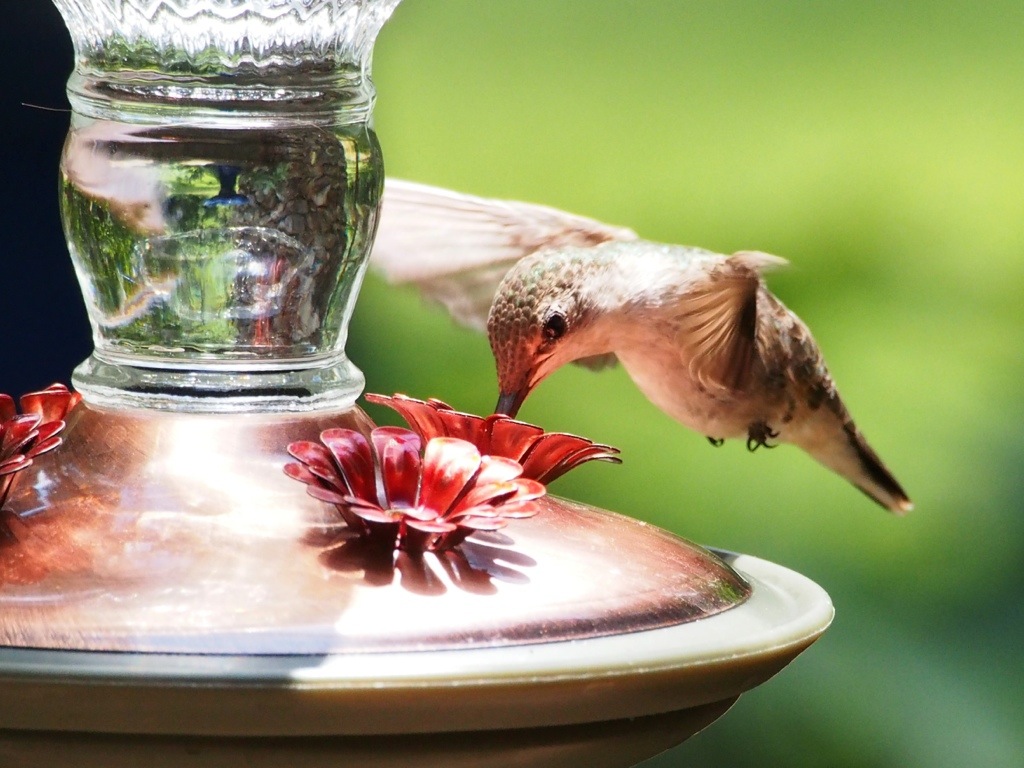
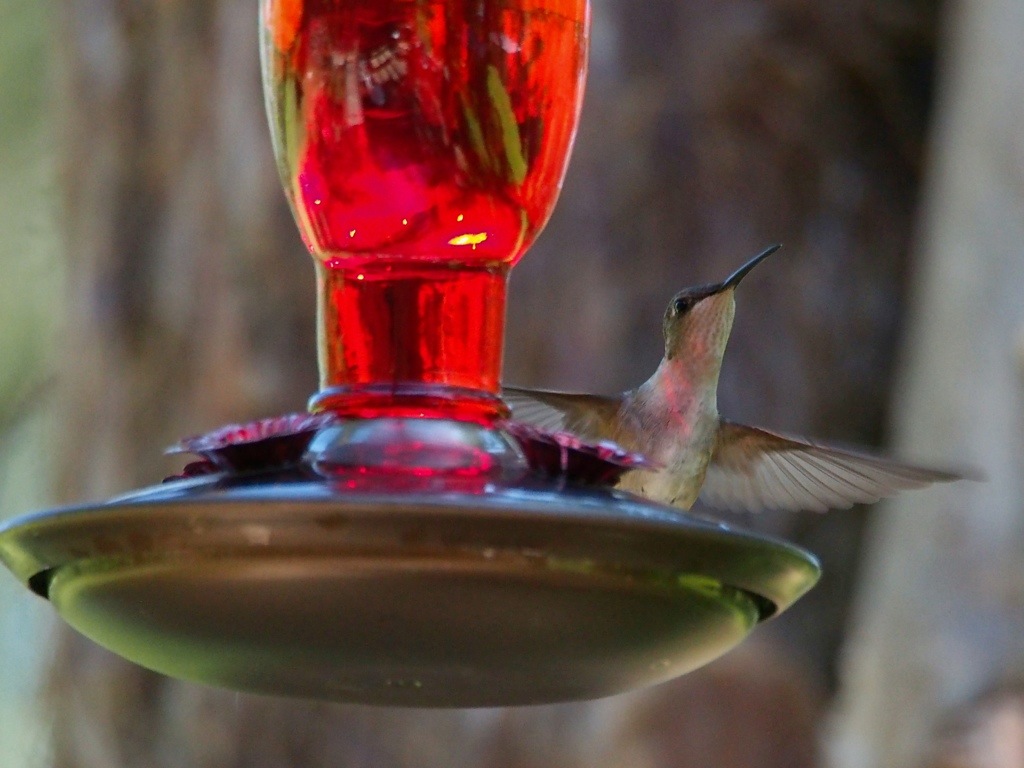
Now I know that last shot is not really an action shot. That girl worked her heart out for me – she’s out there on the front lines everyday defending that red bottle feeder, and her exhaustion is starting to show. She’s the acrobat diving into frame in so many of these shots. Well done, my little friend, well done.

It’s Time to Leave the Nest Already

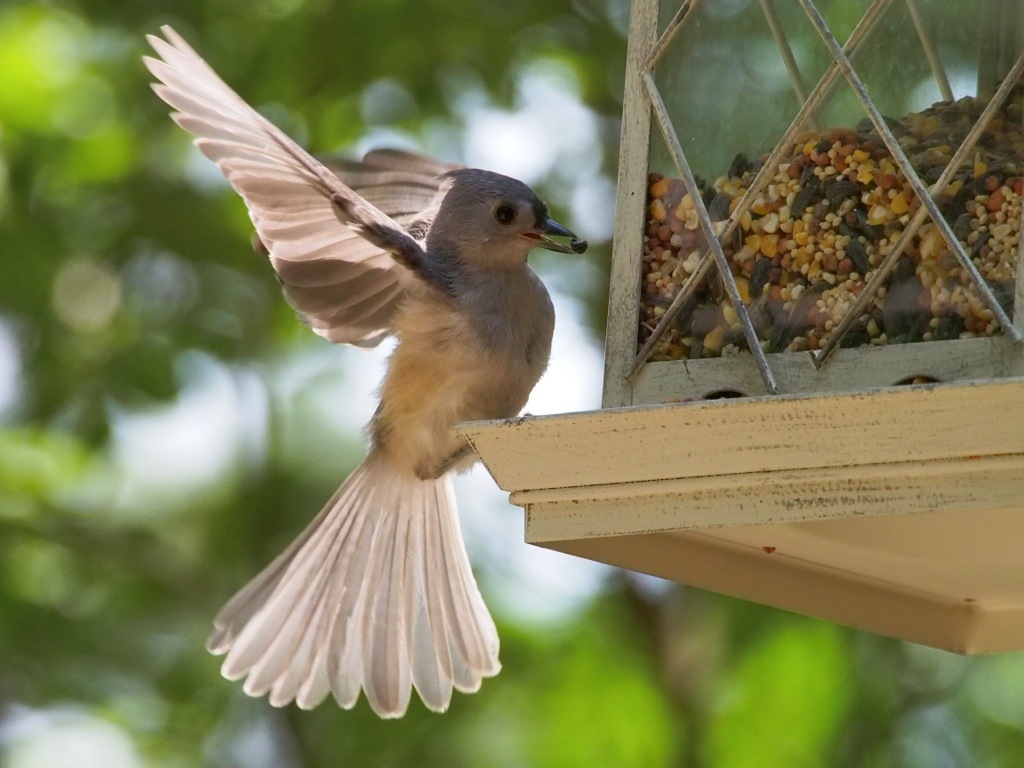
Titmice are pretty much identical. I can pick out two that I have had at the feeder for a couple of years because of scars they have. Recently I have been watching a young titmouse – he stood out from the cool grey crowd. I was pretty sure it was a youngster because it’s plumage was a bit rough and it still had the yellow edging on its beak that baby birds had. It’s about the same size as the other birds so it seemed like it should be more confident. It looked to me like it was having a hard time mastering basic titmouse routines.

A couple of days ago I witnessed an altercation. The young bird would vocalize and make lots of screeching sounds whenever a mature bird got close – I assumed that this was about a young bird proving himself. He seemed to be incapable of holding his own.

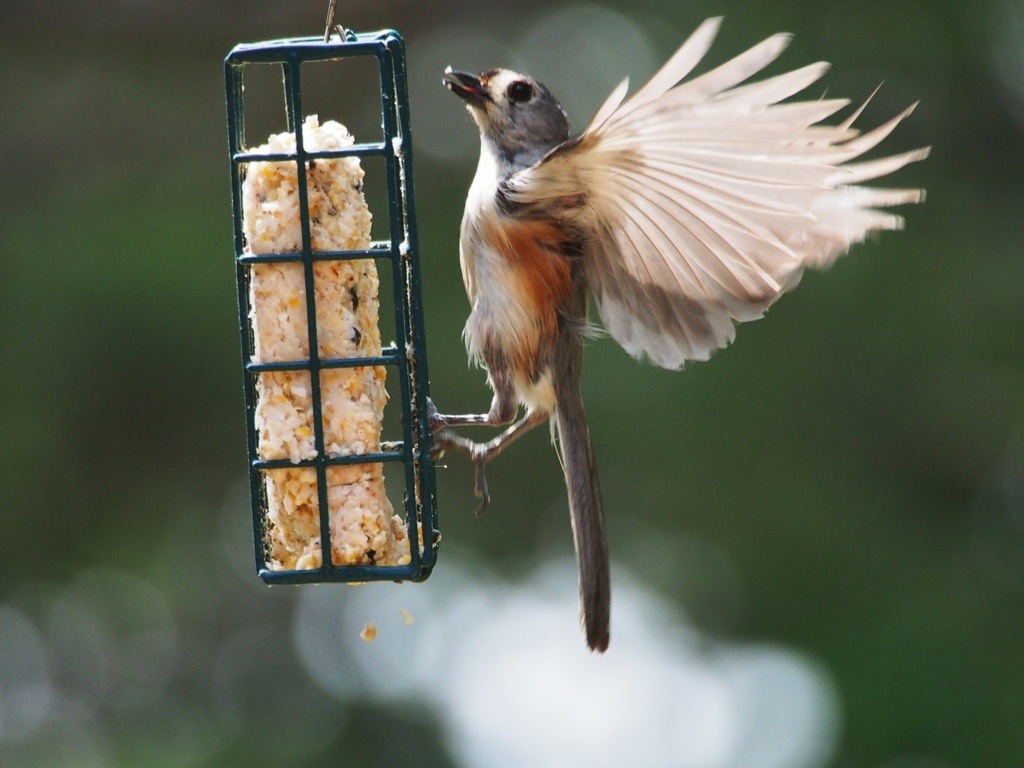
I started to notice this bird regularly. In this screen door weather it’s clear when he is on one of my pergolas. He seems to be able to screech even with his mouth full. He also puffs out his feathers – this has made him an attractive subject as I study capturing movement through setting changes.

Last night, just before sunset I saw the following interaction – as I watched I assumed it was a tussle over a peanut, but as I looked at the next to last shot I wondered if I had been looking at this all wrong…

As I watched the scene above I was sure that there was a fight over a peanut, but as I looked at the photos afterward, I wasn’t so sure.

Today I saw the two birds again and it became clear that my impressions were wrong.

Once I saw this play out I had to revisit the other photos and look at them through a different lens. I have never seen this type of behavior before, was this youngster just not ready to leave the nest? Does he just want to live beyond his means and eat peanuts all day instead of sunflower seeds? Was he the oldest child who wishes he got more time with mom and dad? Was he the middle child who grew up believing that he didn’t get enough attention? Was he the youngest who like to play the baby card to keep from having to fix his own supper? EIther way, he’s got his parents snowed.

Eureka Springs Through a 60mm Macro Lens

There are lots of reasons to move up to an interchangeable lens system camera. I say “interchangeable lens system”, because technically I do not shoot a DSLR. DSLR stands for Digital Single Lens Reflex – meaning that you look through the lens you shoot with and that is made possible by reflection, a mirror that rests below the viewfinder. I shoot “mirrorless” – specifically micro 4/3. Because there is no mirror the space between the sensor and the lens can be dramatically reduced, allowing for smaller cameras and lenses. I can carry a three to four lens kit in a messenger bag with all the bells and whistles. The smaller distance means that the focal equivalents are not the same as standard DSLRs which operate on the 35mm camera equivalents. My focal lengths offer twice the reach – so a fast 50mm portrait lens is only a 25mm lens in my system. My 75-300mm bird lens is equivalent to a 150-600mm zoom on a DSLR. It makes for a compact and somewhat inconspicuous kit.

One of the things I love is shooting with a dedicated macro lens. I have been using a 45mm Leica macro lens for the last year or so. The 35mm equivalent would be twice that – 90mm. It’s a great lens but often can’t get me as close as I would like. I have a vintage macro bellows set up that is fun to use with the right subject, but lacks portability. Recently I acquired a new 60mm (120mm equivalent) 1:1 ratio lens and I am loving it. I haven’t had the time to take it out with the tripod to go crazy with the details, but I did get a chance to take it out for a spin around the formal gardens of Eureka Springs, Arkansas last week.

Click along and walk with me up Spring Street and enjoy the gardens.

Coneflowers – there is something about the coneflower that draws me back every year – the shape, the color, the insects – all of this and its perfectly spaced center structures make it lovely from almost any angle.

Orange Petals – I am drawn to oranges in nature in any season. The macro lens allows me to focus close and then focus closer. I tend to shoot flowers in aperture mode, playing with the DOF.  New details emerge as the depth of field gets tighter and tighter. Light through petals reveals structure.

The Buzz – I love the challenge of capturing a bumble bee in action, and nothing is better than seeing the individual pollen grains. Shooting on a full-function camera lets you switch to shutter mode to try to freeze their constant motion.

Thistles – I know they are invasive weeds, but I love thistles. The thrive in places where nothing else does. A couple of years ago a springtime flood created a slide on one of the city’s mountainsides. To prevent future slides deep rooting grasses were planted and the hillside was slightly terraced. The following year the grass came up, but within it were thousands of thistles. They are on a spot where the late day sun isolates them against the sky. They make for a stunning horizon, but it’s their structure that draws me.

Nature’s Spirograph – on that same hillside I see daisies below the grass line. I love the geometry that you find when you get close to daisies and similar petalled flowers like brown-eyed susans. Often after shooting you find that there is more wildlife than you had bargained for in your frame.

Ready for their close-ups – as much as I love categories, not everything fits neatly into sets when I shoot. Sometimes something just catches my eye and I shoot one or two frames.

Not bad for a first outing. I made the choice to leave my camera bag in the car and shoot only with the new lens. I find that this is a great way to get to know a lens, to force yourself to depend on it for the shot. Personally, I love new gear, but often depend on the old favorites and it’s good to get out there and push yourself outside of your comfort zone.

If you are a photog, what lens do you have sitting around that you haven’t gotten to know as well as you should?

Shutter Speed Part 4 – My Blue Heron

I’m becoming more comfortable working in Shutter Mode. There are some times when it fails me, but that most often has to do with extreme light or shadow issues, the things that make getting a good shot almost impossible. As I discovered in Part 2, my camera can handle pretty high ISO settings. I did some research on some real world reviews and found that I could push the ISO up to 3200 with little or no noise and that as high as 6400 a clean image was still possible.

On July 4th, like most people, I like to watch fireworks. I prefer to do it from a kayak out on a lake or river if possible. Since last summer we were in a drought and had no fireworks we were set for a super-sized show this year. I like to get to the lake at around 7:30 and get out on the water before it gets dark to set my bearings and get in a short paddle before sunset. Right after dusk I spotted a great blue heron. They are one of my favorite birds – standing over 4 feet tall with a six-foot wingspan, they are a sight to behold. This was my chance to push that ISO and try to keep a reasonably fast shutter speed. To be sure, there is some grain in some of the shots, but keep in mind that this is dusk – a full half-hour after sunset. Pushing the ISO let me keep the shutter speeds between 1/320 and 1/400 second, not fast enough to stop most action, but enough to capture pretty sharp images given the conditions – low light shots from a kayak.

I have found that I can get closer to these birds later in the evening and have always looked at these encounters as pictures I take only with my eyes, because I didn’t think I could get decent quality with a camera without a tripod on dry land. Pushing the limits is teaching me otherwise.

Click on the gallery – all shots were taken at an ISO setting of 3200. There is definitely some grain, but considering that I needed a flashlight to see the buttons on my camera I am pretty happy with the results.

Shutter Speed Part 3 – Happy Accidents

This is the third post in a series on migrating away from my comfort zone – shooting in Aperture Mode – to exploring the wonders of shooting in Shutter Mode. In Part 1 I talked about the trade offs of Shutter vs Aperture Modes and the search for the structure of a hummingbird’s wings. In Part 2 I discussed some simple setting changes that let me get more shots off and have more keepers in a series on a visit from a bluejay. Today I want to discuss an unexpected byproduct of shooting in Shutter Mode – Happy Accidents.

In my typical Aperture mode I might have gotten an inflight shot by accident once a month that was useable. Now sometimes I got lucky when there was so much action that all I had to do was keep snapping and hope for focus like this. Apart from this flurry of activity those times when a bird launches into the air were mostly just unreadable blurs.

Now most of these shots are not really useable, but they are readable and I think I am learning more about the way a bird flies. That information will help me take better shots of birds as they launch themselves into the air – knowing the process helps me to make better guesses of where the action will be in a split second.

I have always imagined that birds launch themselves into the air by flapping their wings and lifting off – but no – they take a leap of faith, hopping or stepping off to catch the air before they even spread their wings…

Alley oop!

Alley oop! f6.7 1/1000 second ISO 1600

Geronimo!

Geronimo! f6.7 1/800 second ISO 3200

Cowabunga dude!

Cowabunga dude! f6.7 1/800 second ISO 3200

To infinity and beyond!f8 1/800 second ISO 2500

To infinity and beyond! f8 1/800 second ISO 2500

Like I said – not great photos, but they do give me a better feel for where to look for the action on take offs, but what about landings? I am learning that wings are much more open when a bird is landing – they flutter to catch their balance. Sometimes they even overshoot their target – it all happens in a split second and I always missed it in Aperture Mode…

Incoming!

Incoming! f6.7 1/800 second ISO 3200

Overshot the landing!

A real nail-biter! f6.7 1/800 second ISO 1600

All a flutter!

All a flutter! f6.7 1/1000 second ISO 1600

Knowing that the landing is the prime time to catch wing action was a huge advantage to shooting. I also noticed that certain feeders with narrower foot holds tended to require more wing flaps to land on, so this weekend I set out to try to make one good capture. I knew what was needed – bright light, fairly high ISO, fast shutter speed, a bird landing on a  tricky perch – not much to ask for – right?

A focused landing! f9 1/1000 second ISO 3200

A focused landing! f9 1/1000 second ISO 3200

I found this feeder a couple of weeks ago at Lowes and wondered if the birds would use it because of the narrow edge. It turns out that they do use it and if you can get into place before noon on a sunny day with the right camera settings you just might capture some wing action.

Shutter Speed Part 1 – It Gives You Wings!

In photography there are always trade-offs. Modern DSLRs try to balance the trade-offs to give you the perfectly exposed photo.

When it comes to shooting mode, I’m an Aperture kinda girl. I love the control I have over the DOF (Depth of Field). WIthout thinking I can spin that adjustment dial until the image is bright enough and the subject is isolated to my satisfaction. I developed my love of the Aperture Mode over the course of years of shooting things that don’t move a lot, like flowers and rusty things. When I started shooting birds, I started in Auto to see what the camera would choose for the situation. I noted the shutter speeds seemed to be between 200-350. Moving to Aperture mode, I kept that number in mind. Since I hate noise (grainy-ness) and love bokeh (the cool blurry swirly backgrounds in photos that make the subjects pop), I kept the ISO low and the Aperture pretty close to wide open. That is my comfort zone. Unless I am shooting in a studio under a light kit I keep to that formula.

That brings us to the trade-offs. What I give up for my love of a shallow DOF and lots of creamy bokeh is the ability to stop action unless there is a ton of light. Sometimes I have gotten pretty lucky, but not nearly as often as I would like. I see in focus action shots of wildlife all the time, I see them taken with mirrorless cameras too – there has to be a way. Trying a new mode would prove to be part of the answer. It’s time to leave my comfort zone and tread out into the wilderness that is Shutter Mode! After reading some articles I have decided that since this whole bird obsession thing is an exercise aimed at becoming a better photographer, I owe it to myself to try this long neglected mode on my camera.

This weekend I was pretty much house bound with a nasty bug courtesy of a tick bite acquired on a recent hike, so I read a few articles about shooting birds. Something I had never considered was increasing the ISO – for me the low ISO has been like a treasured idol in my toolbox of predictable outcomes, even though my camera has one of the highest ratings for performing at higher ISO settings. Another thing I had to give up was the image review feature – the more I shoot the more I have seen how that third-of-a-second image in my viewfinder has robbed me of shots, losing my subject as the image flashed onscreen. By Sunday I resolved that I was ready to take off the training wheels and try this out.

I decided to start a quest to understand the structure of a hummingbird’s wings. I have shot lots of hummers in the last year and have always focused on their eyes whenever possible. I still did that, but I did a few things to increase my odds of getting a good shot. First, I made my focus point as small as possible so that I did not have to pre-focus on the feeder first and hope to get a focus on the bird. Next, I chose certain feeders to focus on – ones that were in bright sunlight. Finally, I deleted all shots of birds not in motion – I have hundreds of clean focused shots of birds sitting still – I want to see motion. I also deleted shots where the wings were not definable. I took some test shots at different shutter speeds – 500, 640, 800, and 1000 – each of these settings required a change in ISO to produce an image bright enough to use. I used to work with ISOs from 200-800 – now I would work as high as 2500. Beyond that I was just not happy with the grainy nature of the test shots in the available light on that day. This required me to change settings as the light changed – it was a partly cloudy day so I got lots of practice.

The shots that follow are not great, but I am seeing that it is possible for me to get closer to capturing or potentially stopping movement. Stopping a hummingbird’s wing is an unrealistic challenge – but I do think that I understand the structure better now.

I started with some of my better shots in my old mode taken in the last week – usually in pretty good light to begin with.

f6.7 1/250 sec ISO 100o This is one of my better efforts in Aperture Mode

f6.7 1/250 sec ISO 1000
This is one of my better efforts in Aperture Mode

f6.7 1/250 second ISO 1600 This is a shot where I just increased the ISO - the light was almost perfect so even in Aperture mode I got a sense of the feathers.

f6.7 1/250 sec ISO 1600
This is a shot where I just increased the ISO – the light was almost perfect so even in Aperture Mode I got a sense of the feathers.

F6.7 1/250 sec ISO 1000 Switching to Shutter Mode and bumping up the ISO first

F5.9 1/250 sec ISO 1000
Still in Aperture Mode and bumping up the ISO first – still wonderful light

f6.7 1.250 sec ISO 250 Starting to loose the light - but because the feeder was close it still worked - I can see the ribs of the feathers

f6.7 1.250 sec ISO 250
Starting to lose the light – but because the feeder was close it still worked – I can almost make out some of the structure of the feathers – last shot in Aperture Mode.

Now onto Shutter Mode – these shots were all taken yesterday.

f6.1 1/250 sec ISO 1600  After a short rain shower I switched to Shutter Mode - kept the speed low and pushed the ISO a bit. I focused on the closer bird and can begin to see definition in the feathers.

f6.1 1/250 sec ISO 1600
After a short rain shower I start a new day in Shutter Mode – kept the speed low and pushed the ISO a bit. I focused on the closer bird and can begin to see definition in her feathers.

f6.1 1/250 sec 1250 ISO The same bird moves to the other side of the feeder - you can clearly see the layers of feathers that I have previously been unable to capture. The ISO is making a difference.

f6.1 1/250 sec 1250 ISO
The same bird moves to the other side of the feeder – you can clearly see the layers of feathers that I have previously been unable to capture. The ISO is making a difference. I only got this shot because I disabled the preview feature. With no image to review I can keep shooting.

f6.7 1/640 sec ISO 2000 The bird is scratching in flight - in Aperture Mode this shot is a goner, it would have been a blurry mess. In Shutter Mode it is fairly clear and you can see the underside of his wing.

f6.7 1/640 sec ISO 2000
The bird is scratching in flight – in Aperture Mode this shot is a goner, it would have been a blurry mess. In Shutter Mode it is fairly clear and you can see the underside of his wing, plus it stopped the action of his foot.

f6.7 1/800 sec ISO 2000 A bit too much sunlight, but this shot captures the recoil motion of a wing flap. Personally I like the inverted image of my pergola in the feeder too.

f8 1/800 sec ISO 2000
A bit too much sunlight, but this shot captures the recoil motion of a wing flap. The smaller Aperture setting has slightly reduced DOF – just a bit deeper focus on the bird and feeder. Personally I like the inverted image of my pergola in the feeder too.

f6.7 1/800 sec ISO 2000 This is more detail than I have ever seen on a wing - the sunlight was pretty intense, blowing out a couple of areas, but the grain is OK so far.

f6.7 1/800 sec ISO 2000
This is more detail than I have ever seen on a wing – the sunlight was pretty intense, blowing out a couple of areas, but the grain is OK so far.

f6.7 1/640 sec ISO 2000 It's clouding up and I'm losing light. More grain than I like but I am still seeing feather structure - managing ISO is the crucial.

f6.7 1/640 sec ISO 2000
It’s clouding up and I’m losing light. More grain than I like but I am still seeing feather structure – managing ISO is the crucial.

f6.7 1/640 sec ISO 2500 Same bird - another shot I would have missed if I hadn't turned off the preview feature and an angle I rarely capture because the movement is the closest thing making focusing a crap shoot. I' still seeing feather structures even in this lower light.

f6.7 1/640 sec ISO 2500
Same bird – another shot I would have missed if I hadn’t turned off the preview feature and an angle I rarely capture because the movement is the closest thing making focusing a crap shoot. I I’m still seeing feather structures even in this lower light.

f6.7 1/500 sec ISO 2500 The sun peaks back out and I get a shot with a bit lower speed - you can see how much feather detail is lost by moving below 1/640 second.

f6.7 1/500 sec ISO 2500
The sun peaks back out and I get a shot with a bit lower speed – you can see how much feather detail is lost by moving below 1/640 second.

So to sum up – speed + ISO + good lighting = better ability to stopping action, but the trade-off can be grain in your image unless the light is really great. My camera has a huge ISO range and I just need to push it to see how far it can go on a good sunny day. This probably seems like old hat to most wildlife photogs, I was probably doing things the hard way and I clearly was not making use of my camera’s capabilities. I have been resistant to trying to shoot fast-moving things like sports events because I have limited myself by staying in that comfort zone – it’s time for me to break things loose.

No Bird Left Behind

When sorting through my shots with an eye towards putting together a blog post, sometimes I find that some of my favorite images just don’t find a place. I have never really liked posting a single image – I like making sets, so what do I do with these shots? Today I decided to put the orphaned shots together into a set of my favorite leftover shots of the Spring of 2013.

Not all of these are perfect or in focus, with wildlife sometimes you take the shot because it just happens. Where a shot fits into a previous post, I have placed a link into the text.

Precision extraction

Precision extraction

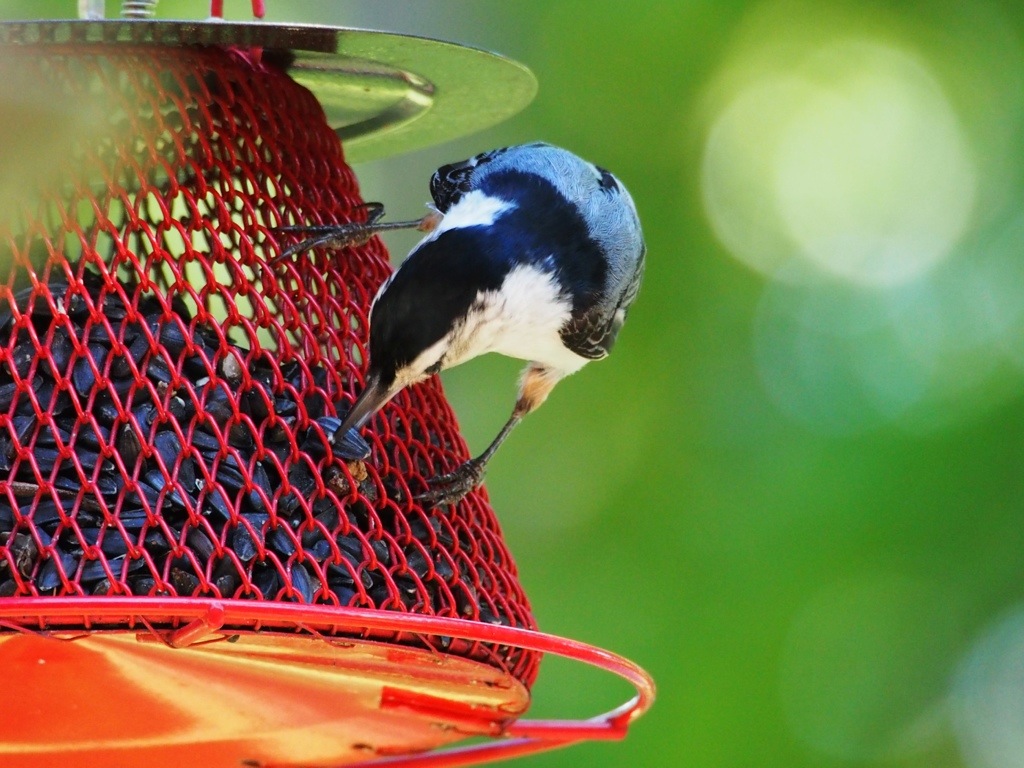
I adore nuthatches, but almost all of my shots are upside down or their swooning pose. These are really adroit birds and can climb almost any surface. I like this shot because it shows off his dexterity. He will take that single seed and fly to a secure perch where he will carefully open and eat it.

Rainforest Cafe

Rainforest Cafe

Robins are everywhere and I loved seeing them in the rain forests of Washington. They are usually spotted on the ground looking for worms – I like the chance to see one at eye level.

It's beginning to look a lot like Christmas

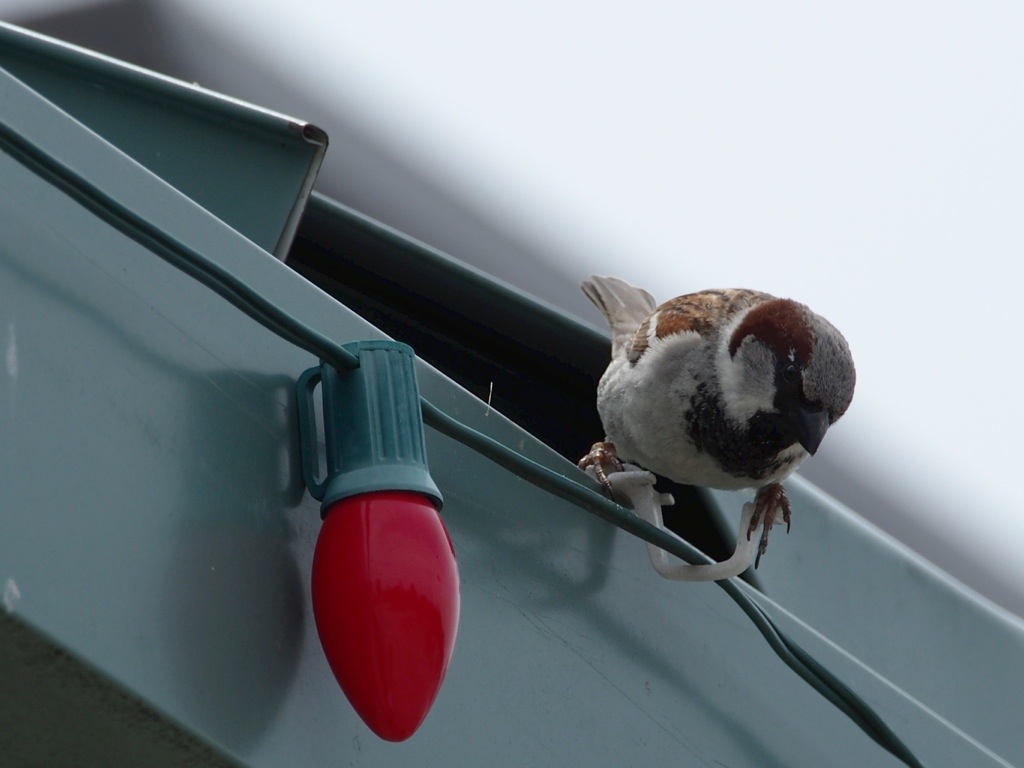
It’s beginning to look a lot like Christmas down there…

Our local hardware store has a facade covered with signs that the house sparrows nest in. They hop all over the roof and barely take notice of customers passing below them. I though it was interesting to see how this little guy has made use of even the Christmas light brackets as a perch. Ho Ho Ho!

Talking with his mouth full

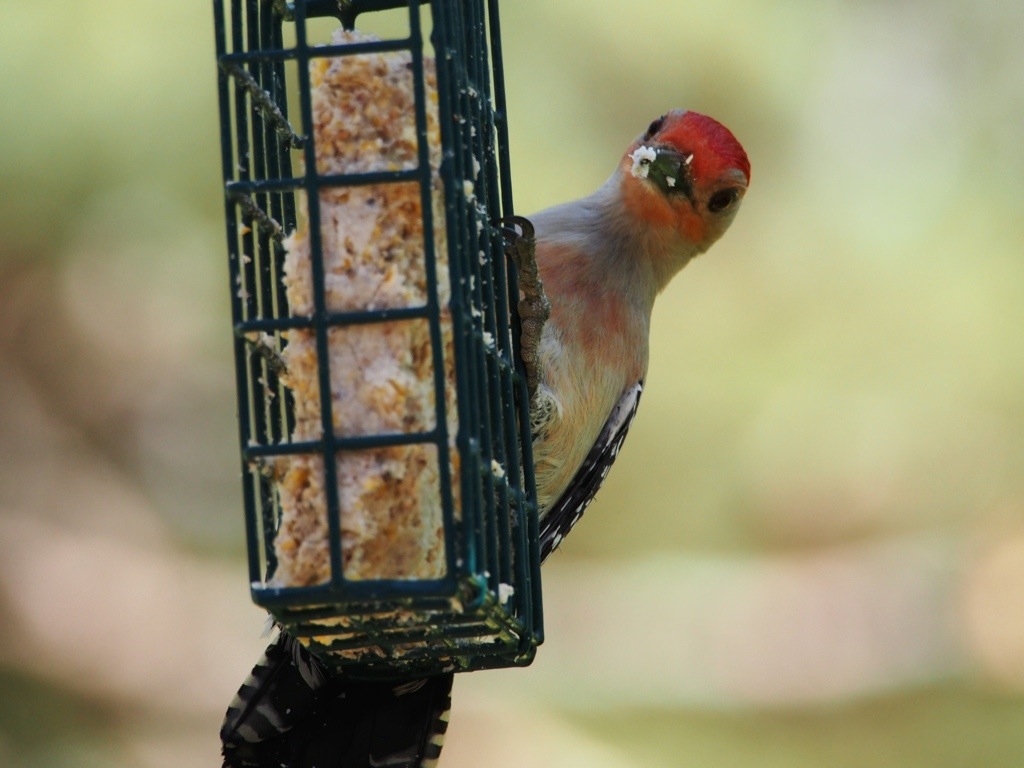
Talking with his mouth full

The red-bellied woodpecker is one of my favorite birds. They can be shy, but once they get used to your proximity to the feeders they stick around unless you make sudden movements. I love it when they look back at me.

Off balance

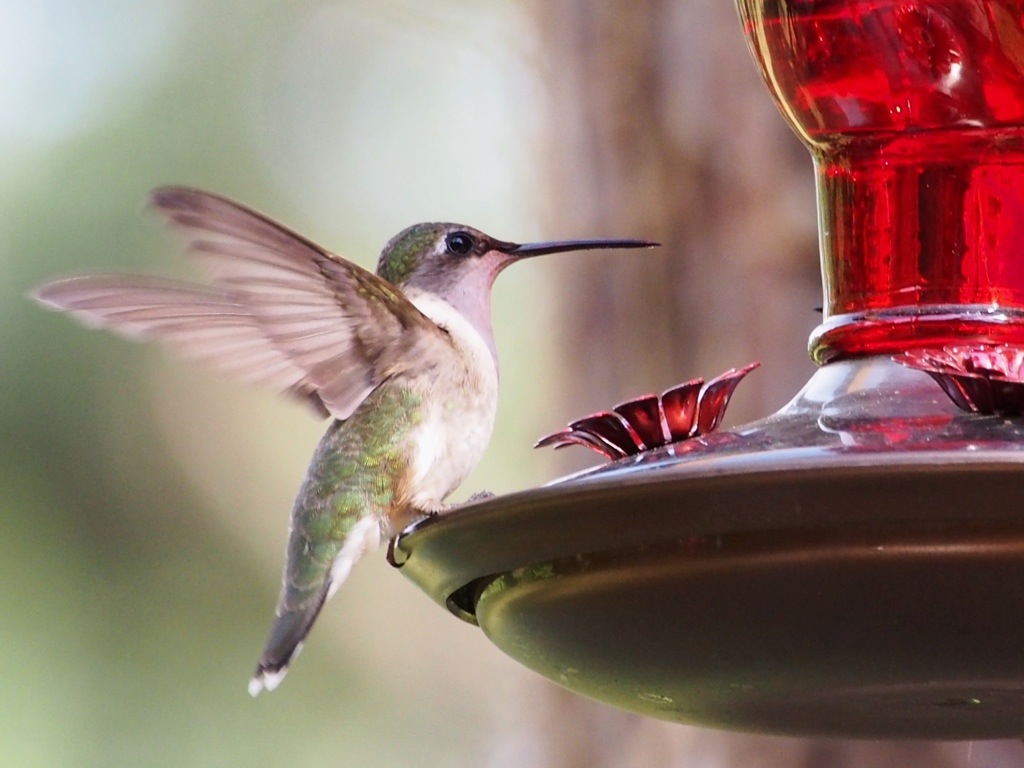
Off balance

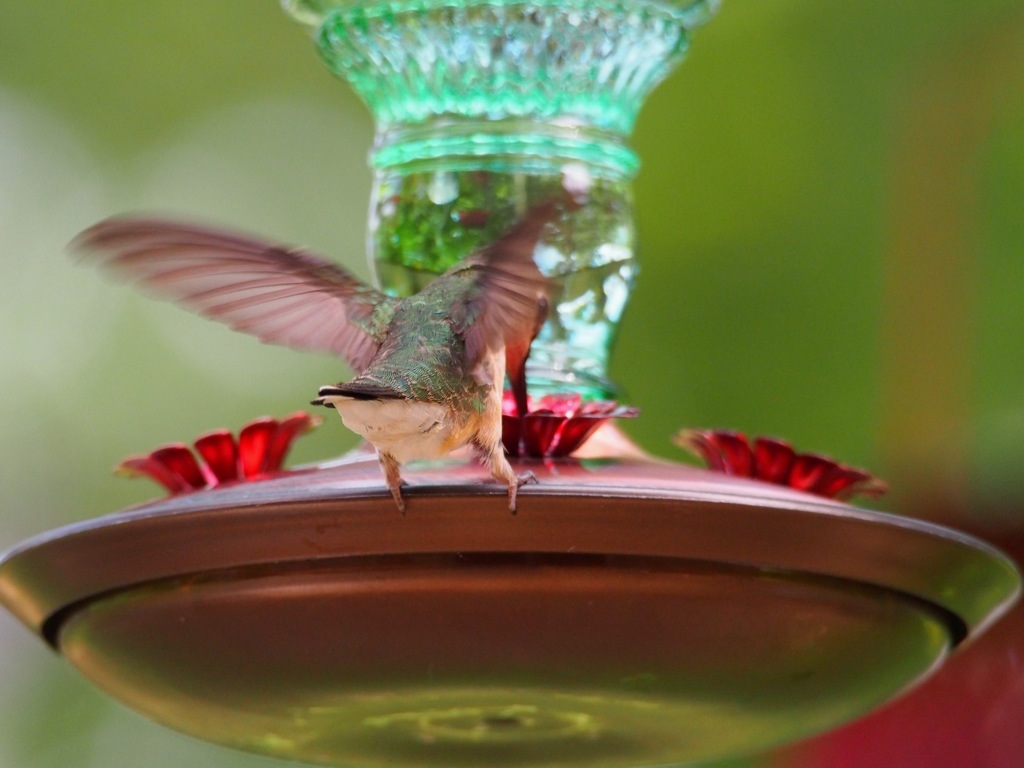
This hummer prefers to drink from the feeder with no perch, sadly she almost falls off every time she sits up after drinking. She flaps her wings to regain her balance before drinking more. I rarely get a good image of the wing structure of a hummer. She reminds me of a gymnast trying to stick the landing.

Out on a limb

Out on a limb

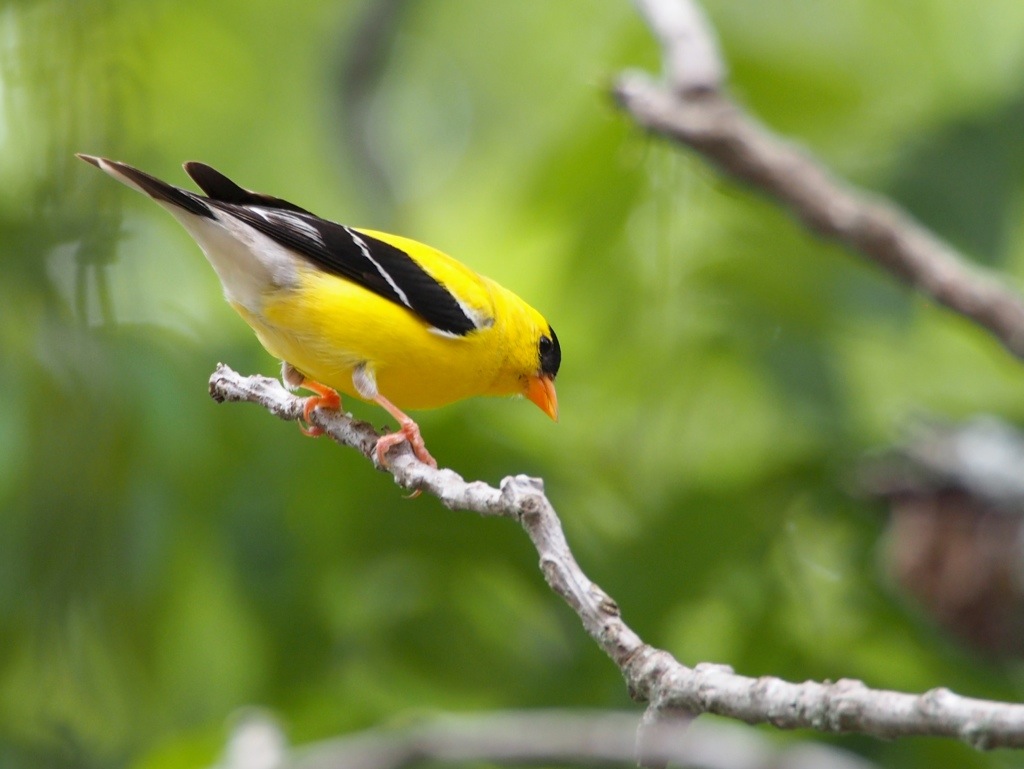
This male goldfinch was the first to return with his new yellow summer outfit. He is unflappable. Dogs barking and racing below his feeder don’t bother him. Yesterday a crow zipped by and almost carried him away – I watched in horror as the collision happened right in front of me. He did a tumble and landed on his feet on the porch – I saw some white down float upward. He took a perch a few feet off the ground and caught his breath. 10 minutes later he was back on his perch feeding. As I have said before, goldfinches are badasses.

Hunkered down

Hunkered down

There is just so much going on when you look at the feathers on a peacock – stripes, eyes, shimmer – I liked getting a shot of most of it happening in one spot.
That boy's wearing polka-dot panties

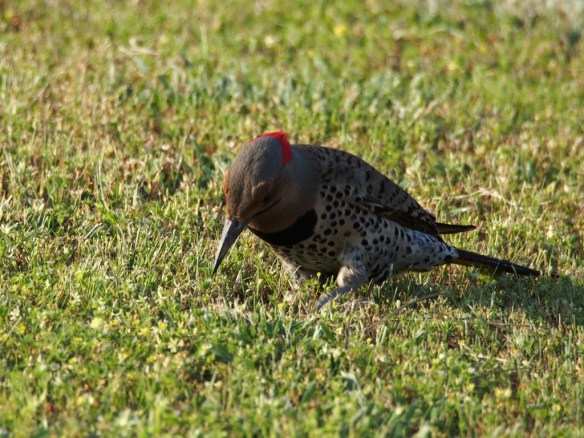
That boy’s wearing polka-dot panties

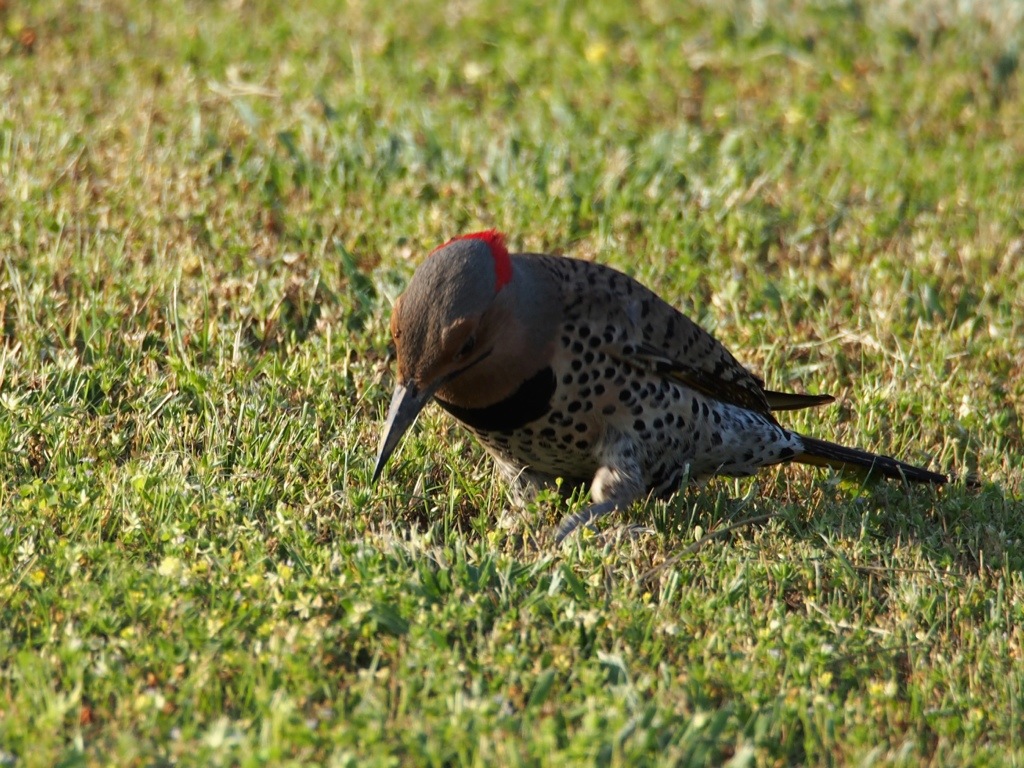
If you’ve read my blog before you may recall that I have recently discovered a northern flicker near the grocery store where I shop. I am officially his stalker now. I know where he lives and I know where he likes to eat. Kinda creepy, I know, but he’s the one with the silly underwear.
Solar lighting

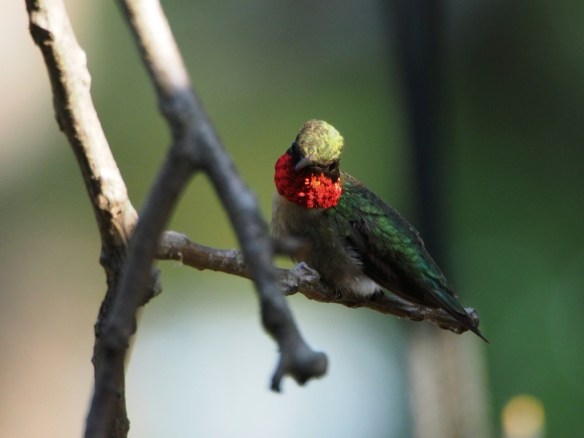
Solar lighting

These late spring evenings have been producing some interesting lighting – as the sun sets behind the trees at the Stone House the light breaks into pieces – when that combines with iridescence it can make for some interesting shots. I love how the feathers on this guy’s throat switched from black to this amazing bronze as he turned his head.

Covert operation

Covert operation

The pileated woodpecker was shot through a window, he’s so shy that it’s taken me a year to get an in-focus shot of him, and as soon as I moved closer to the window to frame a better shot without the pane showing, he bolted. Lesson learned, always take the shot before improving your position.
Mohawk

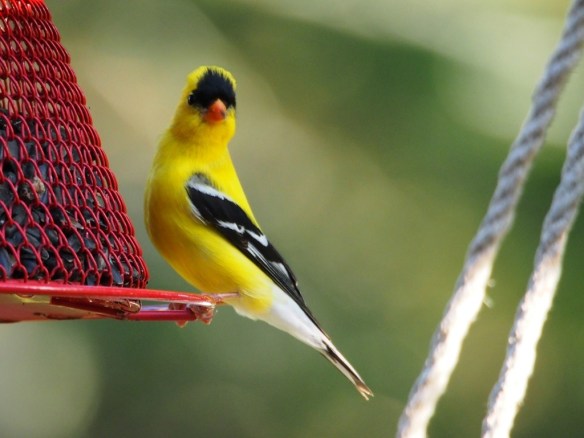
Mohawk

My goldfinch friend reacts to me whistling – often they will cock their head in an effort to catch the sound in one of the earholes they have on either side of their heads, but this time he just puffed up his head – I’ve never seen that before.

Puff Daddy

Puff Daddy

This male hummer is guarding his feeder. As intruders approach he leaves his post, flying sortis to defend his position. When he lands back at base he puffs up to add to his intimidating presence.
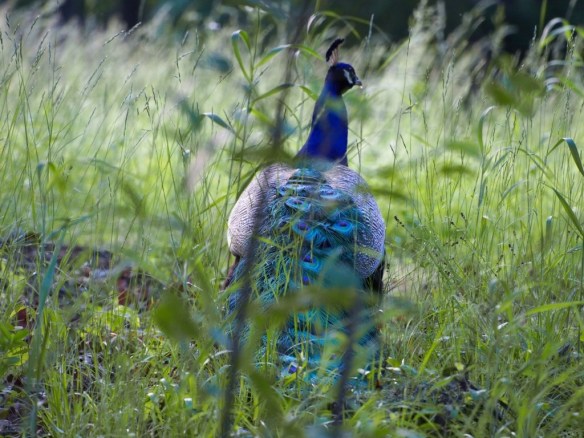
Krishna in the grass

Krishna in the grass.

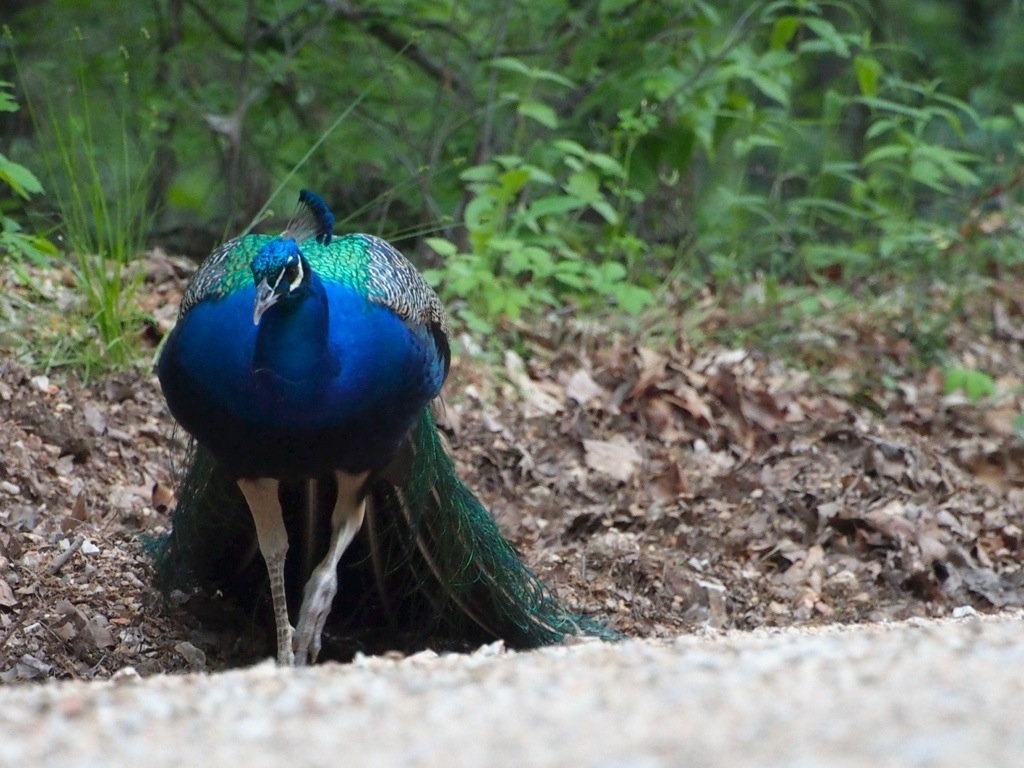
My friend Krishna is a little camera-shy these day. The lawn has been cut down at the Grange Hall and he is lacking cover, so he heads off towards the woods. Sometimes a man needs to be alone with his thoughts and away from the prying eyes of the paparazzi.
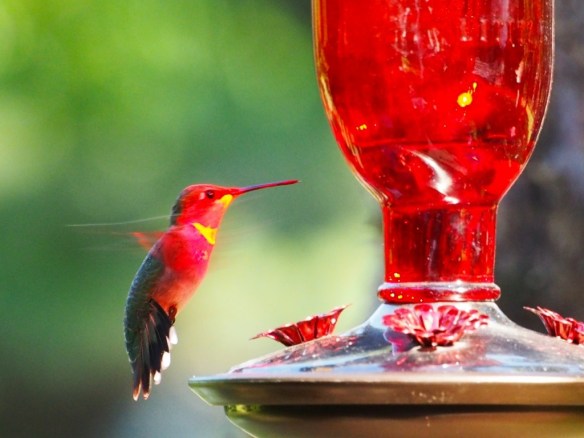
Seeing red

Seeing red

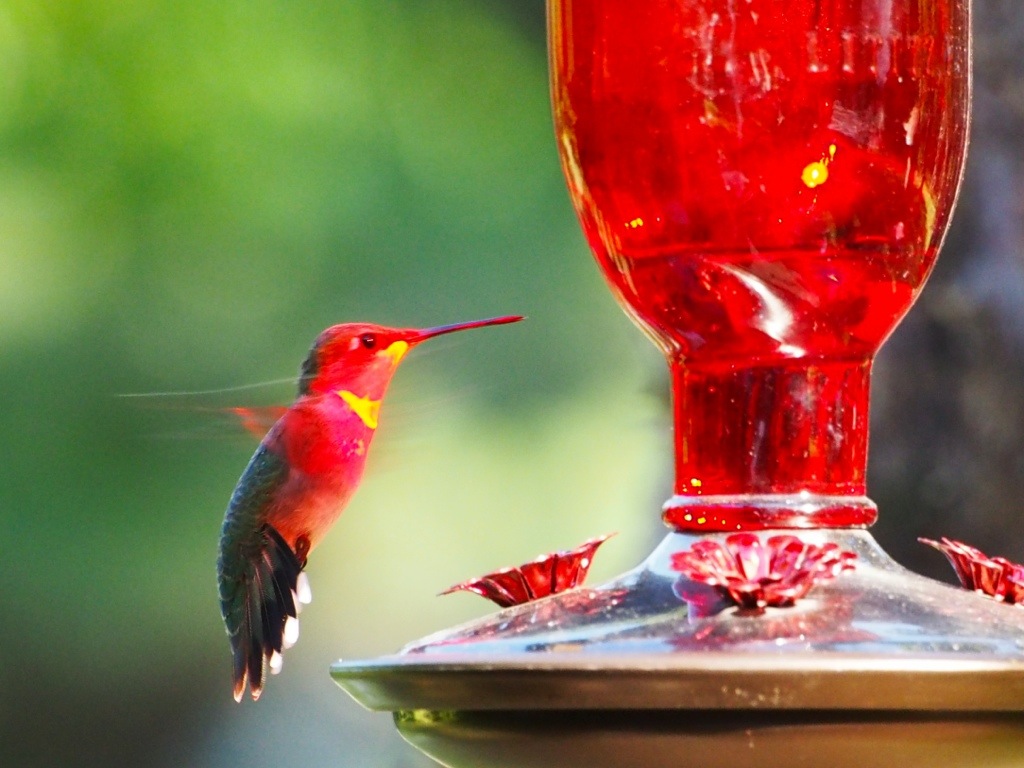
Another shot of that late evening sunlight – for just a moment the sun shone right through the red bottle and onto the hummer – this is one of those you wish you could get another crack at – in low light focussing is more difficult. Imperfect or not – it was an unusual moment.

Focused on his next meal

Focused on his next meal

I rarely get a shot at a hawk near the house. I spotted this guy yesterday on my drive home. The woods here are so thick that I almost never see one in flight, but he passed right in front of my Jeep. I pulled up and turned off the motor. Shooting through thick woods made focussing tricky but I finally dialed in on his eyes and then he took off – an encounter of seconds. I love his intensity, but I am glad that he feeds far away from my feeders.
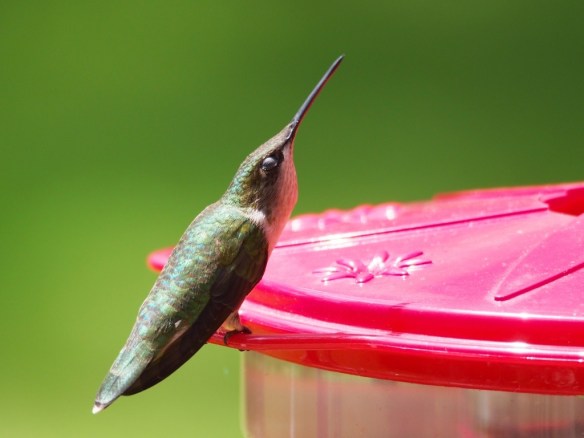
Bliss

Bliss

This photo is the one that made me decide to write this post. I almost posted it alone, but decided to give the library another once-over after deciding against it. Who knew that hummingbirds have eyelashes? I rarely suggest clicking on an image, but I do on this one – the structure of this birds eyelids are amazing! I occasionally get a shot of a bird in the process of blinking – and I typically discard those, but this one seemed different – serene, graceful, poetic – and none of those things have to do with me and a camera. It was just a moment and I happened to snap at just the right time.

So far the springtime has been amazing – birds are singing, I am shooting, and all is well with the world – at least it is here at the Stone House.
Love is in the Air

A few years ago a female peacock showed up in the neighborhood. We searched for her owner, but no one came forward. Over time she became the queen of her corner of the highway. She spent most of her time on the porch of the Heating and Air place or in my neighbor Barbara’s back yard. Barbara eventually took her in and named her “Pretty” because she loved to stare at herself in the mirror.

The next spring this fellow showed up unannounced…

I'm just here to pick up chicks.

I’m just here to pick up chicks.

He was young and out on the town. Again we tried desperately to find his owner to no avail. He fell head-over-heels for Pretty and all attempts to relocate him failed. A neighbor right across the road had a problem with snakes and decided that this handsome lad might be just the ticket. Poco took him in and he thrived, but sadly Pretty did not. She was killed crossing the road to see her beloved.

A solitary man

A solitary man

Our young fella spent weeks crossing back and forth after Pretty passed. Eventually he settled into a routine and he can be seen at the Grange Hall on the swing set, at the Heating and Air, and even on Poco’s chimney. He is a wonder in flight. Poco named our mystery man Krishna. In a sea of green and brown, he is hard to miss.

Oooo - that birdie in the window is mighty handsome.

Looking for love in all the wrong places…

A couple of winter’s back we installed new french doors on the old Grange Hall that serves as a community center for the neighborhood. Immediately our lovesick boy found solace in the windows – each afternoon he could be found on the porch admiring the mystery bird inside the Grange Hall windows. I went to get closer after taking this shot and he audibly scolded me. I learned that you can’t come between a man and his own reflection.

Peacocking around - strutting my stuff.

Peacocking around – strutting my stuff.

Krishna has grown from a young buck to a glorious sight. He walks upright along the road and struts, but something has been missing in his life – love. Each spring Krishna will call out with all his heart, he will display his plumage on the swing set and from the chimney top, but to no avail – until this spring…

Hubba hubba!

Hubba hubba!

Just a couple of weeks ago I saw this little beauty on my drive home. She was strutting her stuff about a quarter-mile from the Grange Hall. There are reports around the neighborhood of the two love birds getting cozy at the Heating and Air place.

I'll stick my neck out and take a chance on love...

I’ll stick my neck out and take a chance on love…

I regularly see them on the road – most often one is searching for the other. Krishna will pace along the dirt road and look for his lady-love in the woods, and she does the same. I heard a report of her watching him on the swing set as he displayed his plumage. I’ve yet to get a shot of them together, but after all, lovebirds want their privacy.

Baby got back

Baby got back

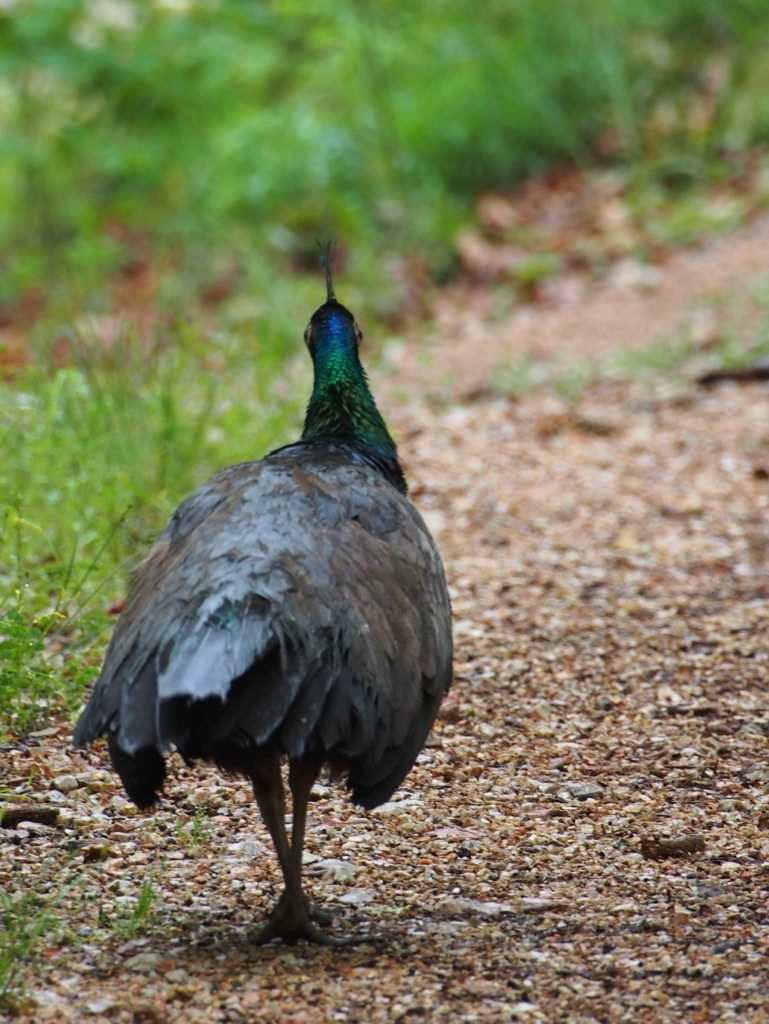
Unlike Pretty, the new girl in town appears to be the same type of Peacock as Krishna – even though she is green, she has the same face mask. And when she walks down the street, she really shakes her stuff.

I'd walk a mile for you...

I’d walk a mile for you…

Krishna is old school – I see him making the trip to pick up his girl, across the road, around the corner, through the woods to the dirt road. He’s never looked better. He’s quit chasing after that bird in the Grange Hall windows, there is something real in his life now.

Ready for a hot date.

That long and winding road that leads to her door.

Perhaps Peachicks are in our future?